
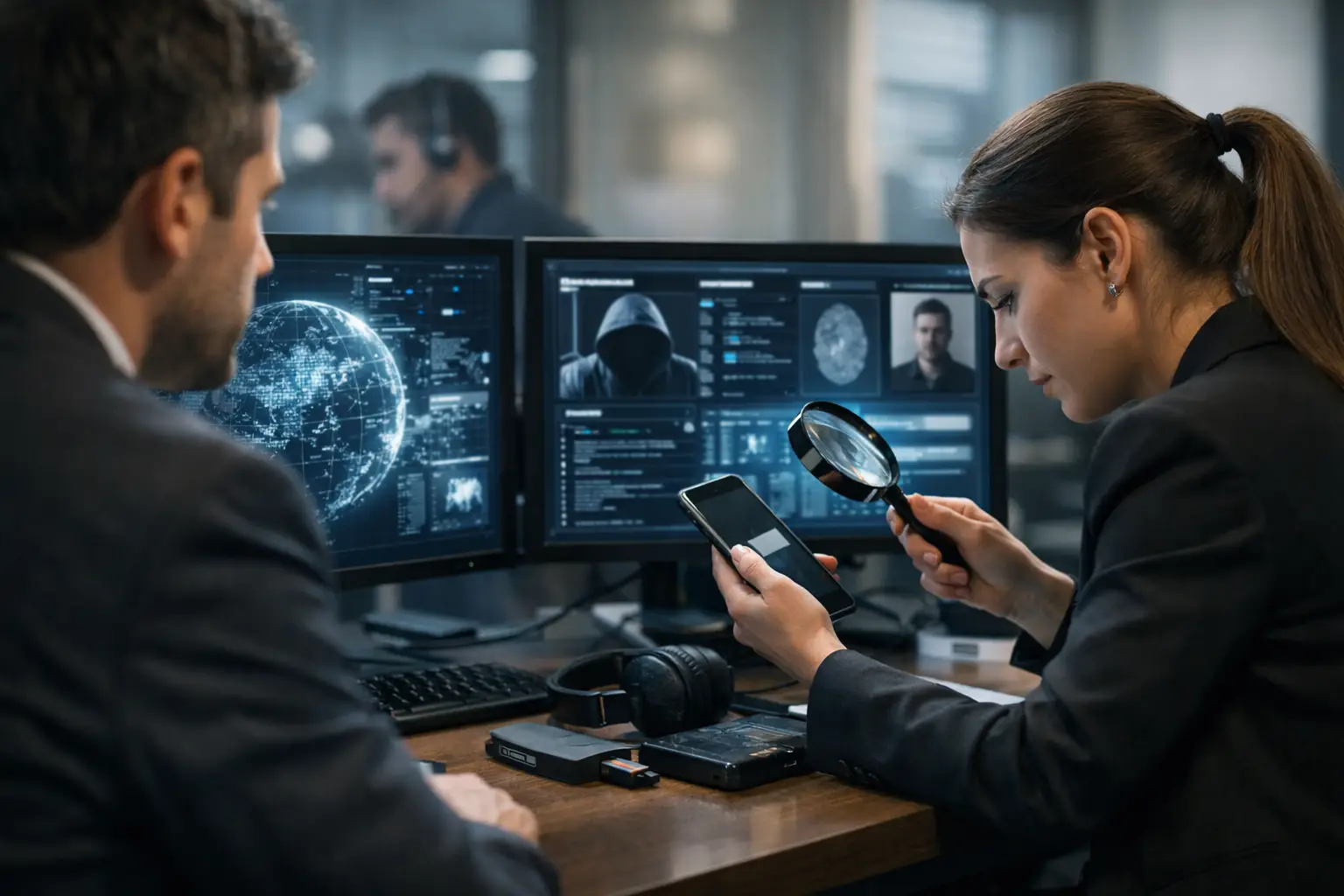
A compromised mailbox, a wiped laptop, missing company data, or messages that no longer appear on a handset can change the direction of a case in hours. When that happens, a cybercrime investigation company is not there to offer generic IT advice. Its role is to identify what occurred, preserve the evidence correctly, and produce findings that can withstand challenge in court, disciplinary proceedings, or a contested internal investigation.
That distinction matters. Many incidents look technical at first glance, but the real issue is evidential. If data is handled badly at the outset, if devices are examined without a clear chain of custody, or if conclusions are reached before the underlying artefacts are tested, the case can be weakened before it properly begins. For solicitors, businesses, and private clients, the value of a specialist lies not just in technical recovery, but in disciplined forensic process.
What a cybercrime investigation company actually does
A proper investigation starts by defining the question, not by running software against a device and hoping something useful appears. The task may be to establish whether unauthorised access took place, whether files were exfiltrated, whether messages were deleted, or whether a user account was misused. In other matters, the issue is attribution – who did what, when, and from which device or account.
A cybercrime investigation company should work from the evidence outward. That usually means preserving devices and accounts in a defensible manner, acquiring data without altering it, examining the relevant artefacts, and documenting each stage. Depending on the matter, this may involve mobile phone forensics, computer forensics, cloud account analysis, log review, OSINT enquiries, deleted data recovery, or timeline reconstruction.
For legal matters, the investigation does not end with technical findings. The output has to be intelligible, relevant, and proportionate. A report that is technically impressive but legally unfocused is of limited use. The most effective forensic work translates digital artefacts into evidence that supports pleadings, disclosure strategy, expert discussions, witness examination, or negotiations.
Why evidential integrity matters more than speed alone
Urgency is common in cyber matters. Businesses may need to know whether a live threat remains active. Solicitors may be facing hearing dates, disclosure obligations, or a rapidly developing allegation. Private clients often arrive when trust has already broken down and digital evidence may disappear if action is delayed.
Even so, speed without forensic discipline can create larger problems. An investigator who opens a device casually, allows a client to forward screenshots instead of preserving original data, or fails to record the handling history may compromise the reliability of later findings. In some cases, a rushed and poorly documented review creates a new line of challenge for the opposing side.
The better approach is controlled urgency. That means acting quickly to secure devices, accounts, backups, and logs while preserving provenance and maintaining a clear chain of custody. It also means recognising when a matter needs immediate containment and when it needs a narrower evidential review. Not every case requires a full-scale incident response. Equally, not every allegation can be resolved by a simple desktop inspection.
How to assess a cybercrime investigation company
For legal and corporate clients, the first question should be whether the firm understands evidence, not whether it simply understands technology. Plenty of providers can recover files or review a machine. Fewer can explain how data was preserved, what methods were applied, what limitations remain, and how the findings would stand up if scrutinised by counsel, the court, or an opposing expert.
Look closely at process. A serious forensic provider should be able to explain acquisition methods, preservation steps, chain of custody, examination scope, and reporting approach in plain language. It should also be comfortable discussing proportionality. A good investigator does not recommend the widest possible enquiry by default. The work should match the issues in dispute.
Reporting quality is another practical test. If the matter may end up in litigation, the report must be transparent and defensible. That means setting out instructions received, materials examined, methodology used, findings made, and any constraints affecting interpretation. Unsupported assertions, overstatement, and advocacy disguised as expertise are red flags.
Independence also matters. A forensic examiner is not there to force the evidence to fit a preferred narrative. The role is to uncover and present the digital facts, whether they assist the instructing party or not. That impartiality is exactly what gives forensic evidence weight.
Common scenarios where specialist cyber investigation is needed
The term cybercrime covers a wide range of fact patterns, and the right approach depends heavily on context. A company investigating suspected insider misconduct may need to examine USB usage, cloud synchronisation, document access, and messaging activity across several custodians. A criminal defence team may need to test whether allegedly incriminating communications were deleted, altered, or attributed incorrectly. A family law matter may turn on location data, account access, or the provenance of messages and images.
Hacking allegations require particular care. Clients often arrive convinced that a compromise has occurred, but suspicion is not the same as proof. A disciplined investigation will test account activity, access logs, device indicators, email rules, login metadata, and other available artefacts before drawing conclusions. Sometimes the evidence supports unauthorised access. Sometimes it points instead to password sharing, user error, poor account hygiene, or a misunderstanding of how a platform records activity.
That is why trade-offs matter. The strongest investigation is not the one that promises the most dramatic result. It is the one that defines the issue properly, preserves what can still be preserved, and reports only what the evidence supports.
The difference between IT support and forensic investigation
This is where many clients lose time. An IT team may be highly capable at restoring systems, improving security, and keeping operations running. Those are essential functions. But an IT response is not the same as a forensic investigation.
IT support is usually focused on continuity and remediation. A forensic examiner is focused on evidence preservation, reconstruction, and explanation. The two disciplines can work together, but they serve different purposes. If the matter may lead to litigation, disciplinary action, regulatory engagement, or criminal complaint, evidence must be handled with those outcomes in mind from the outset.
That often affects practical decisions. Should a device be imaged before being returned to service? Should an email account be preserved before passwords are changed? Are logs being retained, or are they at risk of rolling over? Has a handset been factory reset by well-meaning internal staff? Early decisions can materially affect what can later be proved.
What legal professionals should expect from the process
Solicitors and litigation teams need more than a technical debrief. They need a clear route from allegation to evidence. At the start, that usually means a scoping discussion around issues, custodians, relevant devices, data sources, urgency, and intended use of the findings. It should also address whether the work is for pre-action assessment, disclosure support, criminal defence, internal investigation, or expert evidence.
From there, the process should remain documented and proportionate. Examinations should be limited to the relevant scope, with any changes to that scope recorded. Findings should be set out in a way that allows the legal team to understand both strengths and weaknesses. Some evidence will be compelling. Some will be partial. Some may be inconclusive. A credible forensic provider says so plainly.
Where necessary, the same firm should be able to support later stages of the matter through supplementary reporting, conference attendance, rebuttal of opposing expert opinion, and court attendance. That continuity can be important, especially in cases where digital evidence becomes central rather than peripheral.
Choosing accuracy over assumptions
The pressure in cyber matters is often to move straight to blame. That pressure can come from employers, spouses, complainants, regulators, or even the shape of the allegation itself. Yet digital investigations rarely reward assumptions. Devices are shared. Accounts are reused. Logs are incomplete. Deleted data may be recoverable in one case and gone in another. Screenshots may support a line of enquiry, but they are not a substitute for original evidence.
An experienced specialist, such as Computer Forensics Lab, approaches the matter with discipline rather than speculation. That means preserving first, examining properly, and reporting with precision. For clients dealing with disputes, allegations, or active compromise, that is the difference between a theory and evidence that can be relied upon.
When the stakes are high, the right question is not simply who can investigate fastest. It is who can recover the truth carefully enough for it to matter when challenged.