

Over 80 percent of British criminal cases now involve some form of digital evidence, making social media investigations a critical skill for legal professionals in London. The sheer volume and complexity of online data can pose serious challenges for solicitors and criminal lawyers aiming to build rock-solid litigation strategies. This guide breaks down every stage of collecting and analyzing social media evidence—providing actionable methods and expert-backed tools to help you navigate the legal process with confidence.
Table of Contents
- Step 1: Prepare Investigative Tools For Evidence Gathering
- Step 2: Identify Relevant Social Media Accounts And Content
- Step 3: Capture And Preserve Digital Evidence Securely
- Step 4: Document Findings And Verify Evidential Integrity
- Step 5: Submit Collected Evidence For Forensic Assessment
Quick Summary
| Key Message | Explanation |
|---|---|
| 1. Prepare forensic tools | Assemble specialised software for effective social media evidence collection and legal compliance. |
| 2. Identify relevant accounts | Systematically locate and authenticate social media accounts to ensure credibility of findings. |
| 3. Securely capture evidence | Document and preserve digital evidence using strict protocols to maintain its integrity. |
| 4. Document findings thoroughly | Create detailed logs of evidence collection and methodologies to support legal defensibility. |
| 5. Submit evidence properly | Prepare a comprehensive submission package that meets forensic standards for analysis and review. |
Step 1: Prepare investigative tools for evidence gathering
Gathering social media evidence requires strategic preparation and specialised forensic tools designed for legal investigations. Your primary objective is to assemble a robust collection of investigative resources that will help you systematically capture, preserve, and authenticate digital evidence from various social media platforms.
Professional digital forensic practitioners recommend starting with comprehensive digital evidence collection protocols that ensure data integrity and legal admissibility. These protocols involve selecting appropriate forensic software, establishing secure data capture methods, and implementing systematic documentation processes. Key tools in your investigative arsenal should include forensic imaging software, metadata extraction utilities, and platform specific evidence preservation technologies.
Your investigation demands meticulous attention to technical details. This means using read-only forensic acquisition techniques that prevent data modification, creating comprehensive hash values for evidence verification, and maintaining strict chain of custody documentation. Each piece of collected social media evidence must be rigorously tracked to ensure its legal reliability.
Expert Recommendation: Always maintain multiple backups of digital evidence and document every single action taken during the collection process to guarantee forensic credibility.
Here is a comparison of common forensic tools used for digital evidence collection:
| Tool Type | Typical Use Case | Example Technologies |
|---|---|---|
| Forensic Imaging Software | Creating bit-by-bit copies | FTK Imager, EnCase |
| Metadata Extraction Utilities | Capturing file and platform metadata | ExifTool, Magnet AXIOM |
| Evidence Preservation Solutions | Saving content from platforms | X1 Social Discovery, Hunchly |
| Chain of Custody Systems | Tracking evidence handling | CaseGuard, Nuix Integrity |
Step 2: Identify relevant social media accounts and content
Successfully identifying the right social media accounts and content is a critical phase in legal digital investigations. Your goal is to systematically locate and evaluate potential evidence across multiple online platforms while maintaining forensic integrity and ethical standards.
Law enforcement professionals utilise strategic social media investigation techniques that involve comprehensive search methodologies. This means methodically mapping an individual’s online presence by examining public profiles, connection networks, activity patterns, and content history. Advanced investigators cross reference multiple platforms including Facebook, Twitter, Instagram, LinkedIn and lesser known regional social networks to build a comprehensive digital profile.
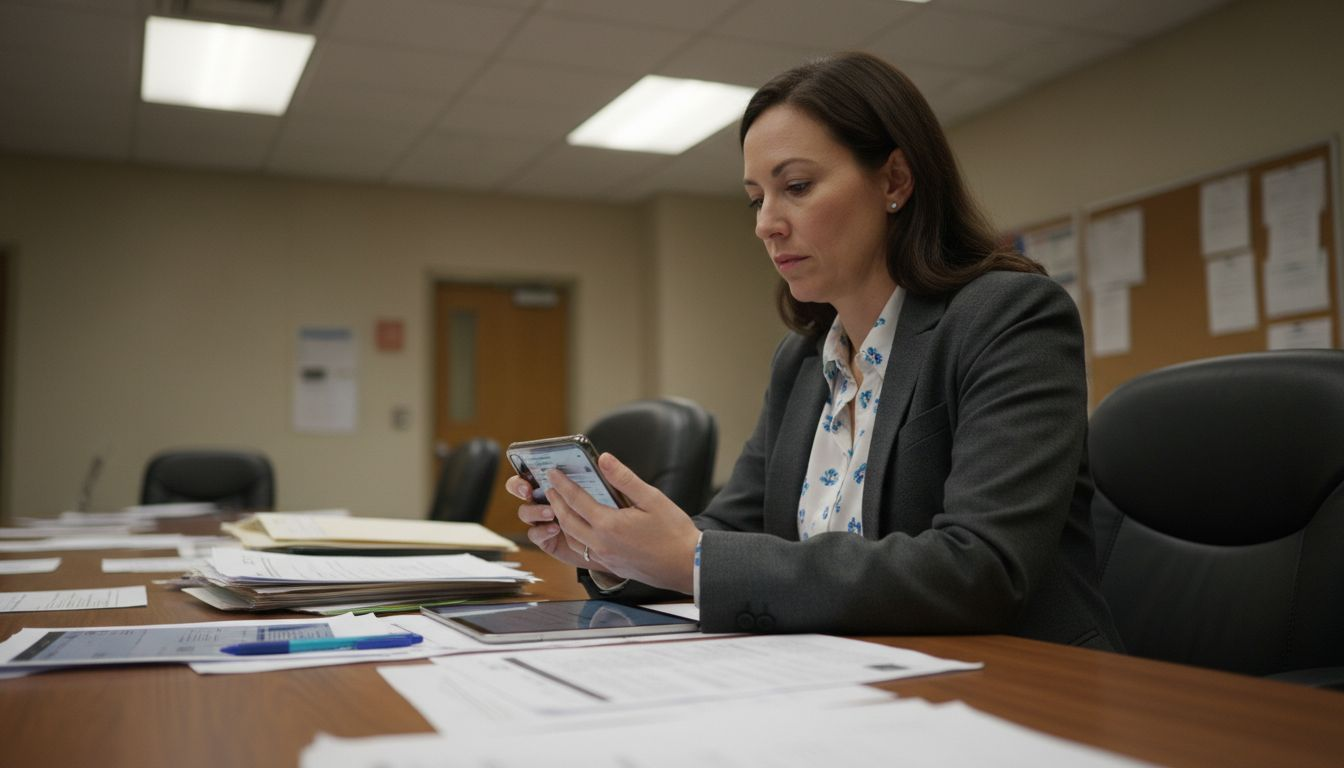
Careful verification becomes paramount during this process. Each discovered account requires thorough authentication to ensure the evidence’s credibility. This involves checking profile creation dates, examining posting consistency, verifying user interactions, and corroborating information across different sources. Pay special attention to metadata such as geolocation tags, timestamps, and network connection details that can provide additional contextual evidence.
Expert Recommendation: Always screenshot and preserve original content immediately upon discovery to prevent potential deletion or manipulation of digital evidence.
Step 3: Capture and preserve digital evidence securely
Capturing and preserving digital evidence demands meticulous attention to forensic protocols that protect the integrity and admissibility of your collected information. Your primary objective is to document and secure social media content in a manner that withstands rigorous legal scrutiny and prevents any potential challenges to its authenticity.
Law enforcement professionals follow comprehensive digital evidence preservation guidelines that emphasise systematic documentation and controlled evidence handling. This requires employing specialised forensic tools such as write blockers, creating forensic images of digital content, capturing comprehensive metadata, and establishing a detailed chain of custody record. Each piece of digital evidence must be captured using techniques that prevent any potential modification or tampering.
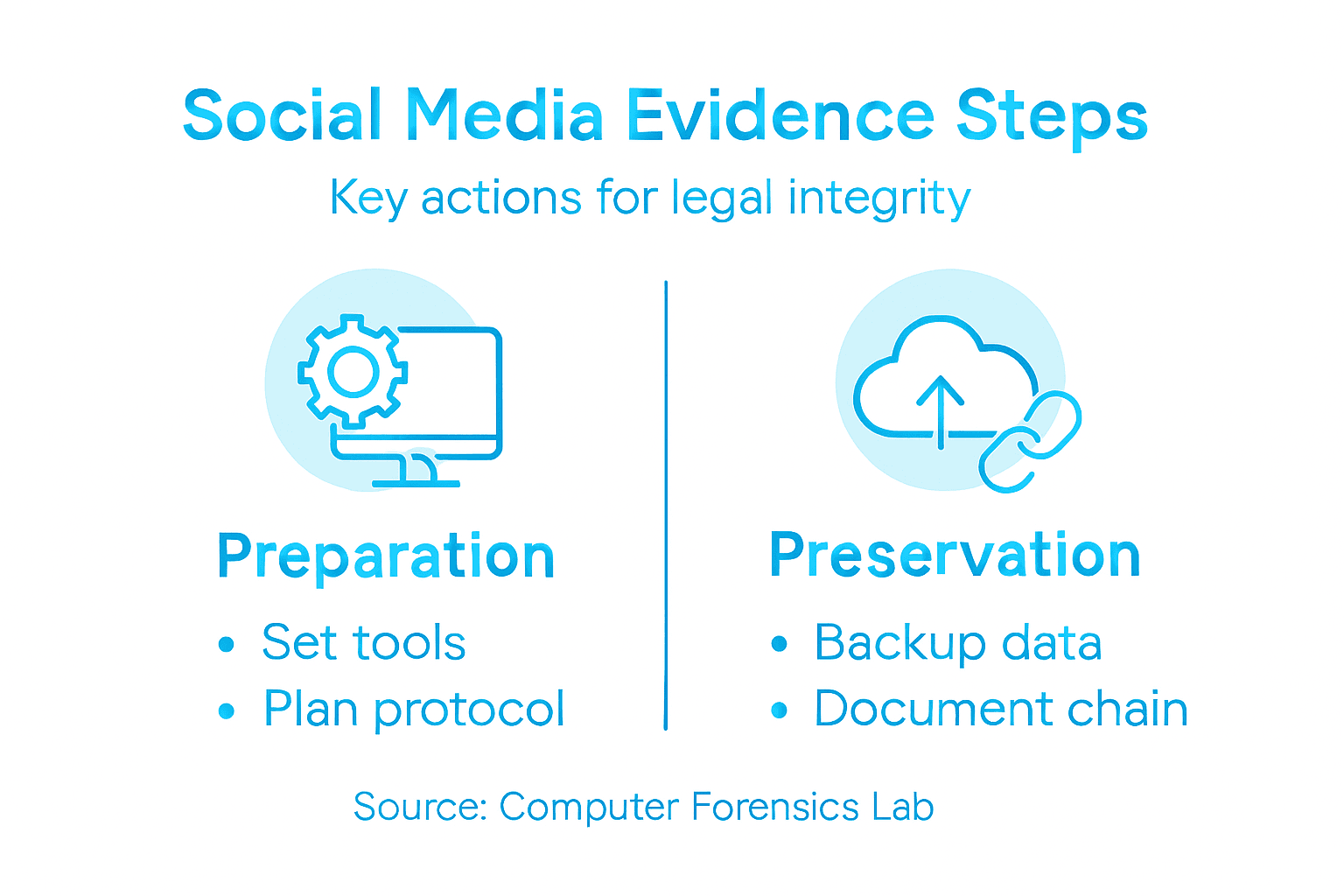

The preservation process extends beyond initial collection and involves creating multiple secure backups, implementing strict access controls, and maintaining comprehensive logs of every interaction with the digital evidence. This means utilising encrypted storage solutions, restricting access to authorised personnel only, and documenting precise timestamps and forensic hash values for each piece of captured content. Your documentation should be so meticulous that it could withstand potential legal challenges and demonstrate the unaltered nature of the original digital evidence.
Expert Recommendation: Always create at least three independent forensic copies of digital evidence and store them in geographically separate secure locations to mitigate potential data loss risks.
Step 4: Document findings and verify evidential integrity
Documenting digital evidence represents the critical final stage where your forensic investigation transforms raw data into legally defensible information. Your primary objective is to create a comprehensive and transparent record that demonstrates the authenticity, origin, and unaltered nature of your social media evidence.
Forensic investigators employ systematic digital evidence documentation methods that ensure meticulous tracking of every investigative action. This involves creating detailed logs that capture precise timestamps, recording the exact source of each piece of digital content, documenting the forensic tools and methodologies used, and generating cryptographic hash values that serve as digital fingerprints proving the evidence has not been modified since initial collection.
The verification process demands rigorous cross referencing and validation techniques. This means comparing digital evidence against multiple sources, authenticating user profiles through corroborative digital traces, validating metadata consistency, and creating comprehensive forensic reports that transparently outline the entire investigative process. Your documentation should be so precise that it could withstand intense legal scrutiny and provide a clear narrative of how each piece of evidence was discovered, collected, and preserved.
Expert Recommendation: Develop a standardised documentation template that captures all critical forensic metadata and ensures consistent, comprehensive evidence reporting across all investigations.
Step 5: Submit collected evidence for forensic assessment
Submitting digital evidence represents the culmination of your meticulous investigative process where carefully collected social media data transitions from raw information to potential legal documentation. Your primary goal is to present a comprehensive evidence package that meets stringent forensic analysis standards.
Legal professionals must follow digital evidence submission protocols that ensure thorough preparation and documentation. This involves compiling an evidence package that includes complete metadata, precise forensic logs, authenticated screenshots, original data files, comprehensive chain of custody documentation, and detailed investigator notes explaining the context and collection methodology of each digital artifact.
The submission process requires strategic coordination with forensic specialists who will conduct in depth analysis and verification. This means preparing a clear narrative that outlines the investigation’s timeline, explaining how each piece of digital evidence was discovered, preserved, and authenticated. Your submission should anticipate potential legal challenges by providing transparent, comprehensive documentation that demonstrates the absolute integrity of the collected social media evidence.
Expert Recommendation: Prepare a supplementary digital evidence index that cross references each piece of evidence with its original source location, collection timestamp, and forensic hash value to streamline expert verification.
The following table summarises key stages of social media evidence handling and their legal significance:
| Stage | Critical Action | Legal Importance |
|---|---|---|
| Identification | Locating accounts/content | Establishes search scope |
| Preservation | Securing original evidence | Ensures admissibility |
| Documentation | Logging tools and methods | Demonstrates process integrity |
| Submission | Packaging for assessment | Enables legal review |
Empower Your Legal Cases with Expert Social Media Evidence Collection
Navigating the complexities of social media evidence gathering is no easy task. The challenge lies in meticulously capturing, preserving, and authenticating digital content while maintaining a secure chain of custody and ensuring its admissibility in court. If you are striving to master these demanding forensic protocols like read-only acquisition, metadata verification, and rigorous documentation, you are not alone. Many legal professionals face the daunting task of handling vast digital information that could be altered or deleted without prompt, confident action.
At Computer Forensics Lab, we specialise in turning this complexity into a structured, defendable investigation. Our Social Media Forensics experts employ advanced forensic tools and industry best practices to safeguard your digital evidence from the moment it is identified through to submitting a flawless evidence package for legal assessment. Whether you require support with evidence collection, preservation, or expert forensic reporting, explore our broad capabilities in Digital Forensic Investigation. Do not risk missing crucial digital proof or jeopardising your case with improper handling. Visit our website today to engage with a trusted partner who understands the vital importance of accuracy and integrity in every social media investigation.
Take control of your investigative process now and work with professionals who know how to transform social media data into powerful evidence that stands up in court.
Frequently Asked Questions
How can I prepare investigative tools for collecting social media evidence?
To prepare investigative tools for collecting social media evidence, start by gathering specialised forensic software and establishing secure data capture methods. Document each step in the evidence collection process and ensure you have multiple backups within 24 hours of capturing the evidence.
What steps should I take to identify relevant social media accounts and content?
Begin by mapping the individual’s online presence comprehensively across various social media platforms. Verify each account through authentication checks, and ensure you take screenshots of relevant content immediately to preserve its integrity.
How can I securely capture and preserve digital evidence from social media?
Securely capture and preserve digital evidence by employing forensic tools to create bit-by-bit copies and maintaining strict access controls. Always document the chain of custody, ensuring multiple secure backups are created within a few hours of collection to avoid data loss.
What is the best way to document my findings and verify evidential integrity?
Create detailed logs that capture timestamps and document the forensic tools used to gather the evidence. Ensure you cross-reference your findings with multiple sources to validate their authenticity before compiling a comprehensive forensic report.
How should I submit the collected evidence for forensic assessment?
When submitting collected evidence for forensic assessment, compile a complete evidence package that includes all relevant metadata and detailed forensic logs. Be sure to provide a clear narrative of the investigation’s timeline and methodologies to facilitate a transparent review process.