

Securing digital evidence in a fast-changing cyber landscape is never straightforward, especially when every case in London’s legal sector demands precision and accountability. The stakes are high for digital forensics professionals who need to collect and preserve sensitive data to strict evidential standards. By focusing on robust forensic readiness protocols and advanced evidence handling techniques, you can strengthen your investigative processes and improve the legal defensibility of every cybercrime case.
Table of Contents
- Step 1: Establish Robust Forensic Readiness Protocols
- Step 2: Deploy Advanced Evidence Preservation Techniques
- Step 3: Maintain Strict Chain of Custody Procedures
- Step 4: Utilise Secure Storage and Transfer Solutions
- Step 5: Verify Digital Integrity and Case Admissibility
Summary
| Main Insight | Explanation |
|---|---|
| 1. Establish Forensic Readiness | Develop a proactive strategy for evidence collection and preservation, ensuring preparedness before incidents arise. |
| 2. Implement Advanced Preservation Techniques | Use sophisticated methods like cryptographic hashing and forensic imaging to safeguard digital evidence’s integrity during investigations. |
| 3. Maintain Strict Chain of Custody | Document every interaction with evidence meticulously to support its admissibility in court and prevent contamination. |
| 4. Ensure Secure Storage and Transfer | Use encrypted storage and robust access controls to protect evidence from unauthorized access or corruption. |
| 5. Verify Evidence Integrity | Conduct thorough checks and generate cryptographic hashes to confirm that evidence remains unaltered and legally compliant. |
Step 1: Establish robust forensic readiness protocols
Securing digital evidence requires a proactive and systematic approach that prepares organisations to collect, preserve, and analyse potential forensic data before incidents occur. This step involves developing comprehensive protocols that protect the integrity and admissibility of digital evidence through strategic planning and preparation.
To establish robust forensic readiness, organisations must implement a multi-layered strategy that encompasses technical, procedural, and legal considerations. Key components include:
- Technical infrastructure for continuous data monitoring and preservation
- Staff training in digital evidence handling procedures
- Policy development for incident response and evidence collection
- Legal compliance with forensic science standards
The National Institute of Justice emphasises the importance of collaborative forensic research strategies to optimise evidence handling methodologies. By establishing clear protocols, organisations can ensure their digital forensics capabilities remain proactive, efficient, and legally defensible.
A comprehensive forensic readiness protocol requires ongoing assessment and refinement. Digital environments evolve rapidly, so your strategy must remain adaptable, incorporating emerging technologies and legal frameworks to maintain investigative effectiveness.
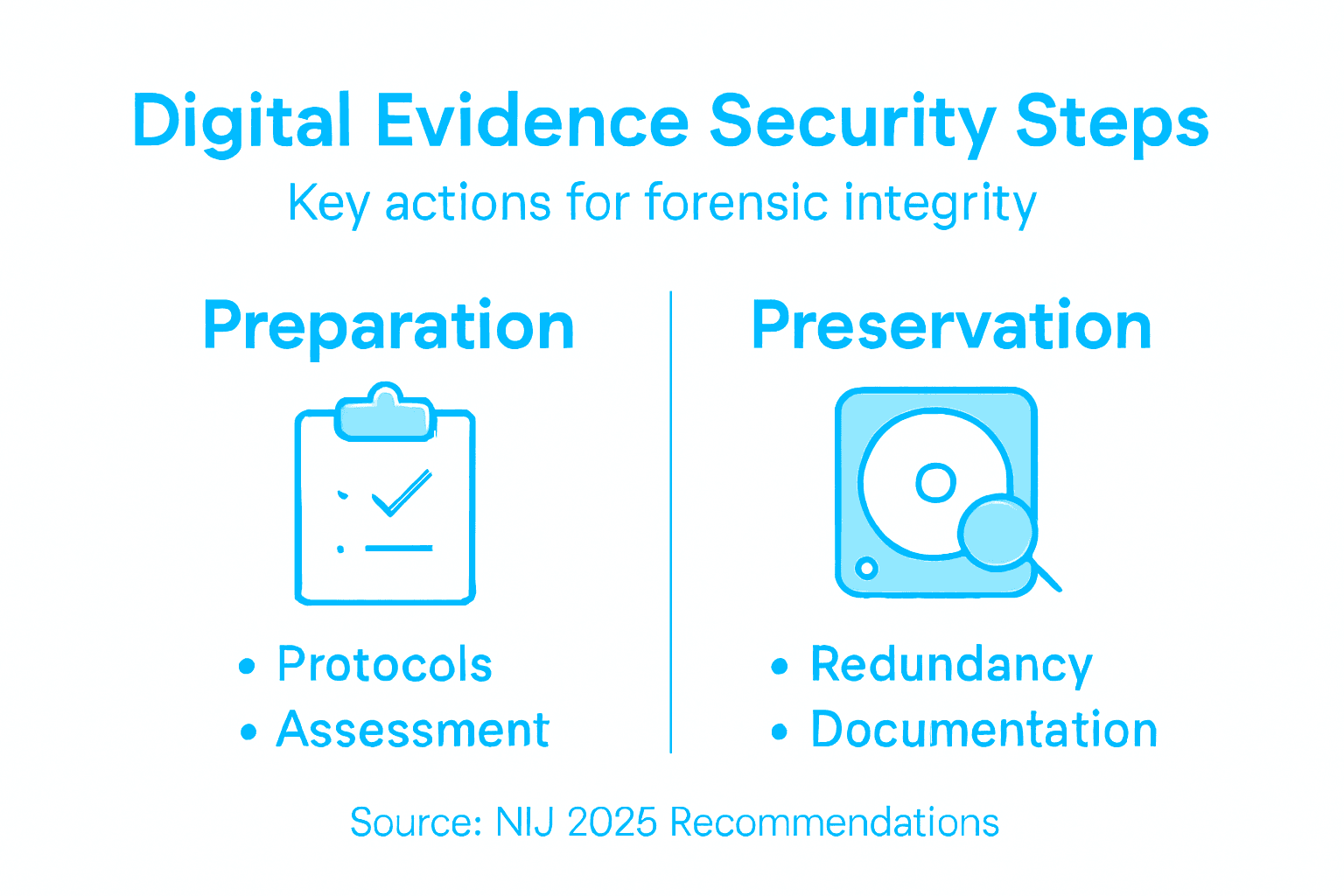

Expert Tip: Regularly conduct simulated forensic scenarios to test and improve your organisation’s evidence collection protocols and staff readiness.
Step 2: Deploy advanced evidence preservation techniques
Deploying advanced evidence preservation techniques is crucial for maintaining the integrity and legal admissibility of digital evidence. This step focuses on implementing specialised methodologies that protect electronic data from modification, contamination, or unintentional corruption during forensic investigations.
To effectively preserve digital evidence, forensic professionals must utilise a comprehensive set of sophisticated techniques:
- Cryptographic hashing to verify data integrity
- Write-blockers to prevent accidental data modification
- Forensic imaging for creating exact replicas of digital media
- Secure chain of custody documentation
Modern digital forensics relies on advanced preservation methodologies that ensure electronic evidence remains authentic and unaltered. Specialised tools like EnCase and FTK Imager provide forensic experts with robust capabilities to acquire, analyse, and protect digital evidence through precise imaging and verification techniques.

Successful evidence preservation requires a multidisciplinary approach involving collaboration between law enforcement, forensic experts, and legal professionals. Your strategy must remain adaptable, incorporating emerging technologies and legal frameworks to maintain investigative effectiveness and ensure evidence reliability.
Expert Tip: Implement redundant preservation methods and maintain multiple independent forensic copies to mitigate potential data loss or corruption.
Step 3: Maintain strict chain of custody procedures
Maintaining a strict chain of custody is fundamental to preserving the legal integrity and admissibility of digital evidence. This critical process ensures that every piece of electronic information remains uncontaminated, traceable, and defensible throughout the entire forensic investigation.
Effective chain of custody procedures require meticulous documentation and tracking of digital evidence:
- Comprehensive logging of all evidence handling
- Precise timestamp recording for each transfer
- Individual accountability for evidence preservation
- Secure evidence storage protocols
- Detailed transfer documentation
Forensic professionals must document evidence handling meticulously to prevent potential legal challenges. This involves creating an unbroken chronological record that tracks every interaction with digital evidence, from initial collection through forensic analysis and potential court presentation.
A single break in the chain of custody can render entire digital evidence sets inadmissible in legal proceedings.
The documentation process requires forensic experts to record critical details including the name of each person handling the evidence, the exact time and date of transfer, the purpose of the transfer, and the specific actions taken. This comprehensive approach ensures transparency and prevents potential accusations of evidence tampering or contamination.
Expert Tip: Implement a digital tracking system with blockchain-like verification to create an immutable, time-stamped record of all evidence interactions.
Step 4: Utilise secure storage and transfer solutions
Securing digital evidence requires implementing robust storage and transfer solutions that protect sensitive information from unauthorized access, interception, and potential corruption. This critical step ensures that forensic data remains intact, confidential, and legally admissible throughout the investigative process.
Effective digital evidence storage and transfer strategies involve multiple layers of protection:
- Encrypted storage devices with advanced security features
- Geographical redundancy for backup systems
- Multi-factor authentication for access control
- Offline backup preservation methods
- Tamper-evident digital signatures
Forensic professionals must implement rigorous digital preservation protocols that safeguard evidence through comprehensive security measures. This involves selecting approved cloud services, utilising secure hardware with encryption, and establishing strict access control mechanisms.
Digital evidence is only as secure as its weakest storage or transfer mechanism.
Critical considerations include selecting forensically-approved cloud services, using hardware with robust encryption capabilities, and implementing communication channels that prevent potential interception or tampering. The goal is to create an environment where digital evidence remains completely protected from collection through potential legal proceedings.
Expert Tip: Conduct regular security audits of your storage and transfer infrastructure to identify and address potential vulnerabilities before they can be exploited.
Step 5: Verify digital integrity and case admissibility
Verifying digital evidence integrity is a critical forensic process that ensures collected electronic data remains unchanged and legally acceptable for court proceedings. This step demands meticulous attention to technical validation and legal standards to prevent potential challenges to your investigative findings.
Key components of digital integrity verification include:
- Cryptographic hash generation for evidence verification
- Comprehensive metadata documentation
- Scientific reliability assessment
- Provenance tracking
- Forensic tool validation
Forensic professionals must validate digital evidence authenticity through systematic verification processes that demonstrate consistent, unaltered data throughout the investigation. This involves generating cryptographic hash values like SHA-256 to confirm data integrity and establishing a clear, documentable chain of evidence collection.
Admissibility hinges on proving that digital evidence has remained unmodified and was collected through legally sanctioned methods.
Successful verification requires collaboration between technical experts and legal professionals to ensure that every piece of digital evidence meets stringent judicial requirements. This includes demonstrating scientific reliability, maintaining an unbroken chain of custody, and presenting clear, comprehensible documentation of evidence collection and preservation methods.
Expert Tip: Develop standardised verification protocols that can be consistently replicated and defended in legal proceedings.
The following table outlines the business impact of investing in advanced digital forensic measures:
| Forensic Measure | Business Impact | Risk if Neglected |
|---|---|---|
| Staff Training | Quick, correct evidence response | Increased error and non-compliance |
| Encryption & Storage | Protects sensitive data | Vulnerable to data breaches |
| Chain of Custody Systems | Prevents legal disputes | Evidence may be inadmissible |
| Integrity Verification | Strengthens legal defence | Potential for evidence tampering |
Here is a summary comparing the primary aims and outcomes of each forensic process step:
| Step | Main Objective | Key Outcome |
|---|---|---|
| Forensic Readiness | Prepare for incident response | Evidence is collection-ready |
| Evidence Preservation | Prevent data alteration or loss | Data remains intact and authentic |
| Chain of Custody | Maintain legal traceability | Evidence is admissible in court |
| Secure Storage & Transfer | Protect from access and corruption | Evidence confidentiality is preserved |
| Integrity Verification | Prove authenticity and reliability | Evidence stands up to legal scrutiny |
Secure Your Digital Evidence with Expert Forensic Solutions
Protecting digital evidence demands a proactive and precise approach that ensures integrity, traceability and legal admissibility throughout every step of your investigation. If you are facing challenges with preserving authenticity, maintaining chain of custody or implementing secure storage and transfer solutions as outlined in “How to Secure Digital Evidence 2025: Proven Forensic Steps” you are not alone. Many legal professionals, businesses and law enforcement agencies need trusted expertise to navigate complex forensic requirements with confidence.
At Computer Forensics Lab, we specialise in thorough Digital Evidence Preservation and meticulous Digital Forensic Investigation. Our expert team ensures your electronic evidence is handled with exacting chain of custody protocols and cutting-edge methods to defend against data loss or contamination. Do not risk critical evidence being challenged or discarded in legal proceedings. Act now to safeguard your case by consulting our specialists who deliver tailored forensic services designed for the highest standards.
Explore how our comprehensive digital forensic services can empower your investigation at Electronic Evidence. Secure your evidence effectively with proven strategies today by contacting Computer Forensics Lab for prompt support and expert guidance.
Frequently Asked Questions
What are the key components of forensic readiness protocols for securing digital evidence?
Establishing forensic readiness protocols involves developing technical infrastructure, staff training, policy development for incident response, and ensuring legal compliance. Focus on creating detailed written protocols and conduct regular reviews to adapt to changes in technology and law.
How can advanced evidence preservation techniques maintain the integrity of digital evidence?
Advanced evidence preservation techniques, like using cryptographic hashing and write-blockers, help prevent data modification during investigations. Implement these methods to ensure that your evidence remains authentic and uncontaminated throughout the entirety of the forensic process.
What steps are necessary to maintain a strict chain of custody for digital evidence?
Maintaining a strict chain of custody requires meticulous logging of evidence handling, including timestamps and individual accountability for each transfer. Keep comprehensive records to safeguard the admissibility of evidence in legal proceedings and ensure you’re following best practices.
How do I secure storage and transfer solutions for digital evidence?
To secure storage and transfer of digital evidence, utilise encrypted storage devices and establish multi-factor authentication measures. Regularly review your security protocols and conduct audits to ensure all evidence is protected against potential breaches.
What processes should I follow to verify the integrity and admissibility of digital evidence?
Verifying digital evidence integrity involves generating cryptographic hashes and tracking metadata documentation comprehensively. Adopt standardised verification protocols, ensuring that your evidence collection methods are legally sanctioned and can withstand scrutiny in court.