
TL;DR:
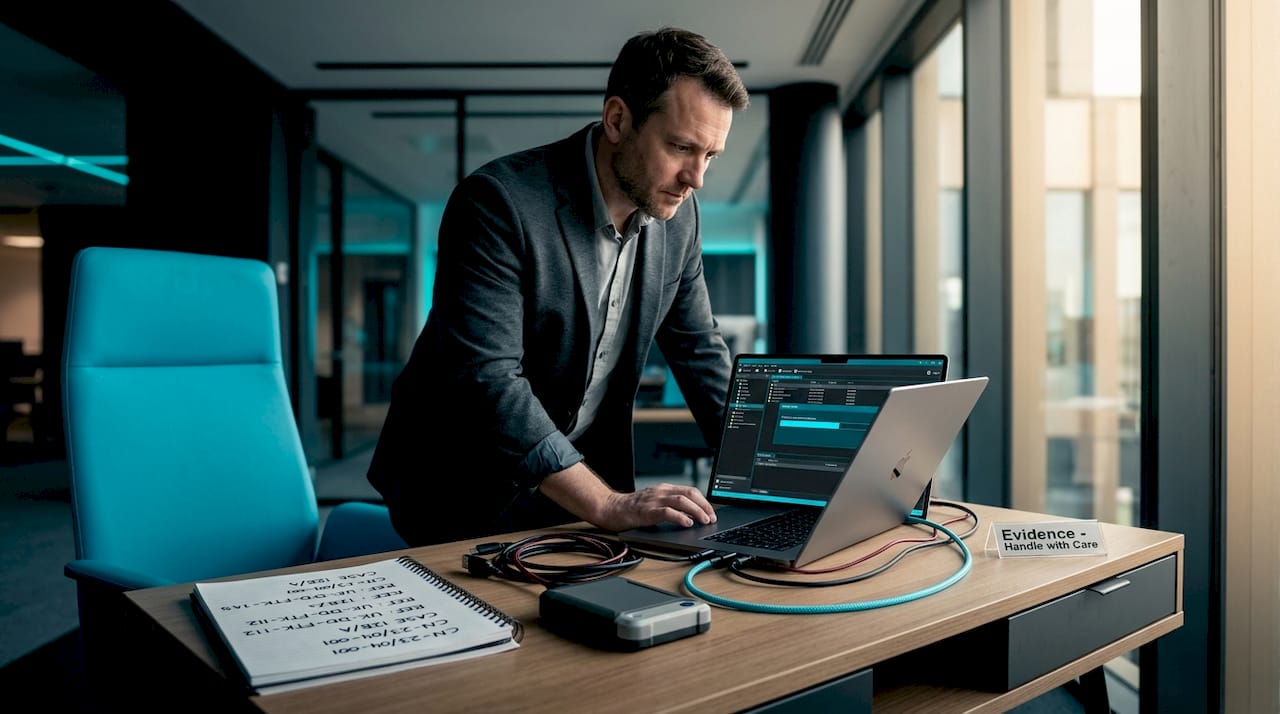
- Forensic imaging produces an exact, verifiable copy of digital evidence, preserving its integrity for legal proceedings.
- The process requires strict adherence to procedures, including documentation, hash verification, and chain of custody to ensure admissibility and defend against challenges.
Many legal professionals and corporate clients assume that forensic imaging is simply a technical version of dragging files into a folder. It is not. Forensic imaging is a highly controlled, legally accountable process where a single misstep, an unrecorded transfer, a device mounted with write access, or an unverified hash, can render months of investigative work inadmissible. In UK courts, digital evidence is subject to intense scrutiny, and the methodology behind its capture matters as much as its content. This guide cuts through the confusion and equips you with a clear understanding of how forensic imaging works, why its procedural rigour matters, and how to evaluate whether evidence has been collected correctly.
Table of Contents
- What is forensic imaging and why does it matter?
- The Secure–Analyse–Present (SAP) workflow for digital evidence
- Verifying evidence integrity: cryptographic hashing and audit trail
- Common technical challenges and pitfalls in forensic imaging
- Tool selection, benchmarking, and quality assurance in forensic imaging
- Best practice for examination and presentation of forensic images
- Why defensibility, not just technology, is the true test in UK forensic imaging
- How we support robust, defensible forensic imaging
- Frequently asked questions
Key Takeaways
| Point | Details |
|---|---|
| Forensic imaging preserves evidence | A forensic image ensures all data, including deleted or hidden files, are preserved for legal examination. |
| Integrity depends on processes | Hash verification and a clear chain of custody are essential to prove evidence authenticity in UK courts. |
| Defensible methods are required | Following structured workflows and documentation standards makes evidence robust against legal challenge. |
| Technical errors can undermine cases | Missteps like accidental write access or poor diagnostics can render evidence inadmissible. |
| Tool validation is critical | Choosing and periodically validating forensic tools ensures reliable results and court credibility. |
What is forensic imaging and why does it matter?
Forensic imaging is the process of creating an exact, bit-for-bit duplicate of a storage device, capturing every sector of data including files that have been deleted, hidden, or stored in unallocated space. This is fundamentally different from copying visible files. When an investigator performs a forensic image, they capture a complete and verifiable snapshot of a device at a precise point in time, without altering the original.

The importance of this process cannot be overstated. Why forensic imaging is vital for legal cases is straightforward: it is the only way to ensure that what a court examines is exactly what was on the device when it was seized. Any departure from this standard introduces doubt, and doubt is something the opposing counsel will exploit without hesitation.
The UK’s approach to digital evidence handling is anchored in established principles designed to ensure accountability. ACPO guidelines principles require that no action taken during a forensic investigation should change data that may later be relied upon in court, that an auditable trail of all processes exists, and that a suitably trained and responsible person supervises every step. These principles shape how reputable forensic practitioners operate.
Key reasons forensic imaging is foundational to every digital investigation:
- Preserves original data by creating a working copy, so the source device need never be re-examined.
- Captures hidden and deleted content that standard file copies would miss entirely.
- Enables repeated, independent analysis without any risk of contaminating the evidence source.
- Supports chain of custody by being a documented, timestamped snapshot tied to a specific exhibit.
- Withstands legal challenge because the image can be independently verified through integrity checks.
“The golden rule in digital forensics is this: do not alter what you are trying to prove. Every subsequent action must be justifiable, documented, and reproducible.”
The Secure–Analyse–Present (SAP) workflow for digital evidence
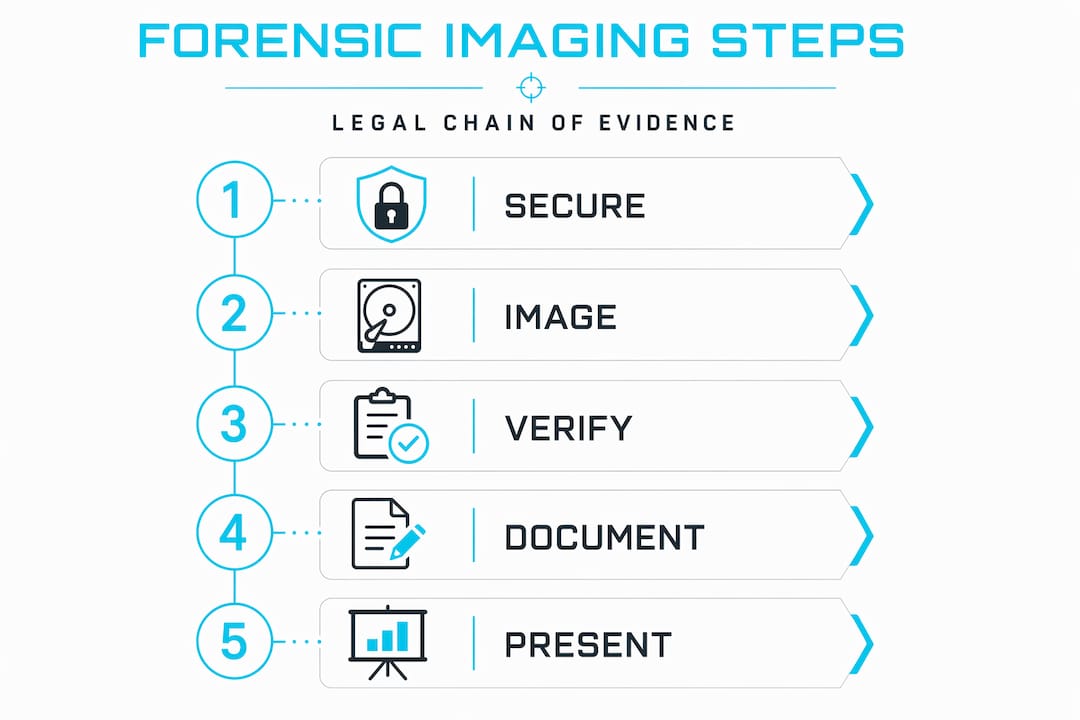
Every responsible forensic investigation follows a structured approach. The Secure–Analyse–Present framework, known as SAP, provides a clear sequence that maintains the integrity and admissibility of digital evidence from first contact through to court presentation. Without this structure, even technically excellent imaging can be legally indefensible.
The three phases work as follows:
- Secure and preserve. This is the first and most critical phase. Devices must be seized, bagged, and protected from any change, including network connectivity, power fluctuations, or accidental interaction. Write blockers are applied before any imaging begins. This phase sets the foundation for everything that follows.
- Analyse. Working exclusively from the forensic image, examiners conduct their investigation. This phase involves reviewing file structures, recovering deleted content, identifying metadata, and building the evidential narrative. At no point should the original device or image be modified.
- Present. Findings are compiled into a structured expert report, supported by the documented methodology, hash verification records, and audit trail. The report must be written to withstand legal scrutiny, peer review, and cross-examination.
| SAP phase | Core activity | Key risk | Control |
|---|---|---|---|
| Secure and preserve | Seize devices, apply write blockers, create forensic image | Accidental modification of original | Write blocker, documented handling log |
| Analyse | Examine image copy, recover data, document findings | Working on original instead of image | Strict separation of image from source |
| Present | Draft expert report, attach hash values and audit trail | Incomplete documentation | Structured report template with mandatory fields |
Pro Tip: Before a device is even switched on in an investigative context, ensure your security steps for evidential data are already in place. Preparation prevents contamination.
Maintaining an uninterrupted chain of custody is not a formality. It is the thread that connects the evidence to the courtroom. How you preserve chain of custody matters at every handoff, every storage transfer, and every point of access throughout the SAP process.
Verifying evidence integrity: cryptographic hashing and audit trail
Understanding how integrity is proven is not just for forensic examiners. Legal professionals commissioning digital evidence must be able to challenge or defend the methodology. Cryptographic hashing is the mechanism by which the integrity of a forensic image is mathematically confirmed.
A hash value is essentially a digital fingerprint. Pass a forensic image through a hashing algorithm such as SHA-256 or MD5, and you receive a unique string of characters. If even a single bit of the image changes, the hash value changes. This means that integrity validation through hashing can prove, with mathematical certainty, that an image is identical to the source device at the time of acquisition.
Safeguarding evidence integrity requires that hashes are computed both before and after acquisition. Any discrepancy signals that the image has been modified and could invalidate it as evidence. Courts increasingly expect to see this verification recorded within the case documentation.
| Approach | Integrity verification | Audit trail | Court defensibility |
|---|---|---|---|
| Secure method | Hash computed before and after acquisition | Full log of access, transfers, and analysis | High |
| Insecure method | No hash, or hash computed only at end | Partial or no documentation | Low or none |
“Imaging methodology alone is not enough. Courts expect defensibility through documented procedures, integrity verification via hashing, and a workflow aligned to recognised guidance.”
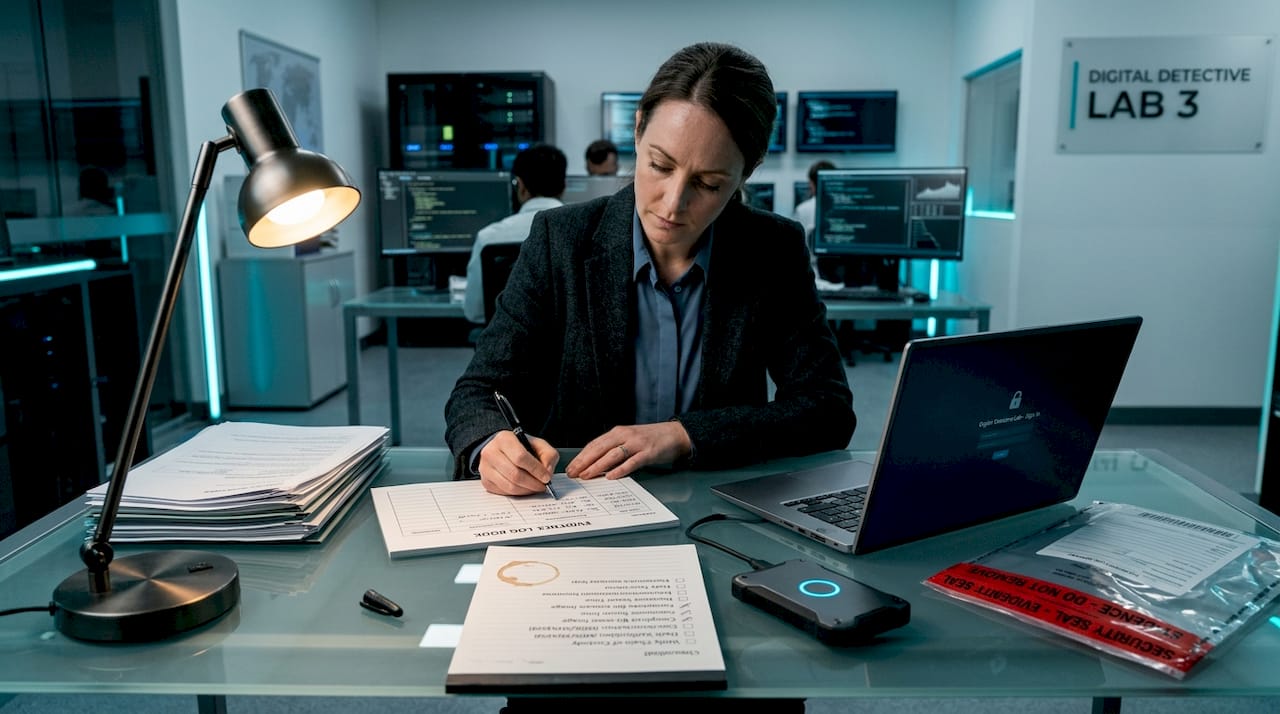
An audit trail logs who accessed the evidence, when they accessed it, what they did, and where the data was transferred. This is not optional documentation. It is what a judge or opposing counsel will scrutinise if the evidence is challenged. Understanding the importance of chain of custody is therefore inseparable from understanding cryptographic hashing.
Pro Tip: Log every interaction with digital evidence in real time, not retrospectively. Retrospective documentation invites credibility challenges. Contemporaneous records carry significantly more weight under ACPO principles.
Common technical challenges and pitfalls in forensic imaging
Even experienced practitioners encounter technical obstacles. The difference between competent and excellent forensic work lies in how those obstacles are anticipated, managed, and documented. There are several recurring pitfalls that can undermine even well-intentioned investigations.
Disk image mount failures are among the most disruptive. These arise from corrupted partition metadata, unusual sector offsets, or tool configurations that inadvertently risk writing to the image during mounting. If a tool mounts an image with write access even briefly, the integrity hash will change, potentially destroying the evidential value of the image.
The most frequent technical mistakes include:
- Mounting images with write access rather than in strict read-only mode, which can silently alter timestamps and metadata.
- Skipping pre-acquisition diagnostics, which may leave undetected corruption or missing sectors in the image.
- Assuming tool defaults are safe, when many imaging tools require explicit configuration to enforce write protection.
- Using unvalidated or untested software, which introduces uncertainty about whether all data sectors were correctly captured.
- Failing to document errors or anomalies during acquisition, even when they appear minor, as these gaps become significant under cross-examination.
The hidden danger here is that many of these errors leave no immediately obvious trace. The image may appear complete and the software may report success, yet sectors may be missing or metadata may have been silently altered. Relying on a reliable forensic imaging process means building in verification checkpoints, not simply trusting that everything worked as expected.
Pro Tip: Always verify your imaging environment in read-only mode before any acquisition begins. Use a forensic write blocker that has been independently tested, not simply assumed to work. Test it with a known dataset first.
Tool selection, benchmarking, and quality assurance in forensic imaging
Choosing a forensic imaging tool is not a matter of selecting the most popular option or the one with the best marketing. Empirical validation is required. Published research on disk imaging tools demonstrates that tool performance, including imaging speed, hashing accuracy, and resource usage, varies significantly and can be studied and measured rather than assumed.
The implications for practitioners and the organisations commissioning forensic work are significant. A tool that performs well on standard hard drives may behave differently on SSDs, encrypted volumes, or drives with damaged sectors. A single tool cannot be assumed to be universally reliable across every data type. This is why periodic validation against representative datasets is essential, particularly when tools are updated or when a new device type enters the evidence pipeline.
| Tool characteristic | Why it matters | How to validate |
|---|---|---|
| Imaging speed | Slow imaging in time-critical investigations can affect evidence availability | Benchmark against known dataset sizes |
| Hashing reliability | Inconsistent hashing defeats integrity verification | Cross-verify with a second independent tool |
| Error handling | Poor error handling leads to silent data omissions | Test on deliberately damaged media |
| Resource usage | High CPU or RAM demands can affect environment stability | Monitor system resources during acquisition |
Metrics-based tool evaluation studies reinforce that agencies and forensic providers should periodically benchmark their toolsets rather than operating on historical assumptions. The forensic software landscape evolves rapidly, and a version update can meaningfully change tool behaviour.
Stat to note: Research evaluating forensic imaging tools across statistical and performance dimensions found that even minor differences in hashing implementation between tools can produce results that diverge under edge-case conditions, an uncomfortable but important finding for those relying on a single tool without independent verification.
Best practice for examination and presentation of forensic images
Completing the technical acquisition is only the beginning. The SWGDE guidance on computer forensics examination is clear: controlled examination environments, rigorous chain of custody documentation across the evidence lifecycle, and properly structured reporting are all required to preserve the admissibility of forensic images.
Examiners must work in isolated, controlled environments where the risk of cross-contamination from network access, shared drives, or unauthorised access is eliminated. Every action taken on the image must be logged, from the opening of a file system to the export of specific artefacts.
The post-acquisition steps every practitioner should follow:
- Confirm the working copy hash matches the acquisition hash before beginning any analysis.
- Document the examination environment, including software versions, hardware configurations, and access controls in place.
- Log every analytical action taken on the working copy, including tools used, search terms applied, and findings identified.
- Preserve and sign all intermediate outputs, such as extracted files or keyword hit reports, maintaining their traceability to the original image.
- Compile the expert report with a clear methodology section, supported by the complete audit trail and hash verification records.
- Prepare for independent review, by ensuring all documentation is sufficiently detailed for a second examiner to reproduce and verify the findings.
Refer to our digital forensics chain of custody guide for a detailed breakdown of how these post-acquisition steps translate into court-ready documentation. Additionally, some legal teams may benefit from digital examination support to integrate forensic outputs into their broader case preparation.
Why defensibility, not just technology, is the true test in UK forensic imaging
There is a temptation in digital forensics to equate technical sophistication with quality. Advanced tools, high-speed acquisition hardware, and impressive software interfaces can inspire confidence. However, the cases we have seen challenged in court rarely fail because the imaging technology was inadequate. They fail because the documentation was incomplete, the steps were not reproducible, or the examiner could not clearly articulate their methodology under cross-examination.
This is an uncomfortable truth for practitioners who take pride in their technical expertise. The methodology that surrounds the technology is what determines whether evidence survives legal challenge. A forensic image created with older but well-documented tools and a rigorous audit trail will almost always outperform an image created with cutting-edge software and no supporting records.
The most defensible forensic work starts before any device is touched. Preparing your documentation and audit trail template in advance is not administrative overhead; it is the foundation of professional credibility. Understanding why chain of custody matters is not a theoretical exercise. It is a practical discipline that shapes every decision from seizure to presentation.
Professional pride in digital forensics should come from transparency and repeatability, not just from technical proficiency. The question every forensic practitioner should ask is not “did I use the right tool?” but “could another qualified examiner follow my steps and reach the same conclusion?” If the answer is yes, the evidence will stand. If the answer is no, the technology you used is irrelevant.
How we support robust, defensible forensic imaging
At Computer Forensics Lab, our digital forensics services are built around the principles covered in this guide. Every imaging engagement follows ACPO and SWGDE best practice, with empirical tool validation, independently verified hash records, and a fully documented chain of custody from initial seizure through to court presentation. We do not treat documentation as an afterthought. It is central to everything we do.
Whether you are a solicitor building a litigation case, a law enforcement team requiring expert support, or a corporate client investigating an internal data breach, our team is prepared to deliver digital footprints for investigations that are technically sound and legally defensible. Every report we produce is written to withstand cross-examination, with our examiners available to provide expert witness testimony when required. Contact us to discuss your requirements, and let our forensic investigations support team guide you through the next steps.
Frequently asked questions
What is the difference between forensic imaging and regular file copying?
Forensic imaging creates a bit-for-bit copy of all data including deleted and hidden files, while file copying only duplicates visible, active files and will miss crucial evidence sitting in unallocated space.
How is the chain of custody maintained with digital evidence?
By documenting every evidence transfer, access, and handling step in a contemporaneous secure log, following SWGDE examination guidance that requires a maintained chain of custody across the entire evidence lifecycle.
Why is cryptographic hashing important in forensic imaging?
Hashing mathematically confirms evidence integrity by producing a unique value before and after acquisition, so any modification, however small, becomes immediately detectable.
What are the common mistakes when handling forensic images?
The most damaging mistakes include mount failures with write access and absent audit trails, both of which can render otherwise valid digital evidence inadmissible in court.
How can you be sure your forensic imaging tool is reliable?
Reliability must be demonstrated through benchmarking and performance testing against representative datasets, not assumed from the tool’s reputation or historical usage alone.