

Every digital forensics specialist and legal professional working in London knows that digital evidence can make or break a case. When an investigation hinges on emails, system logs, or cloud-stored data, the volatility and complexity of these sources demand extraordinary care. The challenge is not just in collecting data, but in preserving the integrity and authenticity of every digital trace so evidence stands up to scrutiny in court. This guide gives you a clear foundation for defining digital evidence, explaining its types, and laying out robust preservation strategies tailored to the unique demands of criminal and civil investigations.
Table of Contents
- Defining Digital Evidence And Its Role
- Types Of Digital Evidence In Investigations
- Chain Of Custody And Legal Admissibility
- Preservation Tools And Best Practices
- Common Errors And Evidential Pitfalls
Key Takeaways
| Point | Details |
|---|---|
| Understanding Digital Evidence | Digital evidence refers to any information stored in digital form that is relevant to legal proceedings and must be preserved meticulously. |
| Importance of Chain of Custody | Maintaining a clear chain of custody is critical to ensure the admissibility of digital evidence in court. |
| Utilisation of Preservation Tools | Employ validated forensic tools for the preservation and examination of digital evidence to prevent contamination and alterations. |
| Avoiding Common Errors | Proper documentation throughout the investigation process is key to safeguard against common pitfalls that can jeopardise a case. |
Defining Digital Evidence and Its Role
Digital evidence has become the backbone of modern legal investigations. Unlike physical evidence you can hold in your hands, digital evidence exists as data stored on computers, mobile devices, servers, cloud systems, and network infrastructure. It encompasses everything from emails and documents to metadata, deleted files, system logs, and communication records. For legal professionals and digital forensics specialists in London, understanding what constitutes digital evidence and why it matters is critical before you can effectively preserve it.
At its core, digital evidence refers to any information stored or transmitted in digital form that has probative value in a legal proceeding. This can include emails that show intent, timestamps that establish a timeline, deleted files that suggest concealment, metadata revealing who accessed a file and when, financial transaction records, and digital communications across platforms like WhatsApp, Facebook, or Telegram. The challenge lies in the fact that digital records require careful handling to maintain their authenticity and evidentiary value. A single misstep during collection or analysis can compromise the entire investigation, rendering evidence inadmissible in court. This is where preservation protocols become absolutely critical. The moment you suspect digital evidence exists, you must treat it as a potential exhibit in legal proceedings.
What makes digital evidence particularly complex is its ephemeral nature. Unlike a physical object that remains relatively stable, digital data can be altered, overwritten, or deleted in seconds. Volatile data like RAM contents, network traffic, and running processes disappear when a device is powered down. This creates a race against time. When you’re conducting investigations involving suspected fraud, data theft, intellectual property breaches, or cybercrime, the investigative strategy must account for the specific types of digital evidence you’re seeking and the tools appropriate for recovery. A structured digital evidence strategy guides which evidence to prioritise, how to collect it without contamination, and what preservation methods will maintain chain of custody. For instance, if you’re investigating employee misconduct involving email communications, you need different collection protocols than if you’re recovering deleted files from a hard drive in a criminal fraud case.
The legal significance of digital evidence cannot be overstated. Courts require that digital evidence meet strict standards of authenticity, reliability, and admissibility. The evidence must be proven to be what it claims to be, and the chain of custody must be unbroken from the moment of collection through analysis and presentation. Any gaps or inconsistencies in how evidence was handled can provide grounds for defence challenges that undermine your entire case. This is why the role of digital evidence impacts investigations so profoundly. One poorly preserved email thread, one unverified data recovery procedure, or one device examined without proper documentation can be the difference between securing a conviction and having evidence excluded from proceedings. The digital evidence you collect today must survive legal scrutiny months or years from now.
To clarify how digital evidence differs from traditional evidence, see the comparison below:
| Characteristic | Physical Evidence | Digital Evidence |
|---|---|---|
| Tangibility | Can be physically touched | Exists as data, intangible |
| Stability | Remains largely unchanged | Easily altered or deleted |
| Preservation | Involves physical storage | Requires specialised tools and protocols |
| Risk Factors | Environmental damage | Unauthorised changes, volatility |
Pro tip: Begin every investigation by documenting exactly what digital evidence exists before touching any devices or systems, then develop a preservation strategy tailored to those specific evidence types rather than using generic approaches for all cases.
Types of Digital Evidence in Investigations
Digital evidence comes in many forms, and each type presents unique challenges during collection, preservation, and analysis. Understanding what you’re dealing with before you start an investigation is fundamental to building a case that will survive courtroom scrutiny. The types of digital evidence you encounter will shape your entire preservation strategy, the tools you use, and the timeline you work within. For digital forensics specialists and legal professionals in London, recognising these different categories allows you to prioritise effectively and deploy appropriate methodologies from the outset.
Electronic communications represent one of the most frequently encountered categories of digital evidence. This includes emails, text messages, instant messaging conversations across platforms like WhatsApp, Telegram, or Signal, as well as social media direct messages and platform communications. These communications often contain admissions of guilt, evidence of conspiracy, or proof of intent that can be decisive in both criminal and civil cases. Then there are files and documents stored on devices: word documents, spreadsheets, presentations, PDFs, and project files that may contain contractual terms, financial records, or instructions for misconduct. Different types of digital evidence require different handling approaches because their vulnerability to alteration and deletion varies significantly. A deleted email in a mailbox database requires very different recovery procedures than a document stored in cloud storage with version history intact.
Metadata forms another critical category that many investigations overlook until too late. Metadata includes file creation dates, modification timestamps, access logs, author information, GPS coordinates embedded in images, and device identifiers. This information can establish timelines with precision, prove who accessed what and when, or reveal attempts to conceal activity through file manipulation. System logs and network data represent another important class of digital evidence. These include server logs showing login attempts and file access, firewall records indicating network traffic patterns, authentication logs revealing whether someone actually had credentials to access a system, and network packet captures showing the flow of data across networks. Diverse forms of digital evidence like these often contain the most objective, unalterable records of what actually happened on a system, making them invaluable when witnesses provide conflicting accounts.
Images, video, and multimedia content present their own challenges. A photograph taken with a smartphone contains embedded metadata revealing exactly when and where it was taken. A video file from security footage or a mobile device may contain facial recognition data or location information. Database records from business applications store structured data about transactions, user accounts, and activity histories. Cloud-based data introduces additional complexity because files exist in remote servers with multiple backup copies and version controls. Mobile device evidence including app data, location history, cached information, and application logs from smartphones and tablets often contains intimate details of a user’s activities and communications. The key point here is that no two investigations will encounter exactly the same types of digital evidence. An intellectual property theft case might focus heavily on document metadata and email communications. A fraud investigation might centre on database records and financial transaction logs. A cybercrime case might require deep analysis of system logs and network traffic. Your preservation approach must match the evidence types you actually have.
Pro tip: Create a detailed inventory of all digital evidence types before you touch any devices, then assign preservation priorities based on volatility and legal significance rather than attempting to preserve everything equally.
Here is a summary of common digital evidence types and their investigation significance:
| Evidence Type | Typical Source | Key Investigative Value |
|---|---|---|
| Emails & Messages | Devices, cloud accounts | Reveal intent and communication links |
| Metadata | Files, images, documents | Prove access, timeline, user identity |
| System Logs | Servers, networks | Track activity and detect tampering |
| Multimedia | Phones, CCTV, laptops | Link individuals to actions or locations |
Chain of Custody and Legal Admissibility
Chain of custody is the documented record of every person who has handled digital evidence, when they handled it, what they did with it, and the condition in which they left it. Think of it as a complete audit trail that proves the evidence has not been tampered with, altered, or contaminated at any point from collection through courtroom presentation. For digital forensics specialists and legal professionals in London, this is not an optional administrative task. It is the foundation upon which the entire admissibility of your evidence rests. Without a solid chain of custody, even the most damning digital evidence becomes worthless in court because the defence can successfully argue that the evidence may have been altered or compromised.
The integrity of your investigation depends entirely on maintaining an unbroken chain of custody from the moment you suspect digital evidence exists. The chain of custody process ensures digital evidence integrity and trustworthiness throughout every step of the forensic examination. This means documenting the exact date and time you seized a device, recording who was present during the seizure, noting the device’s condition and serial number, documenting any unusual characteristics, and maintaining detailed records as the device moves from one investigator to another. Each time someone takes possession of evidence, there must be a written handover noting the time, date, person relinquishing it, person receiving it, and the purpose of the transfer. The moment you cannot account for evidence for even 30 minutes, you have broken the chain. A defence solicitor will exploit that gap mercilessly, arguing that during that unaccounted period, someone could have altered the evidence.
Courts apply strict standards to digital evidence admissibility, and chain of custody failures are one of the leading reasons digital evidence gets excluded from proceedings. Data authenticity and integrity challenges directly affect whether courts will accept digital evidence as credible. The defence will question whether the evidence you present is actually what was found on the original device, or whether it has been modified during examination. They will ask whether the forensic tools you used introduced any changes to the data. They will challenge whether proper procedures were followed to prevent contamination. Each of these questions traces back to chain of custody. If you cannot produce a complete, contemporaneous record showing exactly what happened to the evidence at every moment, the court may determine that you have failed to meet the burden of proof for admissibility.
Practical chain of custody procedures require more than just good intentions. You need standardised forms documenting every transfer, sealed evidence containers with tamper indicators, detailed photographs of devices before and after examination, write blockers preventing any data modification, forensic imaging with hash verification ensuring the copy is identical to the original, and secure storage with access logs. When examining digital evidence, you must use validated forensic tools and document their version numbers, parameters used, and results obtained. You must retain the original evidence in secure storage and work only from forensic copies. Any deviation from standard procedures needs explicit documentation explaining why the deviation was necessary and what steps were taken to maintain integrity. Digital evidence also requires consideration of chain of custody issues specific to cloud data and remote systems, where you may not physically possess the device but must still maintain clear documentation of access and analysis procedures.
Pro tip: Create a dedicated chain of custody log for each investigation from day one, recording every single transfer with exact timestamps and signatures, then verify the log weekly to catch any gaps before they become courtroom liabilities.
Preservation Tools and Best Practices
Preservation tools form the technical backbone of any digital evidence protection strategy. These are not casual applications you download from the internet. They are validated forensic platforms that have been tested, documented, and proven to preserve digital evidence without introducing alterations or contamination. The tools you select will determine whether your evidence survives legal scrutiny or gets excluded from proceedings because the defence successfully challenges their reliability. For digital forensics specialists in London, investing in the right tools and understanding their capabilities is non-negotiable.
Write blockers stand at the front line of preservation. These are hardware or software devices that sit between your forensic workstation and the storage device you are examining. A write blocker intercepts all write commands before they reach the storage device, preventing any data modification. When you connect a suspect smartphone or hard drive to your examination computer, the write blocker ensures the original device remains completely unaltered. This is critical because even the act of reading data from a device can trigger automatic processes that modify the storage. Mobile phones, for example, may update access timestamps or refresh database files simply from being connected to a computer. Without a write blocker, you cannot prove to a court that the evidence you extracted is identical to what existed on the original device. Validated tools and adherence to standards safeguard digital evidence throughout the entire preservation lifecycle. Hash verification tools create mathematical fingerprints of data that prove whether two copies are identical. When you create a forensic image of a hard drive, you generate a hash value for the original device and an identical hash value for your forensic copy. If these hashes match, you have cryptographic proof that the copy is bit-for-bit identical to the original. Any alteration, no matter how minor, produces a different hash value. This mechanism protects you from accusations that you modified the evidence during examination.
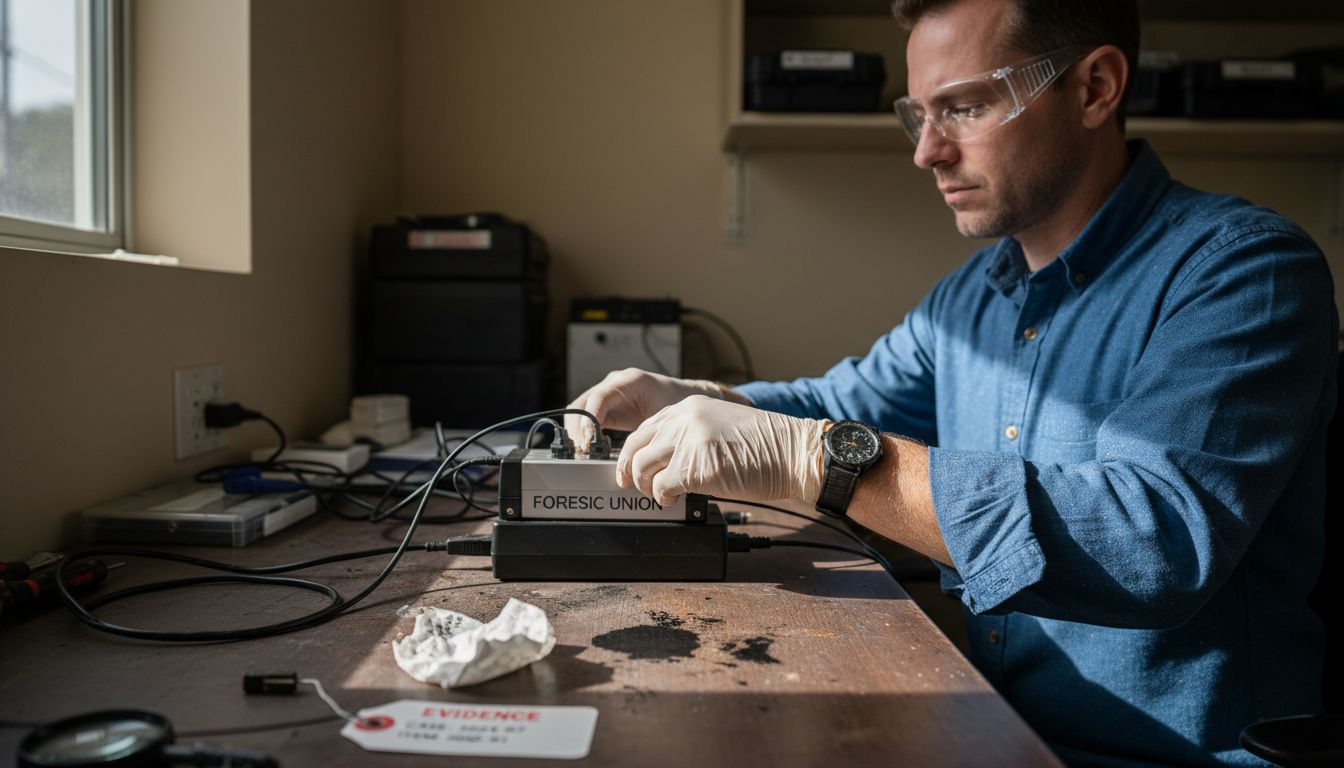
Forensic imaging tools allow you to create exact duplicates of storage devices without altering the originals. These tools bypass the operating system and read data at the lowest level, capturing every bit of information including deleted files, unallocated space, and system areas that normal file recovery cannot reach. Modern imaging tools preserve not just the data but also the metadata, timestamps, and structural information that prove chain of custody. They create detailed reports documenting what was captured, when it was captured, and the tools used. However, imaging alone is insufficient. You must also consider preserving the meaning and context of evidence amidst evolving technological systems. A database image is worthless if you cannot interpret the data it contains. An encrypted communication history is only useful if you can eventually understand what the encryption protects. This means documenting not just the raw data but also the software versions, security settings, and application configurations that give meaning to the evidence.
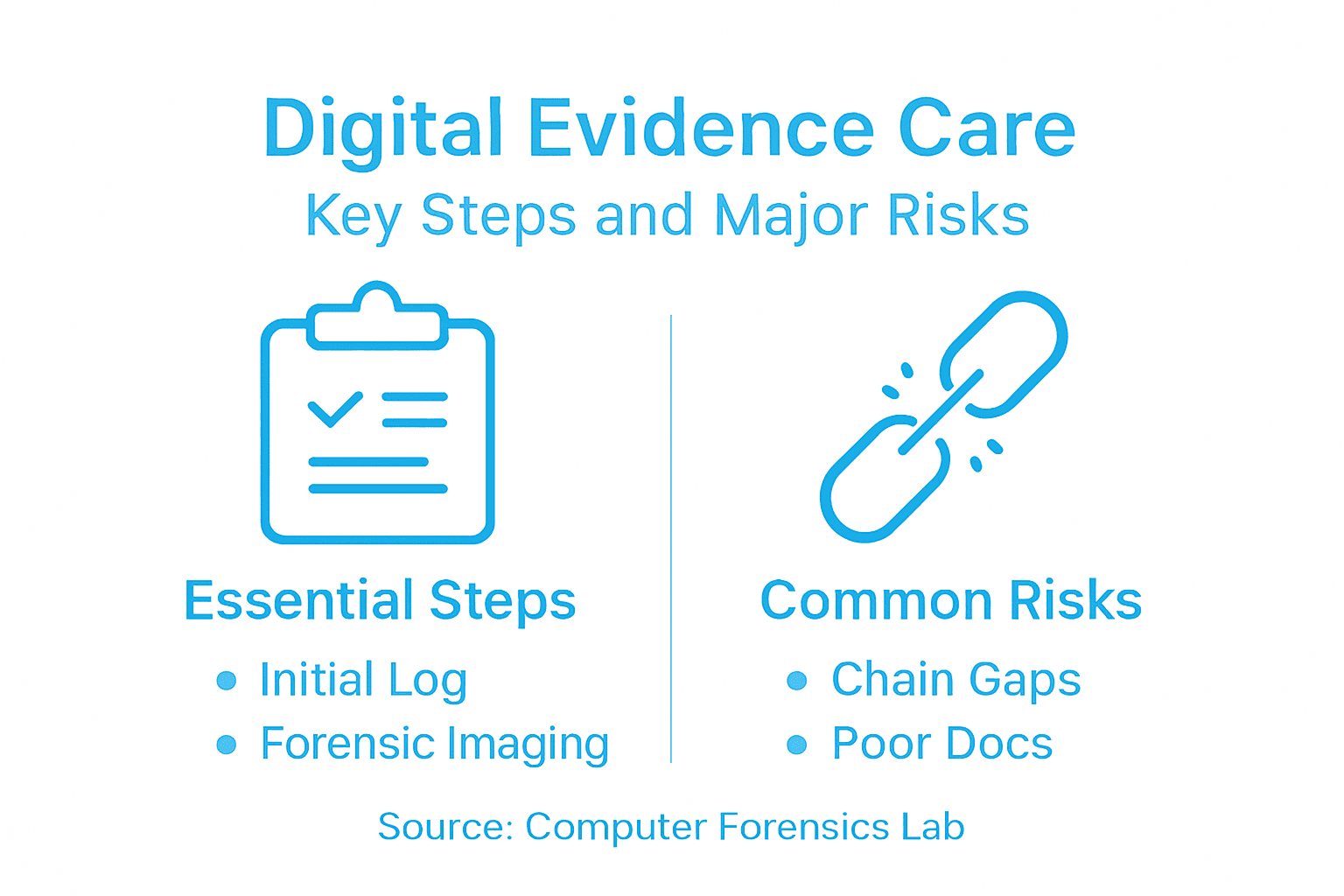
Best practices extend beyond tools to encompassing proper procedures and documentation. Store original evidence in physically secure locations with restricted access and environmental controls protecting against heat, moisture, and electromagnetic interference. Use clean, forensically-sanitised examination computers that have been wiped of all previous data and configured specifically for evidence examination. Implement standardised protocols for every investigation so that procedures remain consistent regardless of which team member conducts the work. Document everything contemporaneously as you work, not from memory days later. Create backup copies of critical evidence stored in geographically separate locations in case original media fails. Test your preservation procedures regularly with known datasets to ensure tools function as expected. Train your staff continuously as forensic software updates introduce new capabilities and occasionally change how evidence is handled. When selecting tools, verify that they are accepted by courts in your jurisdiction and that the developers provide training and certification programmes. Never use beta versions or untested software on actual investigations. The consequences of tool failure in a criminal case can mean guilty parties escape justice or innocent people face wrongful conviction.

Pro tip: Establish a validation routine where you regularly test your preservation tools against known datasets before using them on actual cases, documenting test results to prove tool reliability if the defence later challenges your methodology.
Common Errors and Evidential Pitfalls
Digital evidence investigations fail not because of malice or incompetence, but because of small, seemingly innocent errors that compound throughout the investigation. A missing timestamp here, an undocumented device seizure there, a tool used without proper validation somewhere else. Each mistake alone might seem minor, but together they create vulnerabilities that defence solicitors exploit ruthlessly. Prosecutors and investigators frequently report common handling errors undermining digital evidence, particularly around improper collection methods and chain of custody failures. For digital forensics specialists and legal professionals in London, understanding these pitfalls is the difference between securing convictions and watching cases collapse in court.
One of the most damaging errors is failing to properly document the initial state of a device before examination begins. You photograph a laptop but do not note its operating system, whether it is powered on or off, or what programs are running. You seize a mobile phone but do not record the battery level or whether the device is locked. Later, when the defence challenges whether you altered anything during examination, you have no baseline evidence to prove otherwise. They argue the device was in a different state originally. They suggest you accessed areas you should not have accessed. Without contemporaneous documentation, you cannot defend yourself. Another critical error is assuming that the operating system’s view of data is the full truth. Windows shows you deleted files in the Recycle Bin, but forensic tools reveal hundreds of additional deleted files in unallocated space that the operating system deliberately hides. If you rely only on what the operating system displays, you miss crucial evidence. Conversely, you might misinterpret technical artefacts as meaningful evidence when they are simply system activity or application cache. The drive shows a file with a timestamp from yesterday, but forensic analysis reveals the timestamp was automatically generated by system processes, not user action.
Chain of custody failures remain alarmingly common despite decades of cautionary tales. Someone temporarily stores evidence in an unsecured drawer because the evidence room was busy. A device sits in a locker overnight without anyone documenting who had access. A junior team member examines evidence without supervisor oversight and fails to record what they did. A forensic image is created but the original device is not retained, so there is no way to verify the image is accurate. Judicial assessments of digital evidence reliability often reveal that courts struggle to evaluate the collection and processing stages because investigation teams focus excessively on the final state of evidence. They document analysis results meticulously but neglect to record how evidence arrived in their possession or what occurred during handling. Courts end up assessing reliability based on incomplete information, which means good evidence sometimes gets excluded simply because documentation is inadequate. This is particularly problematic in cases where evidence collection happened years ago by officers who have since left the organisation. Without thorough documentation, you cannot reconstruct what happened or answer the court’s questions about procedure.
Another dangerous pitfall is tool misunderstanding. You use forensic software without grasping what it actually does. Mobile phone examination software might analyse only the active filesystem and completely miss deleted data. Email recovery tools might extract messages but lose critical metadata. Encryption software analysis might require specialised tools that your standard forensic platform cannot handle. You confidently present evidence extracted with a tool that was never validated for that specific purpose, assuming it is reliable because it is professionally named software. The defence brings in their own expert who demonstrates the tool is known to produce false results under certain conditions. Your evidence becomes inadmissible. Failing to understand data context is equally problematic. You recover deleted emails and present them as evidence without considering whether the user deliberately deleted them or the email client automatically purged them. You find files in a temp folder and assume the user created them, missing that applications automatically cache temporary files. You examine a computer from three years ago but rely on current software to interpret data, not accounting for how that application has changed since the evidence was created.
Sloppy documentation is the final major category of errors. Hours of analysis work go undocumented because analysts believe their findings speak for themselves. They fail to record which tools were used, which version, what parameters were applied, what the output was, and what conclusions they drew. A year later, when the case goes to trial, they cannot remember the specific steps they followed. Defence questions the reliability of analysis that has no supporting documentation. Court gets frustrated with vague testimony. A seemingly solid case crumbles because nobody documented the work properly as it happened. The analysis may have been absolutely correct, but without documentation proving it, the court cannot be confident in accepting it.
Pro tip: Create a preservation checklist for every investigation that covers device documentation, tool validation, chain of custody procedures, and analysis recording, then have a senior team member sign off that all items are complete before evidence examination even begins.
Secure Your Digital Evidence with Expert Preservation Services
Preserving digital evidence requires meticulous attention to detail and specialised knowledge to maintain its integrity and admissibility. The challenges of managing volatile data, maintaining an unbroken chain of custody, and using validated preservation tools demand experienced professionals who understand every aspect of digital forensics. If you are facing complex investigations involving electronic communications, metadata, system logs, or multimedia files, failing to preserve evidence properly could jeopardise your entire case.
At Computer Forensics Lab, we specialise in comprehensive Digital Evidence Preservation tailored to safeguard your legal outcomes. Our expert team also provides advanced Digital Forensic Investigation services that ensure rigorous examination and analysis without compromising data integrity. Whether you require assistance with handling electronic evidence or need support in maintaining the chain of custody, we deliver trusted solutions designed to withstand legal scrutiny.
Do not leave your critical digital evidence at risk. Partner with Computer Forensics Lab today and gain the confidence that your digital investigations are in safe hands. Visit our website at https://computerforensicslab.co.uk to learn more and take the first step towards protecting your case with proven expertise.
Frequently Asked Questions
What is digital evidence?
Digital evidence refers to information stored or transmitted in digital form that is significant for legal proceedings. This includes emails, documents, metadata, system logs, and communication records.
Why is preserving digital evidence important?
Preserving digital evidence is essential because improper handling can compromise its authenticity and admissibility in court. A single error during collection or analysis can lead to evidence being deemed inadmissible, undermining the entire investigation.
What tools are necessary for preserving digital evidence?
The necessary tools for preserving digital evidence include write blockers to prevent data alteration, forensic imaging tools to create exact duplicates of devices, and hash verification tools to ensure the integrity of data throughout the preservation process.
How can I maintain a proper chain of custody for digital evidence?
To maintain a proper chain of custody, document each transfer of evidence meticulously, including timestamps and signatures of individuals involved. Use sealed evidence containers and ensure that original evidence is stored securely while working only on forensic copies.