

A complex fraud case lands on your desk and the crucial evidence lives scattered across cloud servers in Ireland, encrypted messaging apps, and a half dozen Internet of Things devices. This scenario is rapidly becoming the norm for London law firms facing modern cybercrime. Understanding multidisciplinary digital forensics methods and advanced AI-powered toolkits is now essential for confidently building your litigation strategy. Get prepared for 2025 by gaining clarity on the technologies, standards, and risks that define credible forensic investigations across multiple platforms and jurisdictions.
Table of Contents
- Defining Digital Forensics In 2025 Context
- Types Of Digital Evidence And Investigation Tools
- AI, Automation, And Deepfake Detection Advances
- Cloud, IoT, And Mobile Forensics Challenges
- Emerging Legal Standards And Compliance Issues
- Risks, Pitfalls, And Investigator Responsibilities
Key Takeaways
| Point | Details |
|---|---|
| Evolving Digital Forensics | Digital forensics now requires understanding evidence from various modern tech sources, including cloud platforms and IoT devices. Legal practices must adapt to these changes to secure effective investigations. |
| AI and Automation | AI significantly speeds up forensic analysis and aids pattern recognition, but it introduces risks like algorithmic bias. Transparency about AI methodologies is crucial during investigations. |
| Complex Legal Frameworks | Navigating international compliance issues is essential for ensuring evidence admissibility, as varying laws can intersect during investigations. Forensic providers must understand these complexities to mitigate risks. |
| Investigator Responsibilities | Continuous learning about emerging technologies is vital for forensic investigators to avoid overlooking critical evidence. Effective communication of findings with clear confidence levels builds credibility in legal contexts. |
Defining Digital Forensics in 2025 Context
Digital forensics has transformed dramatically from its early days of examining desktop computers and hard drives. Today it encompasses confronting modern cyber crimes across multiple platforms, cloud environments, and interconnected devices that generate vastly more data than ever before. For London law firms, this shift means your litigation strategies must account for evidence existing in places that traditional forensic methods never touched. The field is no longer simply about data recovery or finding deleted files. It’s about understanding evidence ecosystems that span personal devices, enterprise servers, and distributed cloud infrastructure all at once.
What makes 2025 different is the convergence of three forces reshaping how investigations work. First, AI and machine learning now form the backbone of forensic analysis, helping investigators sift through terabytes of data that would be humanly impossible to review manually. Second, cloud computing has become the default storage method for most individuals and organisations, pushing forensics beyond traditional physical device examination. Third, the legal framework around digital evidence continues evolving, requiring forensic professionals to maintain rigorous chain of custody standards whilst operating in environments that barely existed five years ago. Your expert witness reports must now address not just what evidence shows, but how that evidence was collected, analysed, and preserved across systems that operate in real time with constantly changing data states.
At its core, digital forensics in 2025 remains grounded in fundamental principles. It still demands meticulous documentation, preservation of evidence integrity, and adherence to strict procedural standards that hold up under cross examination. However, the toolkit and methodology have expanded considerably. Investigators now work with multidisciplinary approaches to address increasingly sophisticated cybercrimes including mobile forensics, Internet of Things device examination, deepfake detection, and complex cloud data reconstruction. For your practice, this means partnering with forensic providers who understand both the technical depth required to extract evidence from modern systems and the legal precision required to present findings in court. Understanding key digital forensics terminology becomes increasingly important as your cases involve more sophisticated technology and novel evidence types that may be unfamiliar to opposing counsel or the judiciary.
The practical reality is this: your cybercrime investigations and litigation strategies must now account for data sources that exist nowhere physical. An employee misconduct case might require examining cloud collaboration tools rather than email servers. A data breach investigation could involve tracing attacks through multiple cloud providers’ logs rather than examining a single compromised server. Intellectual property theft cases now frequently involve reconstructing activity across Software as a Service platforms with retention policies that auto delete forensic artifacts. Your forensic partner needs expertise in these specific environments, not just general IT knowledge. The definition of digital forensics has expanded to mean: the application of advanced technology, established investigative methodology, and rigorous legal compliance to locate, preserve, analyse, and present digital evidence across modern computing environments.
Pro tip: When briefing forensic providers on new matters, specifically describe where your subject’s data likely resides (cloud providers, devices, platforms) before assuming traditional endpoint examination will suffice—this prevents costly re-scoping and ensures your investigation follows the evidence rather than outdated assumptions about where evidence must be found.
Types of Digital Evidence and Investigation Tools
Digital evidence in 2025 spans far beyond the email trails and document files that dominated investigations a decade ago. Your cases now involve encrypted messaging platforms, cloud storage systems, social media activity, device logs, network traffic records, blockchain transactions, and Internet of Things data streams. Each evidence type requires different extraction methods and analytical approaches. A WhatsApp conversation stored on an iPhone requires entirely different forensic techniques than recovering deleted files from a Google Drive account or reconstructing browsing history from a cloud-based browser sync service. For London law firms handling employee misconduct cases, intellectual property theft, or cybercrime investigations, understanding which evidence types exist in which locations is fundamental to building a watertight case. When you brief your forensic team, you need to know whether relevant evidence likely exists on personal devices, corporate servers, cloud platforms, or across multiple environments simultaneously. This knowledge shapes investigation scope, timelines, and costs.
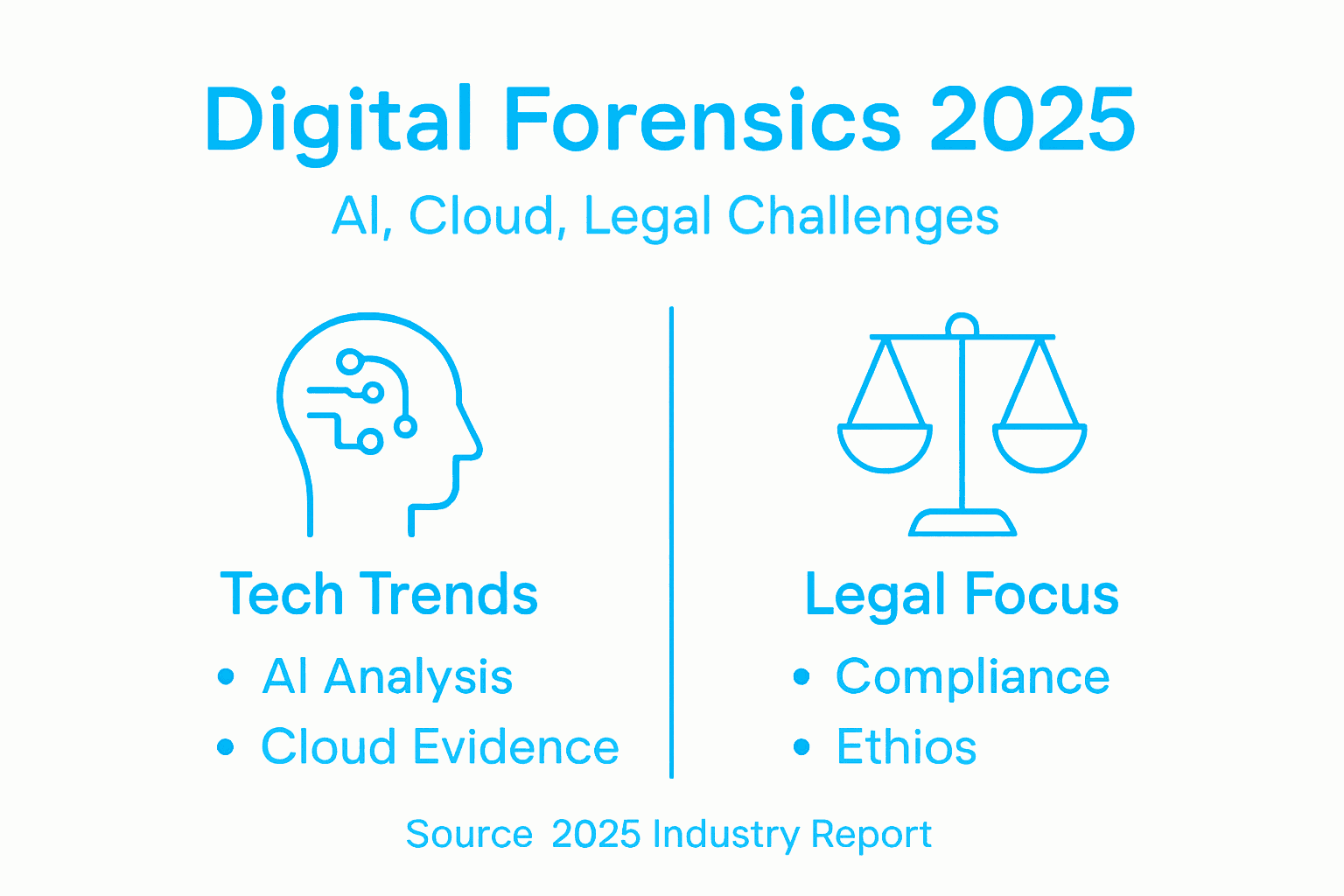

The evidence types you’ll encounter break down into several categories. Device-based evidence includes data from computers, smartphones, tablets, and wearable devices—traditional forensic territory but now complicated by encryption and remote access. Cloud evidence encompasses files stored in services like OneDrive, Dropbox, Google Drive, and Microsoft 365, where data exists in distributed data centres rather than on physical devices you can seize and examine. Network evidence includes logs from firewalls, routers, and Internet Service Providers showing who accessed what and when, crucial for tracing attack vectors or establishing online activity timelines. Application evidence comes from Software as a Service platforms like Slack, Jira, Salesforce, or collaborative tools where business communications and activities occur. Communication evidence includes emails, instant messages, video call metadata, and SMS records. Metadata deserves special attention—the hidden information attached to files showing creation dates, modification times, device identifiers, and access patterns often proves more valuable than file content itself. Understanding rapid forensic processing across diverse evidence types has become essential as investigation toolkits now prioritise AI-powered analysis to handle explosive data volumes that would overwhelm manual review.
Investigation tools have evolved dramatically to address this complexity. Modern forensic toolkits employ AI-powered data analysis to intelligently filter terabytes of raw data down to genuinely relevant evidence, dramatically reducing review time. Blockchain integration protects evidence integrity throughout the chain of custody, creating immutable records of who accessed what evidence and when. Cloud-native solutions allow forensic analysis of cloud data without requiring local downloads, essential when dealing with massive files or restricted data transfer policies. Automation features handle repetitive tasks like hash matching, log parsing, and timeline construction, freeing your forensic experts to focus on complex analysis and interpretation. Encryption handling includes tools for dealing with locked devices and encrypted volumes, a reality in the vast majority of modern investigations. These toolkits support essential forensic analysis techniques that your legal team must understand at a conceptual level when evaluating expert reports or challenging findings in court. Your forensic provider should be able to explain exactly which tools they used, why they selected those tools, and what limitations those tools carry—this transparency matters during cross examination when opposing counsel questions methodology.
The practical challenge is this: no single tool handles all evidence types well. Your investigation typically requires multiple complementary tools working in concert. A data breach case might involve forensic imaging software for endpoint examination, cloud API tools for accessing cloud provider data, network analysis tools for interpreting firewall logs, and AI-powered analytics for identifying suspicious patterns across millions of records. Your forensic partner needs depth across multiple platforms and tools, not just one specialist system. When scoping investigations, ask specifically what tools will be used for each evidence type, what their known limitations are, and how findings from different tools will be correlated and verified. The quality of your case hinges not just on what evidence is found, but on how thoroughly and defensibly it’s been extracted and analysed using appropriate tools for each evidence source.
Here is a summary comparing core digital evidence types and their unique investigation challenges in 2025:
| Evidence Type | Typical Location | Key Extraction Challenge | Legal Consideration |
|---|---|---|---|
| Device-based | Physical devices (phones, PCs) | Local encryption, volatility | Physical chain of custody required |
| Cloud-based | Remote data centres | Provider access, legal compliance | Jurisdictional data transfer laws |
| IoT-based | Connected smart devices | Proprietary formats, poor logging | Manufacturer API and privacy concerns |
| Communication-based | Email, messaging platforms | Encryption, dispersed records | Consent and retention policies |
| Network-based | Firewall and ISP logs | Data fragmentation, volume | ISP data retention regulations |
| Application-based | SaaS collaboration tools | API limitations, session history | Terms of service, third-party logs |
| Metadata | Attached to digital artefacts | Hidden or overwritten data | Proof of origin and modification |
Pro tip: During initial case consultations, provide your forensic provider with specific platforms and accounts you know are relevant (specific cloud services used, messaging apps, email providers) rather than requesting a generic “full forensic examination”—this ensures they deploy the right specialist tools from the start instead of discovering halfway through that crucial evidence exists in a platform they weren’t equipped to handle.
AI, Automation, and Deepfake Detection Advances
Artificial intelligence has fundamentally changed what’s possible in forensic investigations, transforming the relationship between investigators and vast datasets. In 2025, AI systems analyse millions of records in hours rather than weeks, identifying patterns that human reviewers would miss whilst simultaneously reducing fatigue-induced errors. For your London law firm, this means investigations that previously required six months of document review now complete in weeks, dramatically improving case economics and allowing faster resolution. AI-powered automation handles the tedious groundwork: flagging suspicious file access patterns, reconstructing deleted communication threads, identifying anomalous network behaviour, and cross referencing timestamps across multiple evidence sources. But here’s the critical distinction: automation handles volume, whilst AI provides intelligence. The system doesn’t just process faster. It recognises connections, predicts where evidence likely exists based on behavioural patterns, and prioritises genuinely suspicious activity from millions of benign actions. When your forensic team presents findings, they’re presenting conclusions supported by automation and AI handling large datasets efficiently, which brings both tremendous power and legitimate questions about reliability that opposing counsel will certainly raise.
The limitations deserve honest discussion. AI tools provide improved accuracy over manual analysis, but they’re not infallible and their decision making processes can be opaque. A machine learning model trained on historical data might misclassify novel attack types it hasn’t encountered. Automated timeline reconstruction might merge events from different sources in ways that seem logical to the algorithm but distort actual sequence. Perhaps most problematically, AI systems can amplify human bias if trained on skewed datasets. These aren’t reasons to reject AI findings, but they’re reasons to demand transparency about methodology, to understand confidence levels rather than accepting binary guilty or innocent conclusions, and to validate AI conclusions through secondary analysis methods when findings are critical to your case. Your forensic provider should readily explain what confidence threshold their AI system assigned to key findings, what training data the model used, and what alternative interpretations the raw data might support. If they can’t articulate these limitations, they’re not using the technology responsibly.
Deepfake detection represents an entirely new forensic challenge that barely existed three years ago. Synthetic media now includes artificially generated video, audio, and images so convincing that distinguishing authentic from fabricated requires specialist analysis. An employee misconduct case might involve disputed video evidence that’s actually AI generated. A cybercrime investigation could hinge on audio recordings that defendants claim are deepfakes. Intellectual property theft cases increasingly involve synthetic evidence planted to discredit witnesses or create false alibis. Deepfake detection focuses on identifying synthetic media through analysing subtle digital artefacts, examining compression patterns, detecting inconsistencies in light reflection, and studying facial micro expressions that AI generators struggle to replicate perfectly. Current detection techniques work reasonably well but they’re evolving rapidly as generative technology improves. By 2026, what today’s tools reliably detect as synthetic might fool those same tools as generation technology advances. This creates an uncomfortable reality: you might build a case on deepfake detection evidence only to have that evidence become questionable as technology evolves. Your expert witness report must address this uncertainty directly rather than implying certainty the technology doesn’t actually provide.
The practical implications for your practice are substantial. First, discuss deepfake detection explicitly during case scoping. If critical evidence includes video or audio, ask whether synthetic media detection is warranted and what confidence levels your provider can achieve. Second, understand that automation speeds up investigations but doesn’t replace human judgment about evidence significance. AI identifies suspicious patterns; your forensic expert interprets whether those patterns mean what they appear to mean. Third, budget for validation steps when AI findings are case critical. Secondary analysis, manual spot checks, and alternative methodologies cost time and money but protect against relying on unreliable outputs. Fourth, anticipate that opposing counsel will challenge AI and automation based on reliability, bias, and interpretability. Your expert needs to defend methodology not just by explaining what the technology does, but by demonstrating understanding of what it cannot do and where human expertise remains essential.
Pro tip: When briefing your forensic provider on cases involving video or audio evidence, specifically request deepfake likelihood assessment rather than assuming they’ll conduct this analysis automatically—many forensic firms still treat synthetic media detection as an optional add-on rather than standard protocol, and you need those findings before building conclusions around contested audio or visual evidence.
Cloud, IoT, and Mobile Forensics Challenges
Cloud forensics presents a fundamentally different problem than traditional endpoint examination, and many London law firms don’t fully appreciate how radically the landscape has shifted. When evidence exists in cloud storage rather than on physical devices, you cannot simply seize equipment and image hard drives. Instead, you’re dealing with data distributed across multiple data centres operated by providers with varying policies, inconsistent logging practices, and different jurisdictional obligations. A single Microsoft 365 account might store data on servers in Ireland, Amsterdam, and Virginia simultaneously. Each location falls under different legal frameworks. Getting evidence from one requires complying with GDPR, another with EU regulations, and a third with American legal processes. Your forensic provider can’t just download everything. They must navigate provider-specific APIs, negotiate data access under strict legal protocols, and ensure that whatever is retrieved maintains proper chain of custody despite never being under your physical control. Data distributed across multiple locations complicates evidence acquisition fundamentally—you’re not recovering data, you’re requesting it from entities with their own legal obligations and commercial interests that may not align with your investigation.
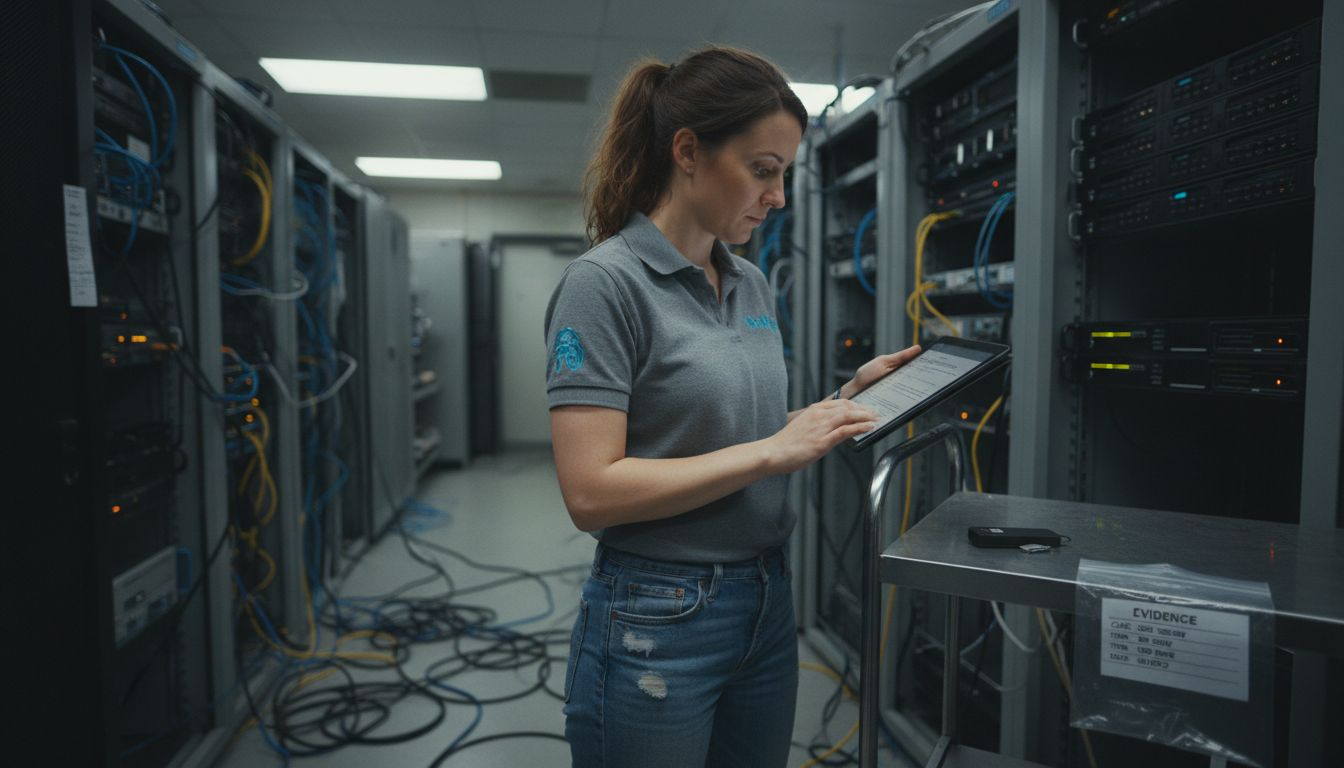
Internet of Things devices create an entirely different challenge. Your client’s smart home system, connected security cameras, wearable devices, workplace IoT sensors, and networked industrial equipment all generate forensic artifacts. The problem is staggering heterogeneity. An Apple Watch stores data completely differently than a Fitbit, which stores data differently than a connected Tesla, which differs from industrial sensors on a manufacturing floor. Each device type uses proprietary data formats, varying encryption standards, and manufacturer specific protocols for accessing stored information. Traditional forensic tools designed for Windows or iOS won’t touch most IoT devices. Many IoT systems lack standardised logging, meaning crucial events might never be recorded in ways forensic analysis can recover. Consider a workplace investigation where someone claims they weren’t at a particular location at a particular time. Evidence might exist in building access logs, networked security system records, IoT-enabled parking sensors, or Bluetooth proximity data from connected devices. Your forensic team needs specialist knowledge across multiple IoT platforms, access to manufacturer APIs or reverse engineering capabilities, and understanding of which devices actually log what information. The explosive growth of connected devices means your investigations increasingly hinge on evidence types that barely existed five years ago, yet many traditional forensic providers still treat IoT as a specialist add-on rather than standard practice.
Mobile forensics brings its own distinct obstacles, compounded by rapid evolution and intentional design complexity. Modern smartphones encrypt data at rest, encrypt communications in transit, and employ sophisticated security architectures specifically designed to resist forensic access. Apple’s iOS and Google’s Android continue adding security features that directly obstruct evidence extraction. Newer iPhone models with Secure Enclave processors store vast amounts of data in secure areas that even Apple cannot access. Android’s encryption has similarly strengthened. Beyond encryption, mobile devices present the challenge of volatile data and rapid operating system changes. Evidence exists in RAM that disappears when devices power off. Important forensic artifacts get overwritten as users continue normal usage. Operating system updates can alter data storage locations, delete logs, and change forensic signatures between one day and the next. A phone forensic image from January might be processed with different methodologies than one from March simply because the OS version changed. Your legal team must understand that mobile evidence often involves complex interpretation of partial data, inference from available artifacts, and acceptance of uncertainty that traditional computer forensics didn’t require. What appears in deleted file recovery might be fragments that require expert interpretation rather than definitive proof.
These three forensic domains share a common requirement: international cooperation and specialised tools are essential to address complexities. You cannot investigate modern cybercrime using methodologies optimised for 2010 desktop computers. Your forensic partner needs demonstrated expertise across cloud platforms, IoT device types relevant to your cases, and mobile operating systems your investigations encounter. During case scoping, ask explicitly what cloud providers you’ll be accessing, which IoT devices might contain relevant data, and how mobile devices will be handled. Ask what tools they’ll use for each platform and whether they have legal agreements with manufacturers enabling access. Ask how they handle cross jurisdictional data requests and what legal support they provide when evidence resides in multiple countries. The quality of your case increasingly depends on forensic expertise in domains that barely existed a decade ago. Traditional computer forensics knowledge is now table stakes. Specialised cloud, IoT, and mobile expertise is what differentiates credible investigations from compromised ones.
Pro tip: During initial client interviews, specifically ask about cloud storage usage (which providers and which types of data), connected devices in relevant locations or worn by key individuals, and mobile device types used—this intelligence allows your forensic provider to scope investigation costs accurately and deploy the right specialist tools from day one rather than discovering halfway through that they lack proper access to critical evidence sources.
Emerging Legal Standards and Compliance Issues
The legal framework around digital forensics is fragmenting precisely when it needs consolidation. Your investigations must comply with GDPR if European data is involved, but also with Privacy Act requirements if Australian information surfaces. You need to respect CCPA obligations whilst handling Californian resident data, yet simultaneously navigate the Data Protection Act 2018 for UK information. Add to this the reality that evidence often exists across multiple jurisdictions simultaneously, and you’re attempting investigations where no single legal standard governs the entire process. Compliance with international legal frameworks is critical to ensure admissible evidence, yet these frameworks frequently contradict each other. German privacy law may prohibit data transfers that UK law requires. American discovery obligations may demand data access that French law forbids. Your forensic provider cannot simply follow one standard. They must navigate conflicting requirements, making practical decisions about which jurisdiction’s rules take precedence when compliance with one means violating another. This isn’t theoretical. It directly impacts whether evidence can be used, whether it remains admissible if obtained under one legal framework but challenged under another, and whether your investigation itself exposes your firm to regulatory liability. The legal landscape has become a minefield where even well intentioned investigators can inadvertently violate laws they didn’t realise applied to their case.
Chain of custody documentation has become exponentially more complex in cloud and distributed environments. Traditional chain of custody meant documenting who physically handled evidence, when they handled it, and what they did with it. Digital evidence in cloud environments never passes through physical hands. Instead, you’re documenting API access requests, authentication logs, data export parameters, and cryptographic verification hashes. Your expert witness report must explain that the evidence was obtained through legitimate cloud provider access, not through unauthorised penetration testing or data theft. You need to document not just what data was recovered, but how the cloud provider’s systems secured that data, what logging the provider maintained, and whether that logging itself is trustworthy. Courts are still grappling with whether cloud provider logs constitute admissible chain of custody documentation or whether they’re simply assertions by a commercial entity with financial interests in the outcome. Maintaining chain of custody for digital evidence requires adherence to legal protocols for evidence collection, yet no single protocol exists globally. Your forensic methodology might be impeccable under UK standards but challengeable under American discovery rules or European evidence law. You need forensic partners who understand not just how to collect evidence, but how to document collection in ways that satisfy multiple legal systems simultaneously.
AI and automation introduce ethical and legal complexities that legislation hasn’t caught up with. If your forensic provider uses machine learning to prioritise suspicious files for manual review, can defence counsel challenge the training data the model was built on? If AI reconstructs deleted communications, what confidence threshold must the AI achieve before findings are admissible? If automated systems flag patterns as suspicious, does that pattern recognition constitute actionable intelligence or unsubstantiated algorithmic bias? Courts are beginning to require transparency about AI methodologies in expert reports, but there’s no standardised framework for what that transparency must include. Your firm increasingly needs experts who can articulate AI limitations credibly under cross examination. You need forensic partners who understand that using advanced technology doesn’t automatically mean using it responsibly. The most sophisticated AI tools in the wrong hands, or without proper validation and transparency, can undermine your case rather than strengthen it. Ethical use of AI in forensic processes requires emerging legislation and harmonisation efforts to standardise procedures globally, yet that harmonisation hasn’t arrived. You’re operating in a legal grey zone where what works in one jurisdiction may be inadmissible in another.
The practical implications are substantial. First, your forensic provider must understand not just the technology but the specific legal jurisdictions relevant to your case. A provider who excels at UK investigations might struggle with cross border EU work or international matters. Second, expect your expert witness reports to undergo much more rigorous challenge than they would have five years ago. Defence counsel now routinely challenge chain of custody, AI methodology, and compliance with privacy regulations. Your expert needs to anticipate these challenges and address them proactively in their report rather than hoping the court won’t notice the gaps. Third, budget additional time for legal review of forensic methodologies before evidence is collected. Getting the legal foundation right upfront prevents costly re-investigations later. Finally, work with forensic providers who invest in legal compliance training and stay current with emerging standards. The field is evolving rapidly. Providers still using 2020 methodologies will create problems for your cases by 2026.
Pro tip: Before engaging forensic services for any matter with potential international dimensions, explicitly brief your provider on which jurisdictions’ laws will govern evidence admissibility and ask what specific compliance protocols they’ll follow—this prevents discovering midway through investigation that your chosen methodology violates the legal standards that actually matter for your case outcome.
Risks, Pitfalls, and Investigator Responsibilities
Data integrity loss remains the most catastrophic risk in digital forensics, yet it’s disturbingly easy to cause accidentally. A single forensic error can contaminate evidence permanently, rendering investigation findings worthless and potentially exposing your firm to professional negligence claims. The risks manifest in several ways. First, improper imaging procedures can alter original data. If a forensic examiner images a live computer without properly isolating it from network connections, malware can modify files during the imaging process. If they write to evidence media without using write blockers, they’ve contaminated the original evidence irreparably. Second, inadequate documentation means you can’t prove chain of custody even if evidence was handled correctly. Third, tool reliability failures go unnoticed when examiners don’t validate their forensic software outputs independently. Fourth, evidence co-mingling occurs when multiple cases’ evidence gets processed in the same forensic environment, creating cross contamination risks. Your forensic provider must operate with redundant safeguards at every step. They need documented procedures for device isolation, write protected evidence handling, validated tool calibration, and segregated case processing. More critically, they need investigators who understand that following proper procedure prevents problems rather than simply documenting that problems occurred. Maintaining data integrity and chain of custody requires forensic methodologies that are current and consistently applied, yet this seems obvious in theory and proves remarkably difficult in practice when investigations run under tight timelines and budget pressure.
AI introduces particular vulnerabilities that investigators often underestimate. Machine learning models identify patterns in training data. If the training data itself was biased, the model perpetuates that bias at scale. An AI system trained predominantly on corporate employee misconduct patterns might flag innocent behaviour as suspicious when applied to personal data. An algorithm trained on Anglophone communications might misinterpret non English language message patterns as suspicious. Perhaps most insidiously, AI systems can introduce confirmation bias amplification. An investigator suspects someone is guilty, deploys AI to find evidence of guilt, and the AI prioritises findings that support that hypothesis whilst deprioritising contradicting evidence. The system didn’t lie. It simply gave you what you implicitly asked for. Your expert witness report must acknowledge these limitations explicitly rather than presenting AI findings as objective truth. When investigators face risks of bias introduced by AI algorithms, they need training to recognise these risks and protocols to mitigate them. This means validating AI conclusions through alternative analysis methods, maintaining detailed records of why certain evidence was prioritised, and being willing to report findings that contradict initial hypotheses.
Another critical pitfall: overlooking evidence in unfamiliar technologies. As IoT proliferates, cloud storage becomes dominant, and new communication platforms emerge constantly, investigators fall behind. A detective expert at examining Windows computers might miss crucial evidence stored in a connected Ring doorbell or Alexa device. They might assume evidence must be in email when it’s actually in Slack channels or collaborative documents. They might not recognise that a person’s location history stored in multiple apps reveals contradictory timelines that undermine their alibi. Investigator responsibilities now include continuous learning about emerging technologies, not just maintaining existing expertise. Your forensic provider should demonstrate that they’re actively monitoring new evidence sources, regularly updating their toolkits, and training staff on unfamiliar platforms before cases require that expertise. If they’re still primarily focused on traditional endpoint forensics and treat cloud or IoT as afterthoughts, they’ll miss evidence. More problematically, you won’t discover that failure until deep into investigation when timelines tighten and alternative approaches become impossible.
Clear communication of findings to legal authorities and court requires investigators to distinguish between what they actually found, what they inferred, and what they speculated about. An expert witness report stating findings as facts when they’re actually probabilities introduces serious credibility risks. Saying an AI tool indicated suspicious activity with 73% confidence is far different from saying activity was definitely suspicious. Saying deleted files might have contained communications is different from saying they contained specific communications. Your forensic partner must articulate confidence levels explicitly. They must flag assumptions underlying their analysis. They must explain limitations of their methodology clearly enough that opposing counsel understands exactly what the findings prove and what they don’t. This transparency feels risky during case preparation because it highlights weaknesses. It actually protects you. A report that honestly addresses limitations is far more defensible than one that oversells conclusions. When that report gets cross examined, the witness who acknowledges uncertainty on minor points gains credibility when asserting certainty on critical ones. The witness who oversells throughout loses credibility entirely when contradictions surface.
This table outlines how key forensic technologies impact investigator responsibilities and risks:
| Technology | Business Benefit | Major Risk | Investigator Duty |
|---|---|---|---|
| AI Data Analysis | Speeds up review process | Algorithmic bias | Validate outputs, exam training |
| Automation Tools | Reduces manual errors | Overlook subtle evidence | Manual cross-checking |
| Deepfake Detection | Verifies synthetic media | Evolving threats | Report confidence levels |
| Cloud Forensics | Accesses remote data | Data jurisdiction issues | Legal compliance expertise |
| IoT Forensics | Reveals behavioural context | Unfamiliar formats | Specialist platform knowledge |
| Mobile Forensics | Extracts volatile evidence | Encryption obstacles | Update methodology regularly |
Pro tip: Before submitting any expert forensic report to court, have defence counsel review the findings and methodology specifically to identify overstatements or unsupported conclusions—this painful exercise identifies problems whilst you can still correct them, preventing discovery during trial that your report contains claims you cannot actually defend under cross examination.
Navigate the Complex World of Digital Forensics with Confidence
As digital forensics rapidly evolves in 2025 with AI-powered tools, cloud complexity and emerging legal challenges, staying ahead requires expert guidance that understands these new frontiers. If your investigations involve encrypted cloud data, AI-assisted analysis or controversial evidence like deepfakes, you need reliable partners who not only extract evidence securely but also maintain impeccable chain of custody and legal compliance. At Computer Forensics Lab, we specialise in advanced Cloud Forensic Analysis and Computer Hacking Examination to uncover critical digital evidence across modern platforms.
Do not let evolving digital tactics threaten your case outcomes. Empower your legal strategies with transparent, responsible forensic processes that withstand scrutiny in court. Explore our insightful Infographics to understand emerging trends and trust Computer Forensics Lab’s expert witness reports and digital investigations. Visit https://computerforensicslab.co.uk today to secure forensic expertise that bridges technology, law and litigation. Act now to ensure your evidence stands up tomorrow’s challenges.
Frequently Asked Questions
What are the key trends in digital forensics for 2025?
The key trends in digital forensics for 2025 include the integration of AI and machine learning in data analysis, the expansion of forensic methods to include cloud and IoT evidence, and the evolving legal frameworks around digital evidence. These trends focus on enhancing investigation efficiency and addressing modern cybercrime complexities.
How does AI impact digital forensic investigations?
AI significantly speeds up the review process by analysing vast amounts of data quickly, identifying patterns that human analysts may miss, and reducing the likelihood of fatigue-induced errors. However, it also introduces challenges related to reliability and potential biases in decision-making.
What challenges do cloud forensics present?
Cloud forensics presents challenges such as navigating multiple data jurisdictions, ensuring that data acquisition aligns with various regulatory frameworks, and dealing with the complexities of data stored across distributed systems. This requires specialised knowledge and tools adapted for cloud environments.
How can legal professionals ensure compliance in digital forensic investigations?
Legal professionals can ensure compliance by understanding the relevant data protection laws that apply to the jurisdictions involved in their investigations. They should work closely with forensic partners who are familiar with multi-jurisdictional regulations and can provide guidance on maintaining proper chain of custody and documentation throughout the investigation.