
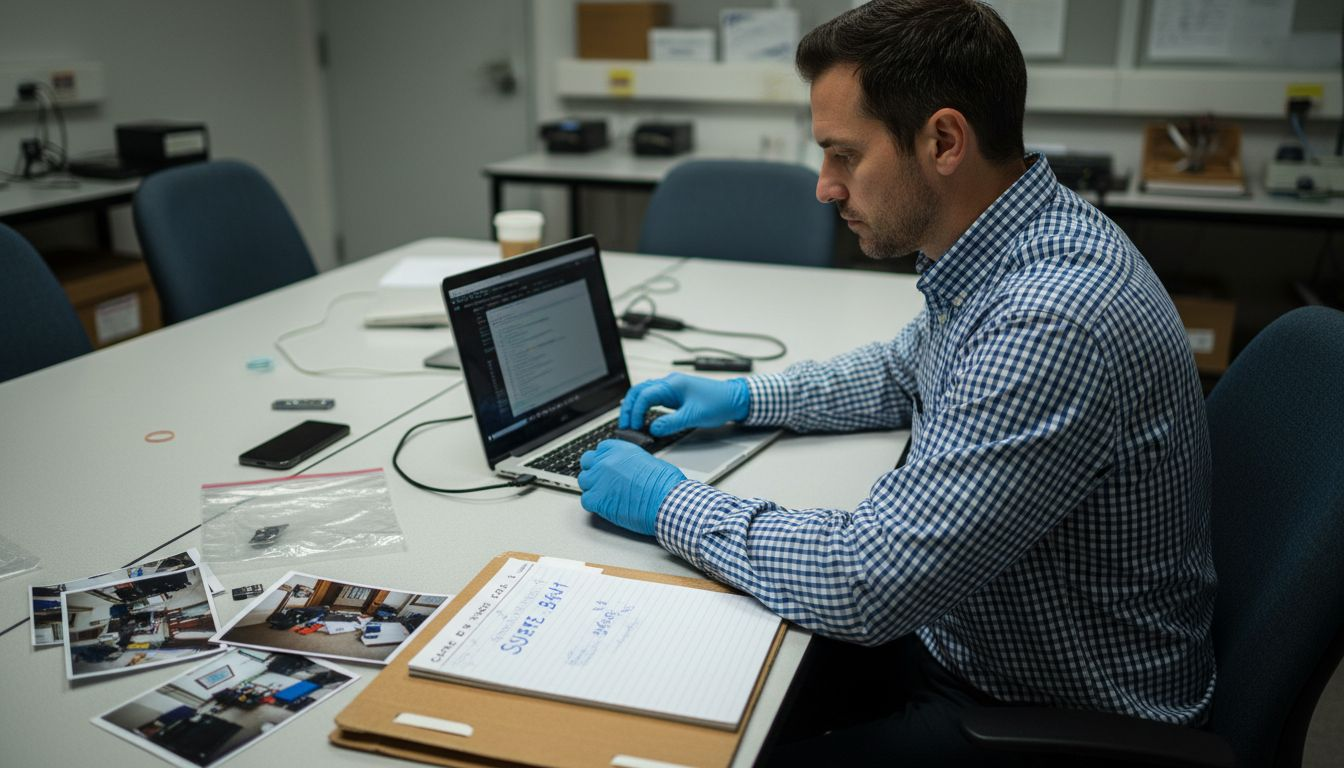
Every criminal defense solicitor in London knows that digital evidence from mobile devices now sits at the heart of courtroom arguments. The demand for robust strategies makes understanding mobile forensics indispensable, as modern smartphones are implicated in approximately 90 percent of contemporary crimes worldwide. This guide offers practical insight into forensic processes, admissibility standards, and expert roles to help you assess, challenge, or support electronic evidence with confidence.
Table of Contents
- Defining Mobile Forensics For Legal Evidence
- Types Of Mobile Data Used In Prosecution
- Forensic Examination Workflow And Standards
- Legal Admissibility And Chain Of Custody
- Expert Witness Roles And Common Pitfalls
Key Takeaways
| Point | Details |
|---|---|
| Importance of Mobile Forensics | Mobile forensics is essential in legal proceedings, with mobile devices involved in approximately 90% of criminal investigations, making systematic data extraction crucial. |
| Types of Usable Data | Evidence from mobile devices includes SMS logs, call records, and location metadata, which can establish connections between individuals and criminal activities. |
| Standardised Practices | Adhering to international standards ensures that evidence handling and documentation maintain data integrity and legal admissibility. |
| Expert Witness Role | Mobile forensic experts must effectively communicate complex evidence and methodologies to ensure legal professionals understand the significance of findings in court. |
Defining Mobile Forensics for Legal Evidence
Mobile forensics represents a specialised investigative discipline within digital forensics, focused on extracting and analysing electronic evidence from mobile devices for legal proceedings. Specialised forensic methodologies enable legal professionals to uncover critical digital evidence that can substantiate or challenge legal arguments in court.
At its core, mobile forensics involves a systematic approach to device data extraction, preservation, and analysis. Forensic experts employ sophisticated techniques to recover deleted messages, call logs, location data, and application metadata without compromising the integrity of the original digital evidence. The process requires meticulous attention to detail, ensuring that all extracted information meets strict legal standards for admissibility.
The global significance of mobile forensics cannot be overstated, with contemporary research indicating mobile devices are now implicated in approximately 90% of criminal investigations. International digital forensics standards have been developed to ensure consistent, reliable methodologies that maintain chain of custody and preserve electronic evidence’s legal validity across jurisdictions.
Pro tip: Always engage certified mobile forensics professionals who understand both technical extraction methods and legal evidence preservation requirements.
Types of Mobile Data Used in Prosecution
Mobile devices have become treasure troves of digital evidence, with prosecutors leveraging multiple data types for criminal investigations. The range of recoverable information extends far beyond simple communication logs, encompassing intricate digital footprints that can conclusively reconstruct events and establish critical connections between individuals and potential criminal activities.
Typical prosecutorial evidence includes communication records such as SMS, MMS, instant messaging transcripts, and call logs. These digital artifacts provide insights into relationships, communication patterns, and potential conspiracy. Additionally, forensic experts can extract multimedia attachments, voice messages, and metadata that reveal precise timestamps, geolocation information, and device interaction histories. Advanced forensic techniques allow recovery of deleted content, ensuring no potential evidence remains hidden.
Beyond communication data, mobile forensics can uncover financial transaction records, application usage patterns, browser histories, and cloud-synchronized data. Sophisticated forensic techniques enable investigators to navigate complex encryption challenges and retrieve digital artifacts that might prove instrumental in establishing motive, opportunity, and intent in legal proceedings.
Pro tip: Engage forensic experts who specialise in multiple device ecosystems to ensure comprehensive digital evidence extraction across different mobile platforms and applications.
Here’s a summary of key mobile data types commonly used as legal evidence:
| Evidence Type | Forensic Value | Typical Legal Use |
|---|---|---|
| SMS/Instant Messaging Logs | Reveal communication trail | Establish motive or intent |
| Call Records | Show contact frequency | Demonstrate relationships |
| Location Metadata | Pinpoint user movements | Verify whereabouts |
| App Usage & Cloud Data | Indicate activity patterns | Link device to criminal action |
| Financial Transactions | Document spending habits | Uncover fraudulent activities |
Forensic Examination Workflow and Standards
Mobile forensic investigations demand a rigorous, systematic approach to ensure the admissibility and reliability of digital evidence in legal proceedings. Novel forensic investigation frameworks provide structured methodologies that guide forensic experts through comprehensive evidence acquisition and preservation processes.
The forensic examination workflow typically encompasses several critical stages. First, forensic specialists conduct initial device identification and preliminary assessment, carefully documenting the device’s condition and potential evidence preservation challenges. Next, they employ specialised forensic tools to create forensically sound bit-by-bit copies of device data, ensuring no alteration or contamination occurs during the extraction process. This stage requires meticulous chain of custody documentation, recording every action taken during evidence collection to maintain legal integrity.

Standards and protocols play a pivotal role in mobile forensic investigations. Internationally recognised guidelines mandate specific procedures for evidence handling, including write-blocking techniques, validated forensic tools, comprehensive documentation, and reproducible analysis methods. These standards ensure that digital evidence can withstand intense judicial scrutiny, providing legal professionals with reliable, court-admissible investigative insights.
Pro tip: Maintain detailed, contemporaneous logs of every forensic action, including tool versions, examination environment, and specific extraction methods to support potential future legal challenges.
For context, here’s how mobile forensic standards underpin legal admissibility compared to non-standard procedures:
| Investigation Aspect | Standard Forensic Practice | Non-Standard Approach |
|---|---|---|
| Data Integrity | Strict preservation protocols | Potential for data alteration |
| Documentation | Comprehensive, audited logs | Incomplete or missing records |
| Tool Validation | Certified, reproducible methods | Unverified or outdated tools |
| Legal Reliability | Admissible in court | Challenged or rejected |
Legal Admissibility and Chain of Custody
Mobile forensic evidence represents a complex legal landscape where technical precision meets judicial scrutiny. Legal admissibility frameworks demand meticulous attention to procedural integrity, balancing investigative necessities with fundamental privacy protections.
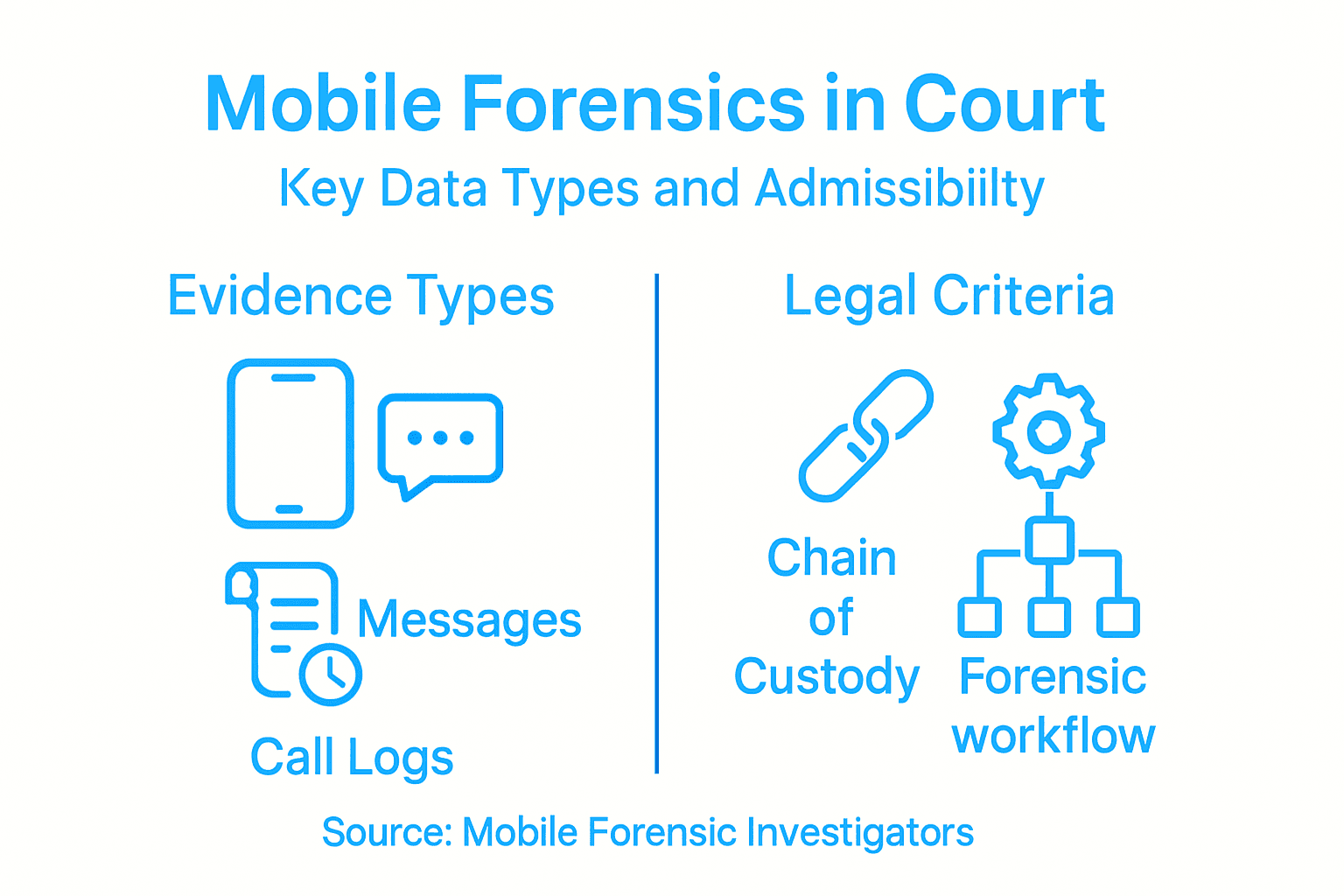

The concept of chain of custody is paramount in ensuring digital evidence remains legally credible. Forensic experts must document every interaction with electronic devices, creating a comprehensive audit trail that demonstrates the evidence’s continuous, unbroken journey from initial collection through analysis. This documentation includes detailed logs tracking device handling, forensic tool usage, extraction methods, and preservation techniques. Each step must be precisely recorded, demonstrating that no unauthorised modifications occurred and that the original data’s integrity remains intact.
Courts evaluate mobile forensic evidence through stringent criteria, examining whether forensic procedures comply with established standards. This involves assessing the forensic tools’ validation, the examiner’s qualifications, the methodology’s reproducibility, and the comprehensive documentation supporting the digital evidence. Forensic professionals must anticipate potential legal challenges by maintaining transparent, defensible processes that withstand rigorous judicial examination.
Pro tip: Create redundant evidence documentation with multiple independent verification methods to strengthen the legal admissibility of your digital forensic findings.
Expert Witness Roles and Common Pitfalls
Mobile forensic expert witnesses occupy a critical intersection between technical expertise and legal communication, translating complex digital evidence into comprehensible courtroom testimony. Forensic expert challenges require professionals to navigate intricate technological landscapes while maintaining absolute precision and clarity.
The primary responsibilities of a mobile forensics expert witness extend beyond mere technical analysis. These professionals must critically evaluate digital evidence, validate forensic methodologies, and present findings in a manner that is both scientifically rigorous and accessible to legal professionals who may lack technical backgrounds. This involves breaking down complex technical processes into clear, understandable explanations, anticipating potential cross-examination challenges, and demonstrating the reliability of forensic techniques through transparent, well-documented procedures.
Common pitfalls in mobile forensic expert testimony often stem from inadequate preparation or insufficient understanding of legal standards. Experts must be prepared to defend their methodologies, explain tool selection and validation processes, and address potential weaknesses in evidence collection. This requires continuous professional development, staying updated with rapidly evolving mobile technologies, encryption methods, and forensic tools. Successful expert witnesses combine deep technical knowledge with exceptional communication skills, enabling them to withstand intense judicial scrutiny and effectively communicate the significance of digital evidence.
Pro tip: Develop a comprehensive portfolio documenting your forensic methodologies, tool validations, and professional certifications to establish credibility before stepping into the courtroom.
Strengthen Your Legal Case with Expert Mobile Forensics Support
Handling mobile forensic evidence in court requires precision, expert knowledge and rigorous adherence to legal standards such as chain of custody and documented forensic methodologies. If your investigation faces challenges in data extraction, validation or expert testimony, trusted specialists can help you navigate these complexities with confidence. The right forensic approach transforms fragmented mobile data into compelling legal evidence that withstands judicial scrutiny.
Partner with experienced professionals at Mobile Forensic Investigators who ensure meticulous data preservation and legally admissible evidence. Our team of Forensic Mobile Specialists is equipped to handle diverse mobile platforms, sophisticated encryption and provide clear expert witness reporting. Act now to secure reliable digital evidence that strengthens every step of your case. Visit Computer Forensics Lab today to consult with experts who know how to make mobile forensics count in court.
Frequently Asked Questions
What is mobile forensics and why is it important in legal cases?
Mobile forensics is a specialised discipline within digital forensics focused on extracting and analysing electronic evidence from mobile devices. It is important in legal cases because it provides critical digital evidence that can substantiate or challenge legal arguments in court.
What types of data can be retrieved from mobile devices for legal proceedings?
Mobile forensics can retrieve various types of data, including SMS/MMS communications, call logs, location metadata, app usage patterns, and financial transaction records. These data types help reconstruct events and establish connections between individuals involved in criminal activities.
How does the chain of custody impact the admissibility of mobile forensic evidence in court?
The chain of custody ensures that digital evidence remains credible and untampered. It involves meticulously documenting every interaction with the evidence, proving its integrity and reliability, which is essential for the evidence to be admissible in court.
What are common challenges faced by mobile forensic expert witnesses in court?
Common challenges include the need to clearly communicate complex technical information to non-expert legal professionals and to defend their methodologies against cross-examination. Continuous professional development and thorough preparation are critical for overcoming these challenges.