
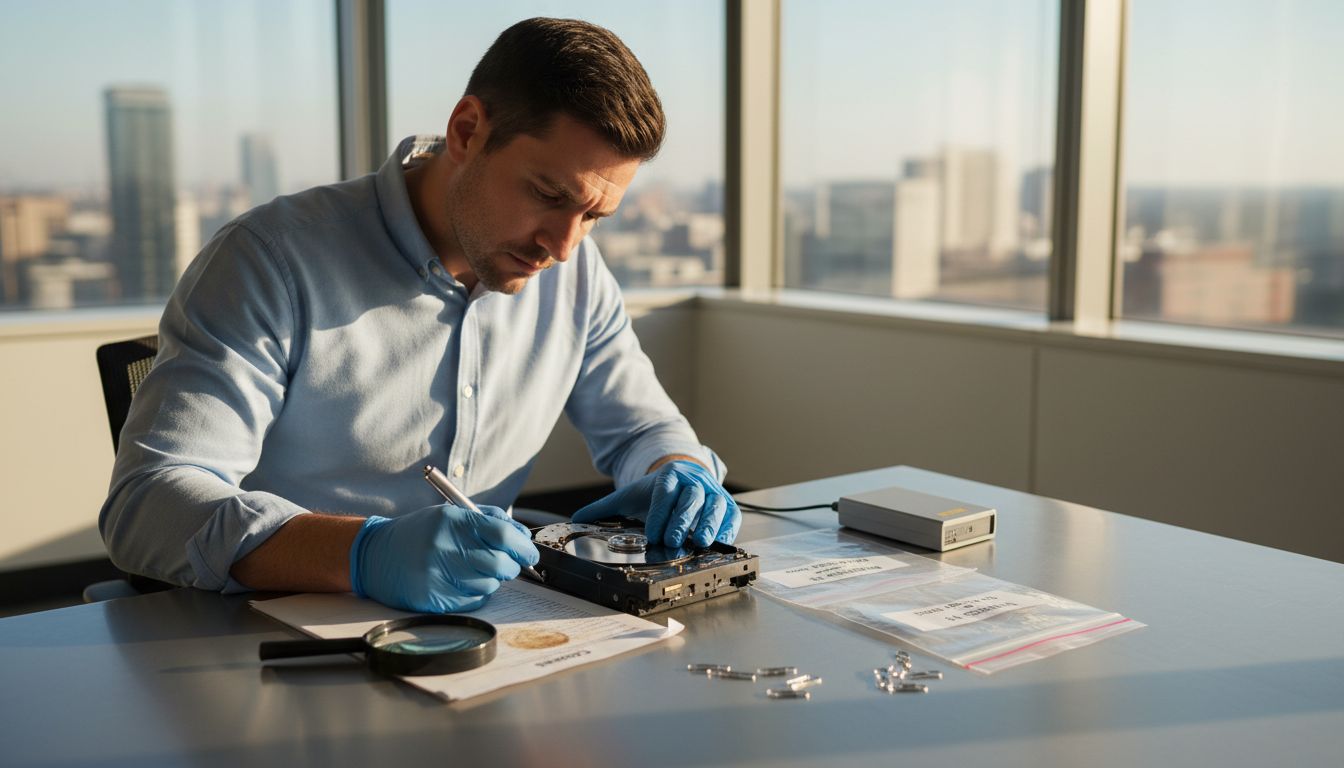
Most advice about digital evidence misses a vital fact—over 80 percent of cases hinge on the proper recovery and preservation of electronic data. For british professionals working with sensitive legal matters, a single misstep during digital forensic investigations could jeopardize critical evidence. This guide explains every essential stage in digital evidence recovery so you can protect case integrity from the start to courtroom resolution.
Table of Contents
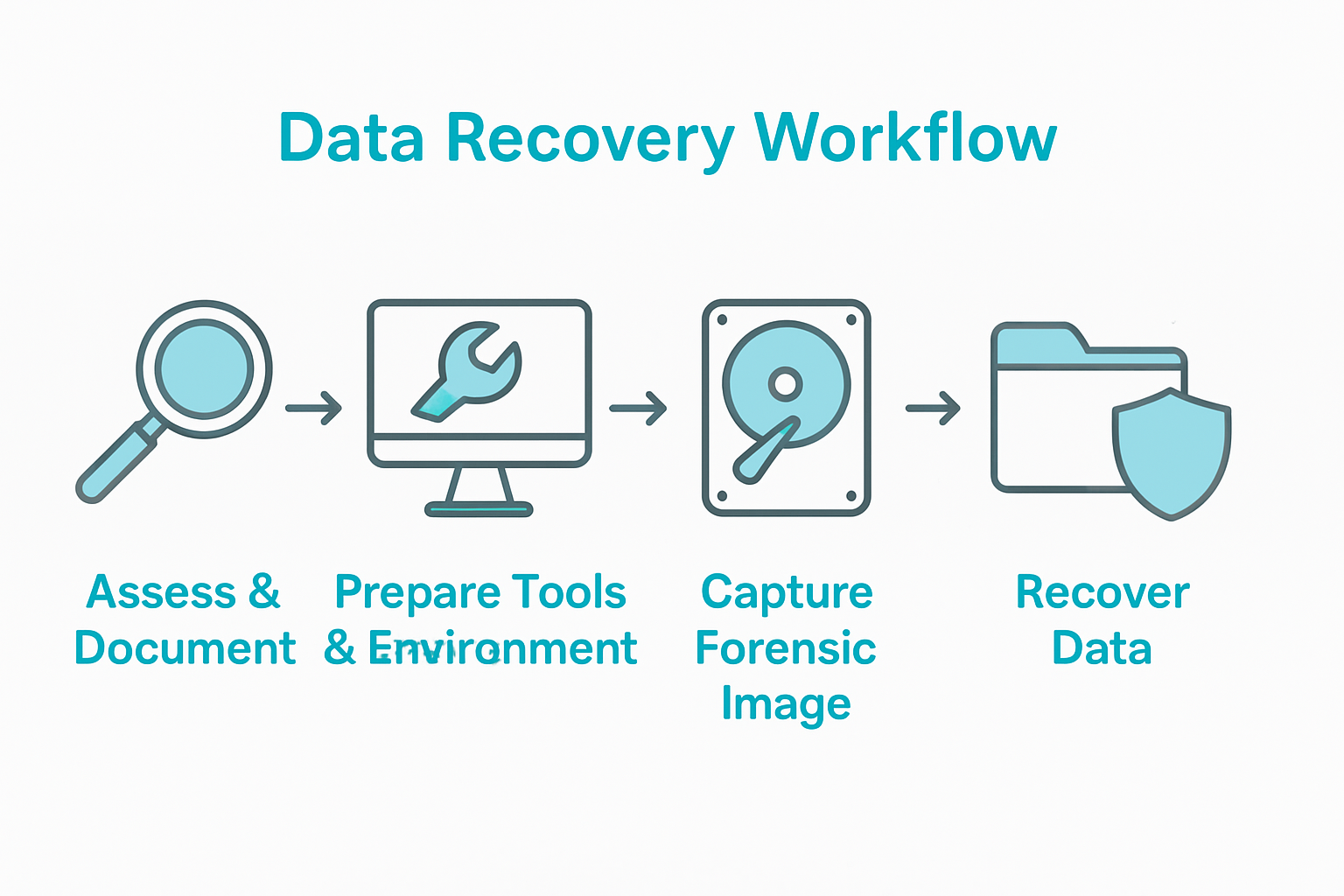
- Stage 1: Assess The Source And Scope Of Data Loss
- Stage 2: Prepare Forensic Tools And Secure Environment
- Stage 3: Capture Forensic Images Of Target Devices
- Stage 4: Recover Data Using Approved Techniques
- Stage 5: Validate Integrity Of Recovered Evidence
- Stage 6: Document Findings And Maintain Chain Of Custody
Quick Summary
| Key Point | Explanation |
|---|---|
| 1. Assess Data Loss Thoroughly | Conduct a systematic investigation of all digital platforms to determine the source and extent of data loss for legal purposes. |
| 2. Prepare a Secure Forensic Environment | Establish a controlled workspace with specialised tools to preserve evidence integrity during digital analysis. |
| 3. Capture Forensic Images Carefully | Create exact digital replicas of storage devices ensuring documentation of all parameters to maintain data integrity. |
| 4. Recover Data Using Valid Techniques | Use systematic recovery methods and focused strategies to extract critical information while preserving legal admissibility. |
| 5. Maintain Accurate Documentation | Document every interaction with digital evidence meticulously to uphold the chain of custody and ensure findings remain credible. |
Stage 1: Assess the Source and Scope of Data Loss
In digital forensics, accurately determining the source and extent of data loss represents a critical first step for legal evidence collection. This initial assessment provides foundational insights into potential digital breaches or information gaps that could substantially impact legal proceedings.
Carefully mapping out the data loss landscape requires systematic investigation across multiple technological platforms. You will need to methodically examine computing devices, network systems, cloud storage repositories, and mobile platforms to understand precisely where and how information disappeared. Start by conducting a comprehensive audit trail that tracks potential points of data disruption tracking timestamps, system logs, and access records.
The forensic process demands meticulous documentation. When investigating potential data loss, record every detail: system configurations, timestamps of potential interruptions, user access logs, and network transmission records. Digital forensics research highlights the complexity of tracing information gaps across interconnected technological ecosystems, underscoring the importance of precision in your initial assessment.
Warning: Preserve original evidence exactly as discovered. Any accidental alteration could compromise the forensic investigation and potentially render critical evidence inadmissible in legal proceedings.
Once you have thoroughly mapped the potential sources of data loss, you will be prepared to move forward with more targeted recovery strategies in the subsequent investigation stages.
Stage 2: Prepare Forensic Tools and Secure Environment
Successfully recovering digital evidence requires meticulously preparing your forensic workspace and selecting appropriate investigative tools. Your goal in this stage is to establish a controlled, secure environment that preserves the integrity of potential legal evidence while enabling comprehensive digital analysis.
Begin by configuring a dedicated forensic workstation isolated from standard network environments. Select specialised forensic software tools designed specifically for legal investigations, ensuring you have comprehensive digital forensics platforms capable of detailed evidence extraction and preservation. Open source forensic frameworks offer robust alternatives that provide flexible, customisable investigation capabilities.
Your forensic toolkit must include write blockers, forensic imaging software, evidence collection utilities, and comprehensive analysis platforms. Prioritise tools that generate verifiable forensic hash values and maintain strict chain of custody documentation. Establish multiple redundant storage systems to safeguard recovered evidence, implementing encrypted backup protocols that prevent accidental data modification.
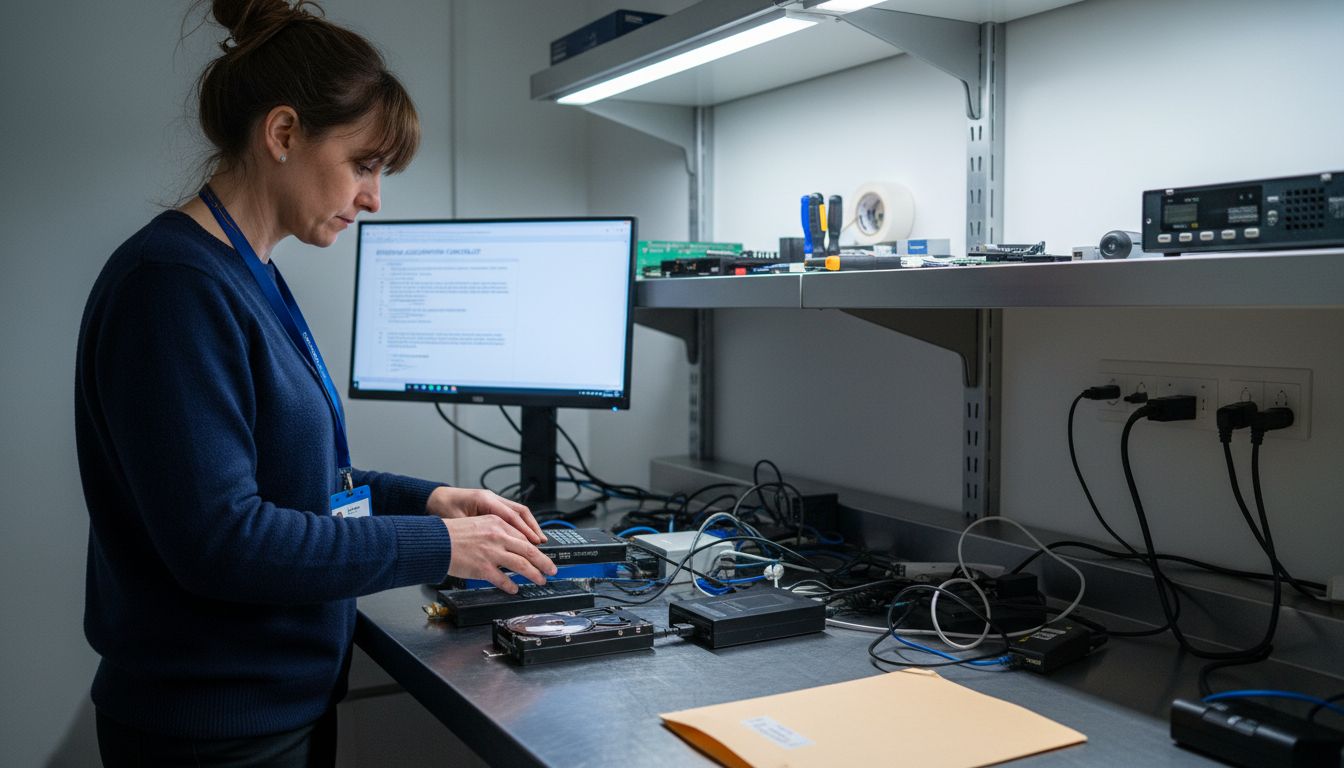
Warning: Never connect original evidence devices directly to your primary forensic workstation. Always use write blockers and create forensically sound duplicate images to prevent potential contamination or inadvertent data alteration.
Once your secure forensic environment is prepared, you will be ready to begin systematic evidence acquisition and detailed digital forensic analysis.
Stage 3: Capture Forensic Images of Target Devices
Capturing forensic images represents a pivotal moment in digital evidence collection where precision and methodical approach are paramount. Your objective is to create exact bit-by-bit digital replicas of storage devices that preserve every fragment of potential evidence without altering the original data.
Begin by connecting your target device through a forensic imaging tool that guarantees data integrity during the extraction process. Open source forensic frameworks can provide robust imaging capabilities that document and validate each step of data acquisition. Select imaging methods that generate cryptographic hash values verifying the exact correspondence between source and duplicate images preventing any potential data manipulation accusations.
When creating forensic images ensure you document comprehensive metadata including device serial numbers, acquisition timestamps, examiner information and precise imaging parameters. Create multiple redundant images stored across different encrypted storage media to safeguard against potential media failure. Implement strict chain of custody protocols by generating detailed logs that track every interaction with the evidence device.
Warning: Always work with write-blocked devices and never modify original evidence under any circumstances. Even the smallest unintentional alteration could render your forensic evidence inadmissible in legal proceedings.
With your forensic images securely captured and verified, you are now prepared to advance to the next critical stage of detailed digital forensic analysis.

Stage 4: Recover Data Using Approved Techniques
Recovering digital evidence demands a systematic and forensically sound approach that preserves data integrity while extracting maximum informational value. Your primary objective is to methodically retrieve potentially critical information using specialised techniques that maintain legal admissibility.
Begin your data recovery process by employing data archaeology methods that specialise in extracting information from damaged or complex storage media. These advanced techniques allow forensic experts to reconstruct digital artifacts from seemingly unrecoverable sources. Supplement traditional recovery approaches with stochastic forensic analysis which can reveal digital activity patterns by examining emergent properties when standard forensic artifacts are unavailable.
Utilise a multi layered recovery strategy that combines logical and physical data extraction techniques. Prioritise file system analysis, sector level scanning, and metadata reconstruction to maximise potential evidence retrieval. Create comprehensive documentation tracking each recovery attempt including technical parameters, extracted data volumes, and forensic hash values to maintain an unimpeachable chain of evidence.
Warning: Each recovery attempt carries inherent risks of potential data modification. Always work on forensically duplicated images and implement strict write protection protocols to prevent unintended alterations to original evidence.
With your data recovery complete, you are prepared to transition into the critical phase of evidence analysis and interpretation.
Stage 5: Validate Integrity of Recovered Evidence
Validating the integrity of recovered digital evidence is a critical forensic process that ensures your findings remain legally admissible and scientifically rigorous. Your primary objective is to definitively confirm that the recovered data matches the original source without any unintended modifications.
Begin by generating cryptographic hash values using established forensic tools that calculate precise digital fingerprints for each piece of recovered evidence. These hash values serve as immutable digital signatures that can conclusively demonstrate the exact state of data during recovery. Consider implementing advanced blockchain based provenance tracking which creates an unalterable record of evidence handling and transmission.
Apply multiple verification techniques including checksum comparisons, metadata cross referencing, and systematic reconstruction of digital artifacts. Document every verification step meticulously recording hash values, timestamps, and examination parameters. Create comprehensive forensic reports that transparently demonstrate the scientific methodologies used to validate recovered evidence integrity.
Warning: A single unverified modification can potentially invalidate an entire forensic investigation. Always maintain multiple independent verification methods and preserve original forensic images throughout the validation process.
With evidence integrity comprehensively validated, you are now prepared to analyse and interpret the recovered digital information for legal proceedings.
Stage 6: Document Findings and Maintain Chain of Custody
Documenting forensic findings and maintaining a rigorous chain of custody represents the critical final stage that ensures your digital evidence remains legally admissible and scientifically credible. Your primary objective is to create a comprehensive narrative that meticulously records every interaction with digital evidence from initial acquisition through final analysis.
Begin by implementing standardised documentation protocols that comprehensively track the provenance of each piece of digital evidence. Create detailed logs recording device identifiers, acquisition timestamps, forensic examination parameters, and explicit documentation of every professional who accessed or manipulated the evidence. Capture precise metadata including file system attributes, hash values, and forensic tool configurations to provide an unassailable audit trail.
Establish a systematic approach to evidence documentation that includes creating sealed forensic reports with cryptographically signed certificates of authenticity. Ensure every document includes comprehensive examiner credentials, precise methodological descriptions, and explicit statements regarding evidence handling procedures. Implement redundant storage strategies that maintain multiple secure copies of both raw evidence and forensic analysis documentation.
Warning: A single undocumented interaction or imprecise record keeping can potentially invalidate months of forensic investigation. Treat every document as a potential legal exhibit requiring absolute precision and transparency.
With your findings comprehensively documented and chain of custody meticulously maintained, you have successfully completed the digital forensic evidence recovery workflow.
Strengthen Your Legal Evidence with Expert Forensic Data Recovery
Mastering the data recovery workflow is essential to overcoming challenges like data loss, integrity validation, and maintaining an unbreakable chain of custody. If you are facing the complex task of recovering digital evidence for legal proceedings, you know how critical precision and trusted methodologies are to ensure admissible and uncontaminated results. From assessing data loss sources to validating recovered evidence, every step demands specialised skills and tools that protect your case from avoidable risks.
At Computer Forensics Lab, our team of Forensic Data Specialists is ready to deliver meticulous recovery services rooted in legal and technological expertise. Whether you need comprehensive Forensic Data Recovery or expert documentation to preserve the chain of custody, we provide thorough digital investigations tailored to support your litigation or cybersecurity needs. Do not let critical evidence slip away due to incomplete or improper recovery processes. Act now and secure your digital proof with trusted professionals by visiting https://computerforensicslab.co.uk to explore how we can help you confidently navigate every stage of your forensic data recovery workflow.
Frequently Asked Questions
What is the first step in the data recovery workflow for legal evidence?
Accurately assessing the source and scope of data loss is the first step in the data recovery workflow. Conduct a systematic investigation of computing devices, network systems, and cloud storage to pinpoint where and how information loss occurred.
How can I prepare my environment for effective digital evidence recovery?
To prepare your environment, create a dedicated forensic workstation that is isolated from standard networks. Ensure to select appropriate forensic tools that focus on preserving the integrity of potential evidence while facilitating thorough digital analysis.
What techniques should I use to capture forensic images of target devices?
Utilise forensic imaging tools that create exact bit-by-bit replicas of storage devices. Connect your target device using these tools, ensuring to document all metadata, including timestamps and serial numbers, to maintain a reliable audit trail.
How do I validate the integrity of recovered digital evidence?
Generate cryptographic hash values for each piece of recovered evidence to confirm that it matches the original source without alterations. Apply multiple verification techniques, such as checksum comparisons and systematic reconstruction, to establish the evidence’s integrity.
What documentation is necessary to maintain the chain of custody in digital forensics?
Maintain detailed logs that track every interaction with digital evidence, including device identifiers and acquisition timestamps. Implement standardised documentation protocols that capture all parameters and interactions to ensure an unassailable chain of custody.
Why is meticulous documentation critical in the data recovery process?
Meticulous documentation is critical because it helps preserve the legal admissibility of digital evidence and establishes scientific credibility. Create comprehensive reports that detail every aspect of the forensic investigation to avoid compromising the evidence.