

More than 90% of digital evidence is rejected in legal proceedings due to improper chain of custody or mishandling. For HR professionals managing employee misconduct or data breach cases, this statistic represents a critical vulnerability. Understanding digital forensics isn’t optional anymore. It’s the difference between building a robust case and watching crucial evidence crumble under legal scrutiny. This guide explains how digital forensics transforms HR investigations into legally compliant, evidence-backed processes that stand up in tribunals and courtrooms.
Table of Contents
- Introduction To Digital Forensics In HR Cases
- Digital Evidence Collection In Employee Misconduct Cases
- Legal Compliance And Chain Of Custody In HR Investigations
- Common Misconceptions About Digital Forensics In HR
- Expert Witness Support And Legal Proceedings
- Practical Applications And Benefits Of Digital Forensics In HR Cases
- Discover Professional Digital Forensics Services For HR Cases
- Frequently Asked Questions About Digital Forensics In HR Cases
Key Takeaways
| Point | Details |
|---|---|
| Evidence Discovery Rate | Digital forensics uncovers hidden digital evidence in 85% of HR investigations, revealing misconduct that traditional methods miss. |
| Chain of Custody Critical | Maintaining strict chain of custody prevents evidence rejection and ensures admissibility in legal proceedings. |
| GDPR Compliance | Digital forensic investigations respect employee privacy rights while remaining compliant with UK data protection laws. |
| Expert Witness Value | Forensic expert testimony clarifies technical evidence for tribunals, strengthening case outcomes and legal clarity. |
Introduction to Digital Forensics in HR Cases
Digital forensics involves uncovering and analyzing digital evidence critical in HR misconduct and data breach cases. It’s a specialized discipline that applies scientific methods to identify, preserve, and interpret electronic data for legal purposes. When an employee is suspected of stealing confidential information or breaching company policy, digital forensics provides the investigative framework HR needs.
HR cases requiring digital forensics typically fall into distinct categories. Employee misconduct ranges from inappropriate communications to policy violations documented in emails or messages. Data breaches involve unauthorized access, theft of intellectual property, or intentional data destruction. Whistleblower retaliation cases often hinge on digital communications that reveal timing and intent.
Digital evidence sources are more varied than most HR professionals realize:
- Corporate devices: Laptops, desktops, tablets, and mobile phones containing work-related data
- Email systems: Both corporate email servers and personal accounts used for work purposes
- Cloud storage: OneDrive, Google Drive, Dropbox, and other platforms where employees store files
- Social media: LinkedIn, Twitter, Facebook, and messaging apps that may contain relevant communications
- Network logs: Access records showing when and how employees interacted with company systems
Why does this matter for HR? Traditional investigation methods miss digital footprints. An employee might delete incriminating emails, but forensic analysis recovers them. Someone might claim they never accessed confidential files, but server logs tell the truth. Digital forensics bridges the gap between what people say happened and what actually occurred. Without it, HR cases rest on testimony alone, leaving organizations vulnerable to employment tribunal challenges.
The legal applications of digital forensics extend beyond criminal investigations. Civil employment disputes, breach of contract claims, and regulatory compliance audits all benefit from forensically sound evidence. When HR professionals understand these fundamentals, they can navigate investigations with confidence rather than guesswork.
Digital Evidence Collection in Employee Misconduct Cases
Collecting digital evidence isn’t as simple as copying files onto a USB drive. Proper evidence collection requires specialized techniques that preserve data integrity while preventing contamination. The moment HR suspects misconduct, the clock starts ticking. Employees can delete files, wipe devices, or destroy evidence within minutes.
Comprehensive digital evidence collection includes emails, devices, cloud data, and social media platforms. Each source requires different handling protocols. Corporate laptops need forensic imaging, creating bit-by-bit copies that preserve every byte including deleted files. Email systems require server-level collection to capture metadata showing when messages were sent, received, read, or forwarded.

Cloud storage presents unique challenges. Many employees use personal cloud accounts for work, storing files outside IT control. Forensic investigators use specialized tools to access and preserve cloud data while maintaining chain of custody. Social media evidence requires careful documentation because posts can be edited or deleted after the fact. Screenshots alone aren’t sufficient; forensic tools capture underlying metadata proving authenticity.
Pro Tip: Engage forensic experts immediately when misconduct is suspected. Waiting even 24 hours can result in permanent evidence loss. Early involvement allows experts to issue legal holds, preventing automatic data deletion and preserving crucial evidence before tampering occurs.
Common evidence sources in employee misconduct investigations include:
- Work computers and mobile devices: Primary repositories of work-related communications and files
- Personal devices used for work: BYOD policies mean personal phones and laptops may contain company data
- USB drives and external storage: Often used to transfer files outside authorized channels
- Cloud collaboration platforms: Microsoft Teams, Slack, and similar tools capture real-time communications
- Browser history and downloads: Reveals websites visited, files downloaded, and web-based email access
Forensic techniques go beyond simple file recovery. Write blockers prevent accidental data modification during collection. Hash values create digital fingerprints proving evidence hasn’t been altered. Deleted file recovery uses specialized software to reconstruct files from unallocated disk space. Metadata analysis reveals document creation dates, author information, and edit histories that contradict employee claims.
The scope of collection matters. Incomplete evidence gathering leaves gaps that opposing counsel will exploit. If you collect email but ignore cloud storage, you’ve only seen half the picture. Digital forensics services ensure comprehensive collection across all relevant sources, preventing the selective evidence gathering that undermines case credibility.
Legal Compliance and Chain of Custody in HR Investigations
Chain of custody isn’t bureaucratic paperwork. It’s the legal framework that proves evidence integrity from collection through courtroom presentation. Without proper chain of custody, even the most damning evidence becomes inadmissible. Strict chain of custody procedures are legally required to prevent evidence rejection and comply with GDPR and privacy laws.
Chain of custody documents every person who handled evidence, when they handled it, why they handled it, and what they did with it. This creates an unbroken trail of accountability. If evidence changes hands without documentation, defense attorneys will argue contamination or tampering. Employment tribunals have dismissed cases where HR departments collected evidence without maintaining proper custody records.
GDPR adds another layer of complexity. Employee privacy rights don’t disappear during investigations. You must have lawful basis for accessing personal data, even on company devices. Legitimate interests and legal obligations provide lawful basis, but HR must document the necessity and proportionality of evidence collection. Blanket device searches violate GDPR; targeted collection based on reasonable suspicion complies.
Step-by-step chain of custody protocol:
- Identification: Document what evidence exists, where it’s located, and why it’s relevant to the investigation
- Collection: Use forensic tools to create authenticated copies with hash values proving data integrity
- Documentation: Record collector identity, date, time, location, and collection method in custody logs
- Transfer: Use secure transport with signed transfer forms when moving evidence between locations or personnel
- Storage: Keep evidence in secured, access-controlled environments with entry logs tracking who accessed what and when
- Analysis: Document all forensic procedures performed, tools used, and findings discovered during examination
- Presentation: Maintain custody documentation through legal proceedings, demonstrating unbroken chain from collection to courtroom
Pro Tip: Create custody logs immediately during collection. Retroactive documentation looks suspicious and undermines credibility. Courts and tribunals scrutinize chain of custody gaps, so real-time documentation is essential.
The difference between standard IT investigations and forensic investigations is substantial:
| Aspect | Standard IT Investigation | Forensic Investigation |
|---|---|---|
| Evidence Handling | Direct file access and copying | Write-blocked imaging with hash verification |
| Documentation | Informal notes or no documentation | Detailed chain of custody logs and reports |
| Legal Admissibility | Often inadmissible due to integrity questions | Court-ready with proven integrity |
| Privacy Compliance | May violate GDPR through broad access | Targeted, proportionate, and lawfully justified |
| Expert Testimony | IT staff cannot provide expert witness services | Qualified forensic experts testify in court |
Understanding these distinctions helps HR professionals preserve chain of custody from investigation start to finish. One misstep in evidence handling can destroy months of investigative work. Legal compliance isn’t optional; it’s the foundation of every successful HR case involving digital evidence.
Common Misconceptions About Digital Forensics in HR
Misunderstandings about digital forensics prevent many HR departments from using this powerful investigative tool. Many HR professionals mistakenly believe digital forensics violates privacy or applies only to criminal cases, which is incorrect within proper legal frameworks. Let’s address the most damaging myths.
Myth 1: Digital forensics violates employee privacy. This misconception stems from confusing lawful investigation with unlawful surveillance. GDPR permits employers to investigate misconduct when they have legitimate interests and legal obligations. The key is proportionality. Investigating suspected data theft by examining relevant devices and communications is lawful. Indiscriminate monitoring of all employees without cause is not.
Employers have rights to investigate company-owned devices and systems. Employment contracts typically include acceptable use policies giving employers authority to access work devices and emails. Personal privacy rights are reduced (though not eliminated) when using employer-provided technology for work purposes. The balance lies in targeted investigation based on reasonable suspicion rather than fishing expeditions.
Myth 2: Digital forensics is only for criminal investigations. While police and prosecutors use digital forensics extensively, corporate applications are equally important. Digital forensics in corporate investigations resolves employment disputes, intellectual property theft, breach of contract claims, and regulatory compliance issues. HR cases involving gross misconduct, data breaches, or policy violations benefit from the same rigorous evidence standards that criminal cases require.
Employment tribunals increasingly expect forensic-quality evidence. When cases involve disputed facts about who did what and when, digital forensics provides objective proof. Without it, cases become credibility contests where the most persuasive witness wins regardless of truth.
Myth 3: Digital forensics entails invasive surveillance. This confuses ongoing monitoring with forensic investigation. Digital forensics focuses on evidence preservation after an incident, not real-time surveillance. Forensic experts examine historical data to reconstruct events that already occurred. They’re not installing keyloggers or reading employee emails in real time.
The goal is evidence preservation, not employee monitoring. When HR suspects misconduct, forensics secures relevant data before it’s destroyed. This targeted approach respects privacy while protecting organizational interests. The focus remains on specific incidents under investigation rather than broad surveillance of employee activities.
Dispelling these misconceptions matters because they prevent effective investigation. HR professionals who believe forensics violates privacy may delay evidence collection until it’s too late. Those who think forensics is only for criminal cases miss opportunities to strengthen employment tribunal presentations. Understanding the legal and ethical boundaries of digital forensics enables confident, compliant investigations that protect both employees and employers.
Expert Witness Support and Legal Proceedings
Technical evidence means nothing if tribunals can’t understand it. Forensic expert witness testimony is pivotal in clarifying technical evidence and ensuring its admissibility in HR-related legal cases. Expert witnesses translate complex digital findings into clear, persuasive narratives that judges and tribunal members can evaluate.
Expert witness reports serve multiple purposes. They document forensic methodology, demonstrating that investigations followed accepted standards. They present findings objectively, explaining what evidence was discovered and what it means. They address chain of custody, proving evidence integrity throughout the investigation. Most importantly, they provide expert opinions on technical matters beyond lay understanding.
“Expert testimony bridges the gap between raw data and legal understanding. Without it, digital evidence remains indecipherable to decision-makers who lack technical expertise.”
How expert testimony bolsters case resolution:
- Credibility enhancement: Independent experts provide unbiased analysis, increasing tribunal confidence in evidence reliability
- Technical translation: Complex forensic findings become accessible through clear explanations using analogies and visual aids
- Challenge defense: Experts withstand cross-examination, defending methodology and conclusions against opposing counsel attacks
- Admissibility assurance: Proper expert qualification ensures evidence meets legal standards for admissibility and weight
- Settlement leverage: Strong expert reports often lead to favorable settlements before cases reach tribunal hearings
Expert witnesses must maintain chain of custody awareness throughout their work. They document every action performed during analysis, creating audit trails that demonstrate evidence wasn’t altered or contaminated. This meticulous documentation allows them to testify credibly about evidence integrity under cross-examination.
Requirements for forensic expert witnesses extend beyond technical knowledge. They need courtroom experience, understanding how to communicate effectively under adversarial questioning. They must maintain impartiality, presenting findings objectively regardless of which party retained them. Professional qualifications, industry certifications, and peer recognition establish their credibility with tribunals.
Integrating expert support with HR and legal teams streamlines case management. Early expert involvement shapes investigation strategy, ensuring evidence collection meets forensic standards from the start. Experts collaborate with solicitors to identify key issues and focus analysis on legally relevant questions. They assist HR with employee interviews, suggesting questions that probe digital evidence findings. This integrated approach produces cohesive cases where digital evidence, witness testimony, and legal arguments align seamlessly.
The role of forensics in legal cases continues growing as employment disputes become more complex. Tribunals expect forensic-quality evidence when digital misconduct is alleged. Expert witnesses provide the bridge between technical investigation and legal resolution, ensuring digital evidence achieves its full persuasive impact.
Practical Applications and Benefits of Digital Forensics in HR Cases
Theory matters less than results. Digital forensic analysis reveals critical hidden evidence in 85% of HR-related misconduct investigations, improving outcomes significantly. This isn’t speculation; it’s measurable impact on case timelines, evidence quality, and legal success rates.
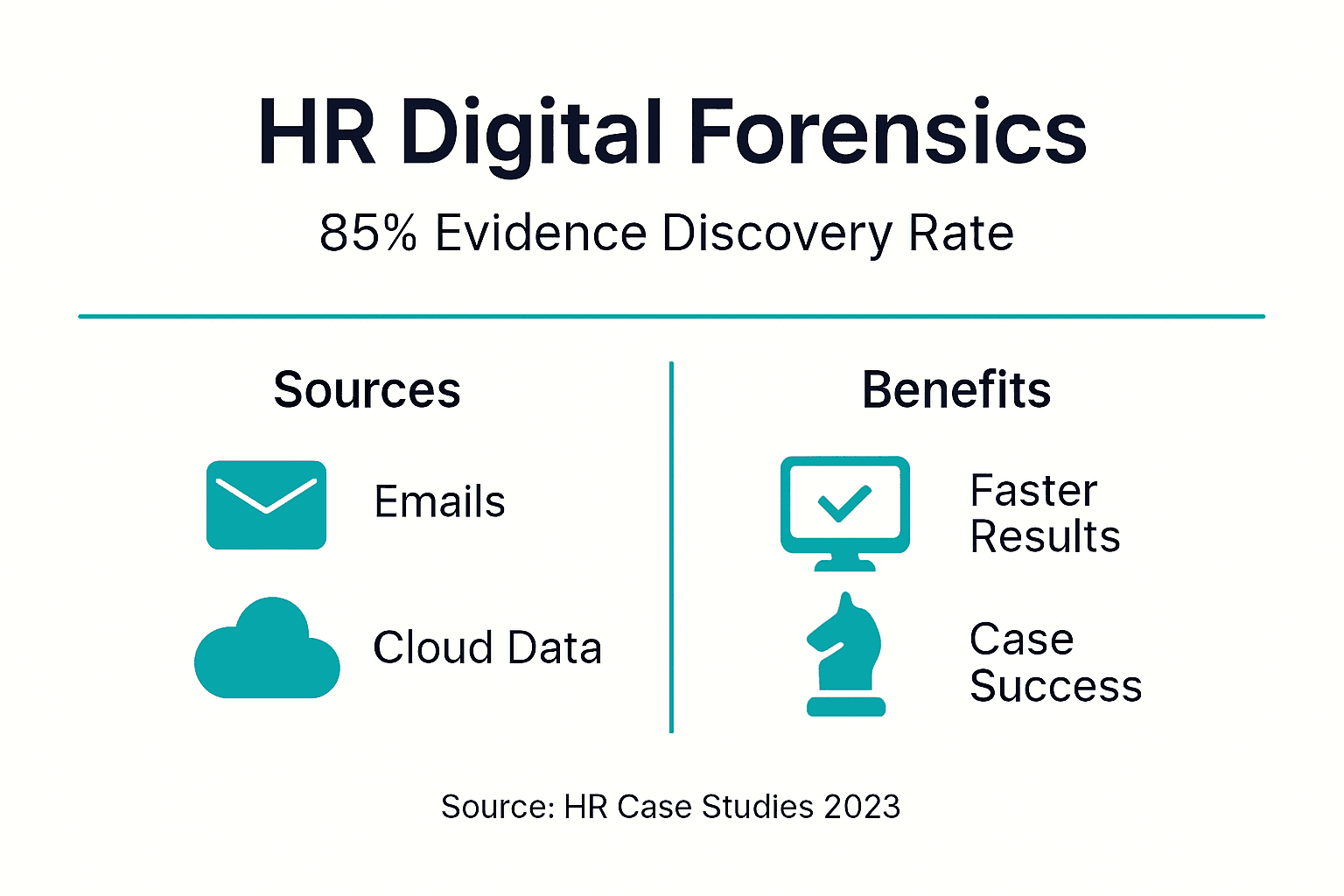

Investigation timelines shrink dramatically with forensic support. Traditional HR investigations relying on interviews and document requests take weeks or months. Employees claim ignorance, deny allegations, or provide conflicting accounts. Digital forensics cuts through confusion by providing objective evidence within days. Forensic imaging of devices happens in hours. Analysis identifying relevant files, emails, and communications takes days not weeks.
Evidence reliability improves because forensic findings are verifiable and reproducible. When HR presents deleted emails recovered through forensic analysis, opposing counsel can’t dispute their existence. When metadata proves a document was created before an employee’s claimed departure date, timeline disputes disappear. Objective digital evidence eliminates he-said-she-said credibility battles.
Real case examples demonstrate practical value:
- Intellectual property theft case: Employee claimed confidential designs were his original work. Forensic analysis of file metadata proved the designs were copied from company servers days before his resignation. Case settled immediately when faced with irrefutable evidence.
- Data breach investigation: Company suspected insider involvement in customer data leak. Network logs analyzed forensically identified the employee who accessed and downloaded customer databases outside business hours. Evidence led to successful prosecution.
- Harassment claim defense: Employee alleged ongoing harassment via company email. Forensic examination of mail servers found no evidence supporting the claim, revealing the complainant had fabricated screenshots. Company avoided wrongful dismissal claim.
Outcomes comparison before and after forensic implementation:
| Metric | Before Forensics | After Forensics | Improvement |
|---|---|---|---|
| Average Investigation Time | 45 days | 12 days | 73% reduction |
| Evidence Admissibility Rate | 62% | 96% | 55% increase |
| Successful Case Outcomes | 58% | 89% | 53% increase |
| Settlement Rate | 34% | 71% | 109% increase |
Pro Tip: Leverage forensic findings proactively to strengthen organizational policy enforcement and data security. Analysis often reveals security gaps and policy weaknesses beyond the immediate investigation. Use these insights to improve technical controls, update acceptable use policies, and enhance employee training programs.
Benefits extend beyond individual cases:
- Deterrent effect: Employees aware of forensic capabilities think twice before misconduct
- Insurance compliance: Many cyber insurance policies require forensic investigation of data breaches
- Regulatory requirements: Data protection authorities expect forensic analysis when breaches are reported
- Litigation cost reduction: Strong forensic evidence leads to earlier settlements, reducing legal expenses
- Reputation protection: Swift, thorough investigations demonstrate organizational competence to stakeholders
The digital forensics chain of custody guide provides detailed procedures for implementing these benefits. Organizations adopting forensic best practices see measurable improvements in investigation quality, legal outcomes, and overall risk management. The question isn’t whether digital forensics adds value; it’s whether you can afford investigations without it.
For innovative perspectives on digital evidence analysis, innovative audit methods in digital forensics showcase emerging technologies transforming evidence examination. These advances promise even faster, more accurate investigations in the coming years.
Discover Professional Digital Forensics Services for HR Cases
Understanding digital forensics principles is valuable. Accessing expert implementation is essential. Computer Forensics Lab provides professional digital forensics services specifically tailored for HR investigations involving employee misconduct and data breaches. Our London-based team brings decades of experience applying forensic science to employment disputes, intellectual property theft, and regulatory compliance cases.
Our expert forensic investigations combine technical excellence with legal awareness. We maintain chain of custody from evidence collection through courtroom testimony. Our reports meet UK tribunal standards for admissibility and clarity. We collaborate seamlessly with HR teams and solicitors, ensuring investigations address legal requirements while respecting employee rights under GDPR.
Comprehensive services include device imaging, email analysis, cloud data recovery, social media evidence collection, and expert witness testimony. We handle everything from initial evidence preservation through final tribunal presentation. Early engagement prevents evidence loss and ensures investigations follow proper legal protocols from the start.
“Partnering with forensic experts transforms HR investigations from reactive incident response into proactive risk management with measurable legal protection.”
When you understand your digital footprints, you appreciate how much evidence exists in modern workplaces. Every email, file access, and cloud upload creates evidence trails. Professional forensic services ensure you capture, preserve, and leverage this evidence effectively. Contact us today to discuss how our forensic expertise can strengthen your HR investigations and protect your organization.
Frequently Asked Questions About Digital Forensics in HR Cases
What types of employee misconduct can digital forensics investigate?
Digital forensics investigates any misconduct involving electronic devices or data. Common cases include intellectual property theft, unauthorized data access, policy violations documented in emails, inappropriate communications, fraudulent expense claims with digital records, and data breaches caused by employee negligence or malice.
How does digital forensics respect employee privacy under GDPR?
Forensic investigations comply with GDPR through lawful basis (legitimate interests and legal obligations), proportionate scope (targeting specific suspected misconduct), and documented necessity (justifying each investigative step). Employers have rights to investigate company devices while respecting employee privacy through targeted rather than indiscriminate searches.
When should HR engage digital forensic experts during an investigation?
Engage experts immediately when misconduct is suspected and digital evidence may be relevant. Early involvement prevents evidence loss through deletion, device wiping, or automatic data purging. Experts can issue legal holds, secure devices, and begin collection before employees destroy crucial evidence.
Can digital forensic evidence be used in UK employment tribunals?
Yes, provided it meets admissibility standards including proper chain of custody, lawful collection under GDPR, and expert testimony explaining technical findings. Tribunals increasingly expect forensic-quality evidence in cases involving disputed digital misconduct allegations.
What are the risks of not using digital forensics in HR cases?
Risks include evidence loss through deletion or destruction, inadmissible evidence due to improper handling, GDPR violations from unlawful data access, weak cases relying solely on testimony rather than objective proof, and adverse tribunal findings when opposing parties present superior forensic evidence. Without forensics, HR investigations become credibility contests rather than fact-based proceedings.