
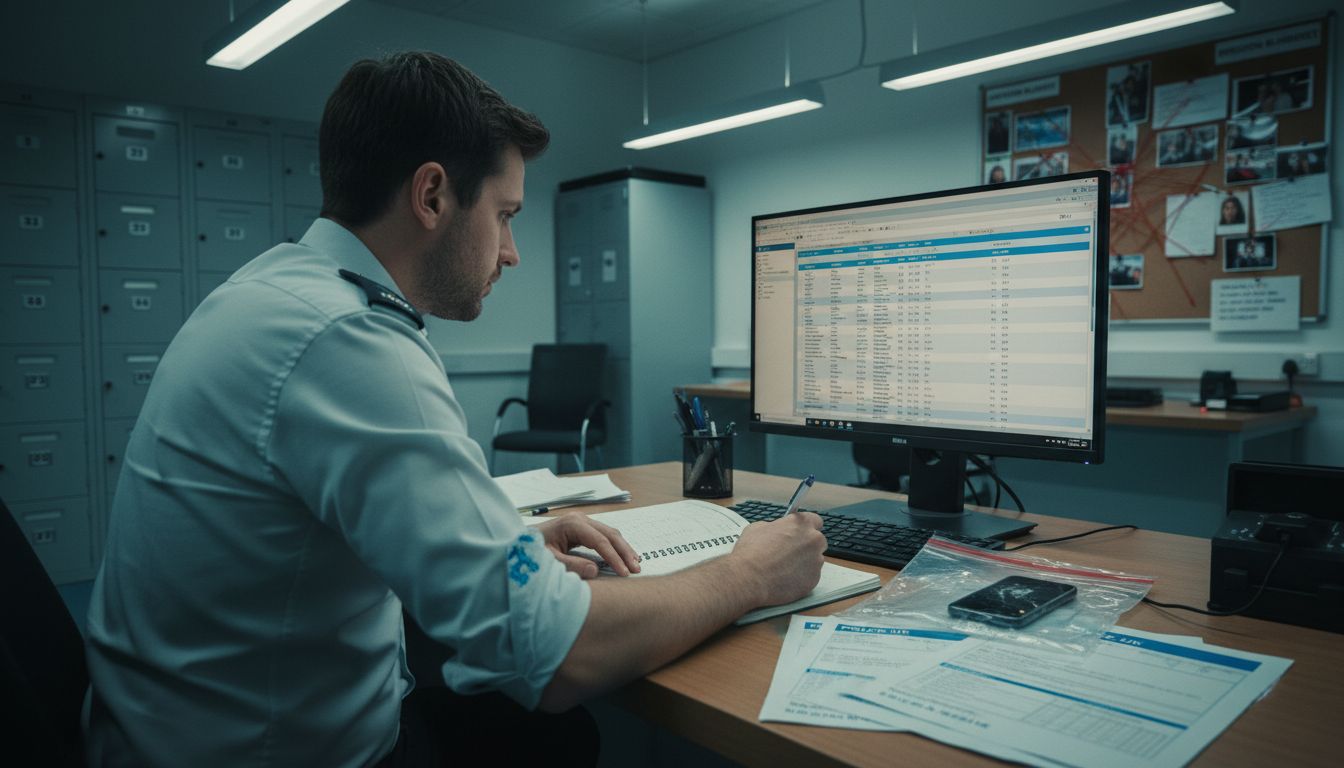
Nearly every investigation today involves digital clues from smartphones, tablets, or wearables. With more than 90 percent of people in the United Kingdom owning a mobile device, the potential evidence stored on these gadgets is critical for legal cases. Understanding mobile forensics is no longer just for technology experts. This guide unpacks the essential principles, techniques, and real-world impacts of mobile forensics that shape modern british legal and security investigations.
Table of Contents
- Defining Mobile Forensics And Key Principles
- Types Of Mobile Forensic Techniques Explained
- Critical Role In Legal Investigations And Security
- Legal Standards And Evidential Admissibility
- Risks, Limitations, And Best Practices
Key Takeaways
| Point | Details |
|---|---|
| Mobile Forensics Definition | Mobile forensics is a specialised discipline focused on recovering digital evidence from mobile devices, requiring strict protocols to ensure legal compliance. |
| Extraction Techniques | Forensic professionals utilise various techniques including logical, file system, physical, and advanced hardware extractions, each suitable for different investigative scenarios. |
| Legal Considerations | Rigorous standards of evidence preservation, chain of custody, and forensic methodology are crucial for maintaining the integrity and admissibility of digital evidence in legal proceedings. |
| Challenges in Mobile Forensics | Ongoing technological advancements and encryption complexities present significant risks and limitations, necessitating continuous skill development and best practice adherence among forensic experts. |
Defining Mobile Forensics and Key Principles
Mobile forensics represents a specialised digital investigation discipline focused on recovering and examining digital evidence from mobile devices such as smartphones, tablets, and wearable technology. Understanding mobile device forensics principles requires a comprehensive approach to extracting and preserving critical digital information for legal proceedings.
The core methodology of mobile forensics involves a structured multi-stage process designed to maintain digital evidence integrity. According to forensic research guidelines, these stages typically include: device seizure, precise identification, careful evidence acquisition, meticulous examination, comprehensive analysis, and professional reporting. Forensic experts must follow strict protocols to ensure that digital evidence remains admissible in court, treating mobile devices as sensitive repositories of potential legal information.
Key principles of mobile forensics centre around several critical technical and legal considerations. Mobile device forensic processes must prioritise:
- Evidence Preservation: Maintaining exact digital evidence in its original state
- Chain of Custody: Documenting every interaction with digital devices
- Technical Neutrality: Using standardised forensic tools that work across multiple device platforms
- Forensic Soundness: Ensuring investigation methods do not alter original data
Successful mobile forensics demands specialised technical skills, advanced technological understanding, and rigorous methodological discipline. Forensic professionals must navigate complex technological landscapes, understanding intricate device architectures, operating systems, and data storage mechanisms to extract meaningful digital evidence effectively.
Types of Mobile Forensic Techniques Explained
Mobile forensics encompasses a sophisticated range of data extraction techniques designed to recover digital evidence from mobile devices with precision and legal integrity. Sophisticated data acquisition methods enable forensic experts to extract critical information across various device states and technological configurations.
Forensic professionals typically employ four primary mobile device extraction techniques: logical acquisition, file system acquisition, physical acquisition, and advanced hardware extraction. Investigators strategically select extraction methods based on device accessibility, operational status, and specific investigative requirements.
Each mobile forensic technique offers unique advantages and challenges:
- Logical Acquisition:
- Extracts accessible user data and metadata
- Works with operational, unlocked devices
- Fastest and least invasive method
- Limited to readily available information
- File System Acquisition:
- Retrieves complete file system structure
- Provides more comprehensive data than logical extraction
- Includes deleted files and system metadata
- Requires device cooperation and minimal security barriers
- Physical Acquisition:
- Captures complete device memory contents
- Enables recovery of deleted or hidden data
- Most comprehensive extraction technique
- Requires advanced technical expertise
- Advanced Hardware Extraction:
- Involves direct hardware-level data retrieval
- Techniques like chip-off and JTAG methods
- Used when standard extraction fails
- Requires specialised equipment and advanced forensic skills
Successful mobile forensic investigations demand technical proficiency, methodical approach, and adaptable strategies. Forensic experts must continuously update their skills to navigate evolving mobile technologies and encryption challenges, ensuring robust and legally admissible digital evidence collection.
Critical Role in Legal Investigations and Security
Mobile forensics has emerged as a pivotal discipline in modern legal investigations, transforming how digital evidence is collected, analysed, and presented in judicial proceedings. Forensic techniques for mobile devices have become increasingly sophisticated, addressing the complex technological challenges posed by rapidly evolving digital ecosystems.

Legal investigations now rely heavily on mobile forensic evidence to uncover critical information across various case types. Comprehensive guidelines for mobile device forensics emphasise the importance of maintaining strict procedural standards to ensure digital evidence remains legally admissible. This process involves meticulous documentation, preservation, and analysis of digital artifacts, which can provide crucial insights in criminal investigations, civil litigation, corporate misconduct cases, and security breach assessments.
The critical role of mobile forensics in legal and security contexts manifests through several key dimensions:
- Criminal Investigations:
- Tracking suspect communications
- Establishing timelines of events
- Recovering deleted messages and data
- Corroborating or challenging witness statements
- Corporate Security:
- Investigating employee misconduct
- Detecting intellectual property theft
- Monitoring potential security breaches
- Ensuring compliance with organisational policies
- Civil Litigation:
- Gathering evidence for divorce proceedings
- Documenting digital harassment
- Proving contract violations
- Establishing digital communication records
- Cybersecurity Forensics:
- Identifying malware sources
- Tracing digital attack vectors
- Reconstructing cyber incident sequences
- Providing forensic analysis for incident response
Forensic professionals must continuously adapt to technological advancements, developing sophisticated methodologies that can penetrate increasingly complex device security mechanisms. Their expertise bridges the gap between complex digital technologies and legal requirements, ensuring that critical digital evidence can be reliably extracted, preserved, and presented within stringent judicial frameworks.
Legal Standards and Evidential Admissibility
Digital evidence represents a complex and nuanced domain within legal proceedings, demanding rigorous forensic standards to ensure its credibility and admissibility. Comprehensive mobile device forensics guidelines establish critical protocols that forensic professionals must meticulously follow to maintain the integrity of digital evidence throughout legal investigations.
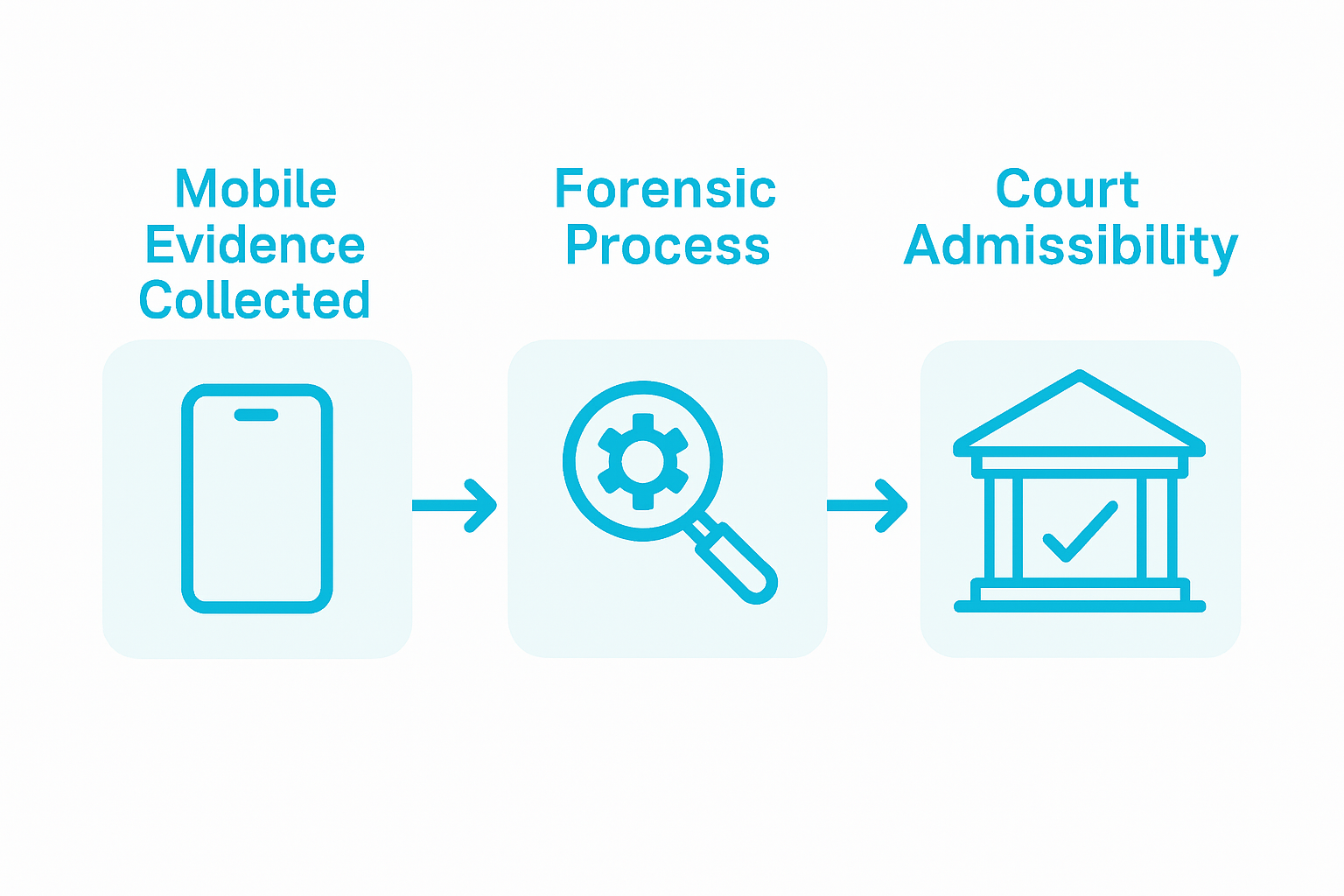

The fundamental principles of evidential admissibility centre on demonstrating the authenticity, reliability, and unaltered nature of digital artifacts. Legal considerations in mobile forensics require forensic experts to document every stage of evidence collection, preservation, and analysis with exceptional precision. This comprehensive approach ensures that digital evidence can withstand intense judicial scrutiny and meet stringent legal requirements.
Key legal standards governing digital evidence preservation include:
- Chain of Custody:
- Detailed documentation of evidence handling
- Continuous tracking of evidence movement
- Identifying all individuals who accessed evidence
- Preventing potential tampering or contamination
- Evidence Integrity:
- Maintaining original data’s exact configuration
- Using validated forensic tools
- Generating comprehensive forensic reports
- Creating verifiable forensic images
- Forensic Methodology:
- Following standardised extraction procedures
- Using court-approved forensic techniques
- Demonstrating scientific repeatability
- Providing transparent analysis methods
- Expert Witness Credibility:
- Qualifications of forensic professionals
- Clear, understandable expert testimony
- Ability to explain technical processes
- Professional certification and experience
Forensic professionals must continuously adapt to evolving technological landscapes, developing sophisticated methodologies that satisfy both technological complexity and legal precision. Their expertise transforms raw digital data into legally admissible evidence, bridging the critical gap between technological investigation and judicial requirements.
Risks, Limitations, and Best Practices
Mobile forensic investigations encompass complex technological challenges that require sophisticated understanding and strategic approach. Comprehensive forensic techniques for mobile devices reveal significant risks and limitations inherent in digital evidence collection, demanding meticulous professional intervention and advanced technical expertise.
Mobile device forensic guidelines highlight the dynamic landscape of digital investigations, where technological complexity constantly challenges established forensic methodologies. Forensic professionals must navigate intricate challenges including rapidly evolving device technologies, encryption mechanisms, and diverse hardware configurations that can potentially compromise evidence extraction and integrity.
Key risks and limitations in mobile forensics include:
- Technological Barriers:
- Constant device technology evolution
- Complex encryption mechanisms
- Proprietary software challenges
- Rapidly changing mobile operating systems
- Evidence Preservation Risks:
- Data volatility
- Potential evidence destruction
- Remote device wipe capabilities
- Network-based evidence manipulation
- Legal and Procedural Challenges:
- Maintaining chain of custody
- Ensuring evidence admissibility
- Addressing privacy regulations
- Managing cross-jurisdictional complexities
- Technical Limitations:
- Incomplete data recovery
- Limited access to secured devices
- Fragmented digital artifacts
- Hardware-specific extraction constraints
Best practices for mitigating these risks require forensic professionals to continuously update their technical skills, invest in advanced forensic tools, develop robust methodological frameworks, and maintain rigorous documentation standards. Success demands a proactive, adaptable approach that balances technological innovation with systematic, legally defensible investigation protocols.
Unlock the Full Potential of Mobile Forensics in Your Legal Cases
Navigating the complex challenges of mobile forensics requires precision, expertise and unwavering commitment to digital evidence integrity. The article highlights key pain points such as maintaining the chain of custody, overcoming technological barriers, and ensuring evidence admissibility. Our Forensic Mobile Specialists understand these challenges intimately and employ advanced forensic methodologies tailored for legal investigations. They ensure that recovered data stands strong under judicial scrutiny while protecting your case from evidential risks.
Don’t let critical mobile evidence slip through the cracks. Empower your investigation with trusted support from our Mobile Forensics Investigations team who specialise in extracting, analysing and preserving digital evidence with the highest standards. Act now to secure legally admissible data that can make the difference in your case. Visit Computer Forensics Lab today and take the first step towards a successful legal outcome.
Frequently Asked Questions
What are the key benefits of using mobile forensics in legal cases?
Mobile forensics provides critical evidence that can validate or refute witness statements, track communication history, and recover deleted data, enhancing the overall strength of legal arguments and investigations.
How does mobile forensics ensure the integrity of digital evidence?
Mobile forensics maintains evidence integrity through strict protocols such as chain of custody documentation, forensic soundness, and using standardised tools, ensuring that digital evidence remains unaltered and legally admissible.
What types of data can be recovered through mobile forensics?
Mobile forensics can recover a variety of data including text messages, call logs, emails, social media interactions, photos, videos, and even deleted content from mobile devices.
How does mobile forensics impact criminal investigations?
Mobile forensics plays a vital role in criminal investigations by providing insights into suspect communications, establishing timelines of events, and revealing previously hidden or deleted data that can be crucial for case resolution.