

Over eighty percent of cybercrime investigations now involve some element of cloud-based evidence, making cloud forensics essential for British criminal lawyers and solicitors working in London. Navigating the complexities of distributed data, international jurisdictions, and multi-tenant cloud platforms presents unique challenges for legal professionals seeking reliable digital proof. This overview clarifies how understanding core cloud forensic principles empowers legal teams to preserve, collect, and present admissible evidence in cutting-edge cybercrime cases.
Table of Contents
- Defining Cloud Forensics And Core Concepts
- Types Of Cloud Services And Forensic Evidence
- Methods For Collecting And Preserving Cloud Data
- Legal Standards And Admissibility In UK Courts
- Risks, Limitations, And Best Practice Comparisons
Key Takeaways
| Point | Details |
|---|---|
| Understanding Cloud Forensics | Cloud forensics adapts traditional forensic methods to the complexities of distributed cloud environments, focusing on evidence preservation, data acquisition, and forensic analysis. |
| Service Models Impact Evidence | Familiarity with cloud service models (IaaS, PaaS, SaaS) is crucial for investigators, as each presents unique challenges and sources of forensic evidence. |
| Maintaining Legal Standards | In the UK, it is vital to adhere to legal standards for digital evidence to ensure admissibility, requiring rigorous documentation and collaboration with legal counsel. |
| Mitigating Forensic Risks | Developing a proactive forensic readiness strategy is essential to address the various risks associated with cloud forensics, including data volatility and jurisdictional complexities. |
Defining cloud forensics and core concepts
Cloud forensics represents a critical specialised domain within digital investigations, uniquely addressing forensic challenges in cloud computing environments. This investigative discipline goes beyond traditional digital forensics by adapting methodologies to the complex, distributed landscape of cloud infrastructure.
At its core, cloud forensics involves systematic evidence recovery and analysis from cloud systems that span multiple geographic locations and technological platforms. Unlike conventional digital forensics, cloud environments introduce substantial complexity through their virtualized, multi-tenant architectures. Investigators must navigate intricate technological landscapes where data is constantly moving, stored across distributed servers, and potentially spanning international jurisdictions.
The fundamental principles of cloud forensics centre around three critical dimensions: evidence preservation, data acquisition, and forensic analysis. These dimensions require sophisticated techniques that can handle the dynamic nature of cloud computing. Forensic experts must develop strategies that can:
- Quickly identify and isolate relevant digital evidence
- Maintain strict chain of custody protocols
- Extract data without compromising its integrity
- Navigate complex cloud service models (Infrastructure as a Service, Platform as a Service, Software as a Service)
- Address potential jurisdictional challenges in multi-regional cloud deployments
Expert Insight: Develop a comprehensive understanding of specific cloud service provider policies and data storage mechanisms before initiating any forensic investigation.
Types of cloud services and forensic evidence
Cloud services represent a complex technological ecosystem with distinct forensic challenges and evidence collection strategies. Understanding these service models is crucial for legal professionals seeking to extract reliable digital evidence in contemporary investigations. Each cloud service model presents unique characteristics that significantly impact forensic approaches and potential evidence availability.
The primary cloud service models include Infrastructure as a Service (IaaS), Platform as a Service (PaaS), and Software as a Service (SaaS), each offering distinctive forensic evidence sources. Infrastructure as a Service provides virtualized hardware resources, where forensic investigators can typically access virtual machine images, network logs, and system configuration details. Platform as a Service offers runtime environments that generate application logs, configuration records, and development environment data. Software as a Service delivers ready-to-use applications, with forensic evidence primarily residing in user activity logs, communication records, and document storage systems.
Forensic evidence collection in cloud environments becomes increasingly complex due to the multi-tenant architectures and distributed server infrastructures. Investigators must develop sophisticated strategies to navigate these intricate technological landscapes, considering:
- Jurisdictional variations in cloud service provider policies
- Data preservation across multiple geographic locations
- Authentication and access control mechanisms
- Network traffic analysis and metadata extraction
- Maintaining chain of custody in virtualized environments
Cloud deployment models further complicate forensic investigations, with public, private, and hybrid cloud environments presenting unique challenges. Public cloud services, shared among multiple users, require nuanced approaches to isolate and preserve relevant evidence. Private cloud infrastructures offer more controlled environments but demand comprehensive understanding of internal network configurations. Hybrid cloud models combine these approaches, necessitating flexible forensic methodologies that can adapt to complex technological ecosystems.

The following table compares how major cloud deployment models affect forensic investigation challenges:
| Deployment Model | Forensic Access Level | Jurisdictional Concerns | Technological Complexity |
|---|---|---|---|
| Public Cloud | Limited, shared | High, multi-national | Very high, multi-tenant |
| Private Cloud | Controlled, internal | Moderate, localised | Moderate, custom systems |
| Hybrid Cloud | Variable, blended | Complex, overlapping | High, mixed platforms |
Pro Tip: Always confirm precise data storage locations and applicable jurisdictional regulations before initiating a cloud forensic investigation to ensure legal compliance and evidence admissibility.
Methods for collecting and preserving cloud data
Cloud data collection represents a complex forensic discipline that demands sophisticated approaches to ensure digital evidence integrity and admissibility in legal proceedings. Legal professionals must navigate intricate technological landscapes where traditional evidence collection methods prove insufficient in capturing the dynamic nature of cloud environments.
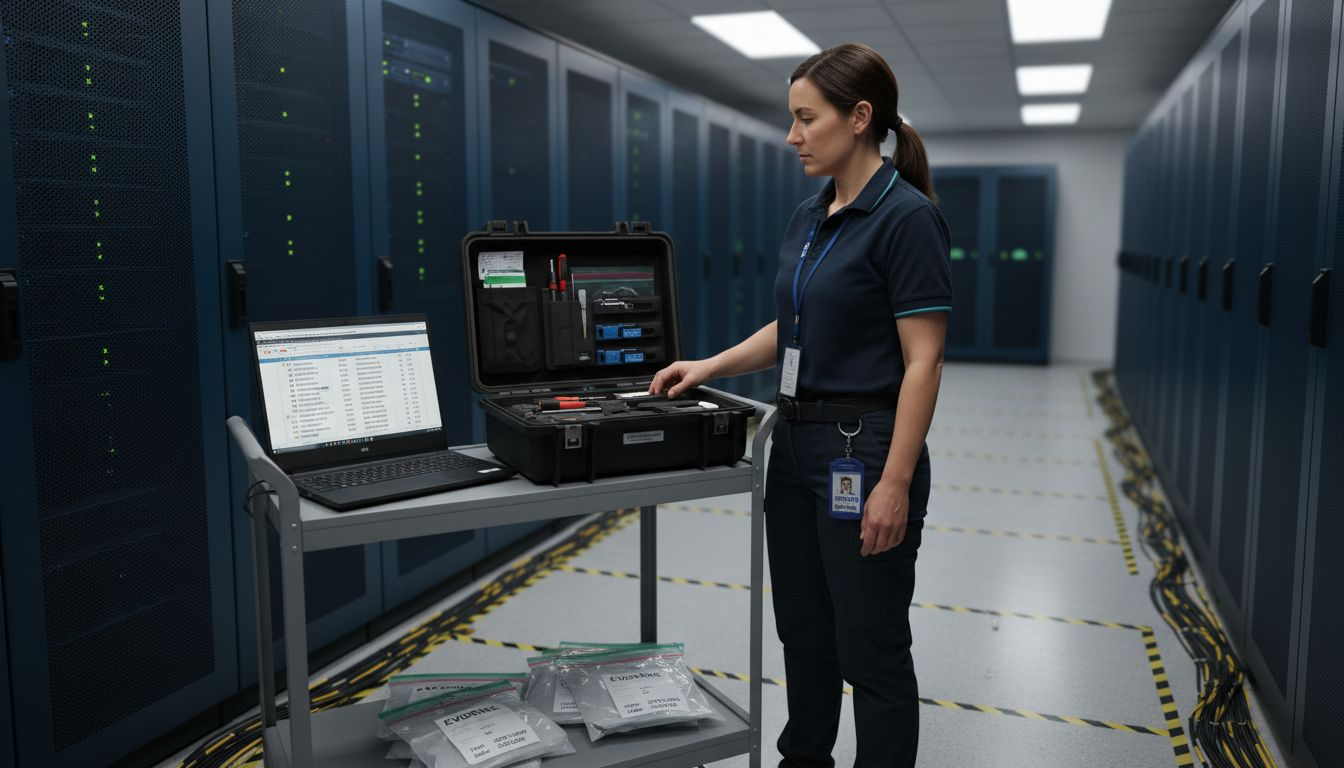
Forensic experts employ systematic techniques for acquiring and preserving cloud-based evidence, which typically involve multi-stage processes designed to address the unique challenges of cloud infrastructures. These methods include capturing data from cloud storage services, analysing service provider logs, and extracting volatile data through runtime analysis. Critical considerations include maintaining a comprehensive chain of custody, ensuring data authenticity, and addressing potential jurisdictional complexities that arise from distributed cloud architectures.
The primary methods for cloud data collection encompass several key strategies:
- Forensic imaging: Creating precise, bit-level copies of cloud storage volumes
- API-based extraction: Leveraging cloud service provider application programming interfaces for controlled data retrieval
- Log analysis: Examining system, application, and network logs for comprehensive digital footprint reconstruction
- Metadata examination: Investigating file and system metadata to establish timeline and user interactions
- Volatile data capture: Securing temporary memory and runtime information before potential data loss
Successful cloud forensic investigations require a nuanced understanding of different cloud deployment models and their inherent forensic challenges. Investigators must develop adaptive strategies that can navigate the complex landscape of public, private, and hybrid cloud environments. This involves understanding specific authentication mechanisms, encryption protocols, and data storage configurations unique to each cloud service model.
Pro Tip: Always document every step of the evidence collection process and maintain strict forensic protocols to ensure the admissibility and credibility of digital evidence in legal proceedings.
Legal standards and admissibility in UK courts
Digital forensic evidence occupies a complex legal landscape in UK judicial proceedings, where technological sophistication increasingly challenges traditional evidentiary standards. Legal professionals must navigate intricate requirements that determine the admissibility and reliability of digital evidence collected through cloud forensic investigations.
The UK legal system is currently reassessing the standards governing software-generated evidence in criminal proceedings, reflecting the rapid technological transformations in digital investigation methodologies. Traditionally, computer-generated evidence was presumed correct unless explicitly challenged, but emerging complexities demand more rigorous verification processes to ensure fairness and accuracy in legal proceedings.
Key legal standards for digital evidence admissibility in UK courts centre on several critical criteria:
- Authenticity: Verifying the genuine origin and integrity of digital evidence
- Completeness: Ensuring no manipulation or selective presentation of digital data
- Reliability: Demonstrating consistent and reproducible forensic collection methods
- Chain of custody: Maintaining comprehensive documentation of evidence handling
- Expert validation: Requiring qualified forensic experts to interpret and substantiate digital evidence
Crucial to admissibility is the ability to demonstrate that forensic investigation techniques adhere to established legal and technological standards. UK courts require meticulous documentation, transparent methodologies, and expert testimony that can withstand stringent cross-examination. This necessitates forensic professionals develop robust processes that not only collect evidence effectively but also satisfy complex legal requirements for evidential credibility.
Pro Tip: Collaborate closely with legal counsel throughout the forensic investigation to ensure all evidence collection procedures align with current UK legal standards and potential courtroom scrutiny.
Risks, limitations, and best practice comparisons
Cloud forensic investigations present a complex landscape of technological challenges that demand sophisticated risk management and strategic approaches. Legal professionals must navigate an intricate terrain where technological limitations can significantly impact evidence collection and preservation strategies.
The field confronts multiple inherent risks and technical limitations across cloud computing environments, ranging from data volatility to jurisdictional complexities. Multi-tenant cloud infrastructures introduce unique challenges that traditional forensic methodologies struggle to address, creating potential vulnerabilities in digital evidence collection and integrity.
Key risks and limitations in cloud forensics include:
- Data Volatility: Rapid resource reallocation potentially compromising evidence preservation
- Jurisdictional Complexity: Navigating legal boundaries across different geographical regions
- Multi-Tenancy Conflicts: Potential interference from shared cloud environments
- Limited Physical Control: Reduced direct access to physical storage infrastructure
- Technological Heterogeneity: Diverse cloud platforms with varying forensic capabilities
Best practices for mitigating these challenges focus on developing robust, adaptable forensic strategies. This involves establishing comprehensive logging mechanisms, implementing cryptographic verification protocols, maintaining strict chain of custody documentation, and fostering collaborative relationships with cloud service providers. Forensic professionals must continuously evolve their methodologies to keep pace with rapid technological transformations and emerging cloud computing architectures.
Summary of common cloud forensic risks and strategies for mitigation:
| Risk Type | Impact on Investigation | Mitigation Strategy |
|---|---|---|
| Data Volatility | Loss of evidence continuity | Immediate acquisition and documentation |
| Jurisdictional Gaps | Legal admissibility issues | Early legal review and coordination |
| Multi-Tenancy | Evidence contamination risks | Enhanced data isolation methods |
| Physical Inaccessibility | Delayed data retrieval | Provider cooperation, API utilisation |
Pro Tip: Develop a comprehensive, pre-emptive forensic readiness strategy that anticipates potential cloud environment complexities and establishes clear protocols for evidence collection and preservation.
Harness the Power of Cloud Forensics for Your Legal Investigations
Legal investigations involving cloud environments face unique challenges such as evidence preservation, data volatility, and jurisdictional complexities. As highlighted in the article, understanding the nuances of cloud service models and mastering precise forensic data collection are crucial to uncovering reliable digital evidence that can withstand court scrutiny. If you are seeking expert support to navigate these complexities while ensuring strict chain of custody and adherence to UK legal standards, specialised professional assistance is essential.
At Computer Forensics Lab, we offer comprehensive Cloud Forensic Analysis services designed specifically to manage the complexities of cloud investigations. Our team combines advanced digital forensic techniques with deep legal knowledge to deliver credible evidence for criminal investigations, corporate disputes, and intellectual property matters. Don’t let the intricacies of cloud forensics slow your pursuit of justice. Explore our Digital Forensics expertise and start building a robust, legally sound case today.
Contact Computer Forensics Lab now to secure precise, timely forensic solutions tailored to your cloud investigation needs.
Frequently Asked Questions
What are the main advantages of cloud forensics in legal investigations?
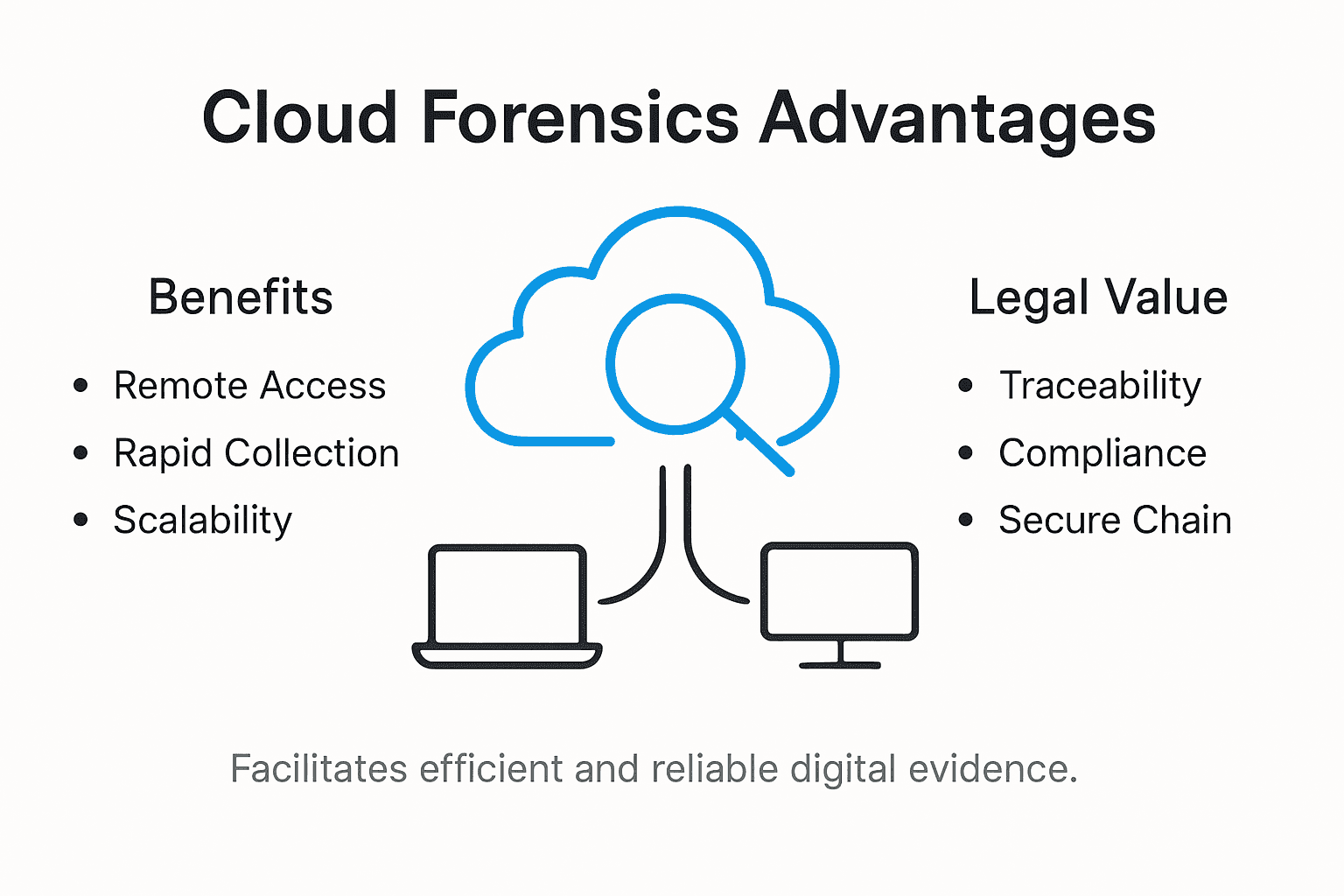
Cloud forensics offers advantages such as efficient evidence collection across distributed environments, the ability to rapidly access and analyse large volumes of data, and the capability to manage intricate jurisdictional issues inherent in cloud systems.
How does cloud forensics differ from traditional digital forensics?
Cloud forensics differs from traditional digital forensics in that it specifically addresses the complexities of cloud environments, which include multi-tenancy, data mobility, and diverse service models, requiring specialised techniques for evidence preservation and data acquisition.
What challenges do legal professionals face when conducting cloud forensic investigations?
Legal professionals face challenges such as data volatility, jurisdictional complexities, limited physical control over evidence, and the need for meticulous documentation to ensure the admissibility and integrity of collected digital evidence.
Why is maintaining a strong chain of custody important in cloud forensics?
Maintaining a strong chain of custody is crucial in cloud forensics to ensure that digital evidence is preserved accurately, remains untampered, and can be reliably presented in court, thus supporting the integrity of the legal process.