
TL;DR:
- Getting into forensic science requires a relevant bachelor’s degree and comprehensive laboratory training, including certification. Practical skills, courtroom readiness, and ongoing professional development are essential for career progression in this field. Early research into certification standards and selecting a specialized discipline enhance prospects for a credible forensic career.
Getting into forensic science isn’t as simple as watching a few crime dramas and applying for a lab coat. Forensic scientist training is a structured, multi-stage process that combines formal academic qualifications, specialised laboratory experience, and certification standards that vary by discipline and jurisdiction. If you’re looking to break into the field or sharpen existing skills, understanding exactly what that pathway looks like will save you considerable time and misdirected effort. This guide covers the educational foundations, practical training routes, certification requirements, and continuing development options that define a credible forensic career.
Key takeaways
| Point | Details |
|---|---|
| Degree is the foundation | A relevant BSc or higher is required before specialist forensic training can begin. |
| Certification requires full attendance | Many courses mandate 100% attendance; missing sessions can cost you your certificate. |
| Courtroom readiness counts | Qualifying as a forensic scientist includes demonstrating testimony competency, not just lab skill. |
| Specialisation matters early | Choosing a forensic sub-discipline early helps you pursue targeted, accredited courses. |
| Continuous learning is mandatory | Advanced workshops, digital forensics, and recertification keep your credentials credible. |
Forensic scientist training: building your academic foundation
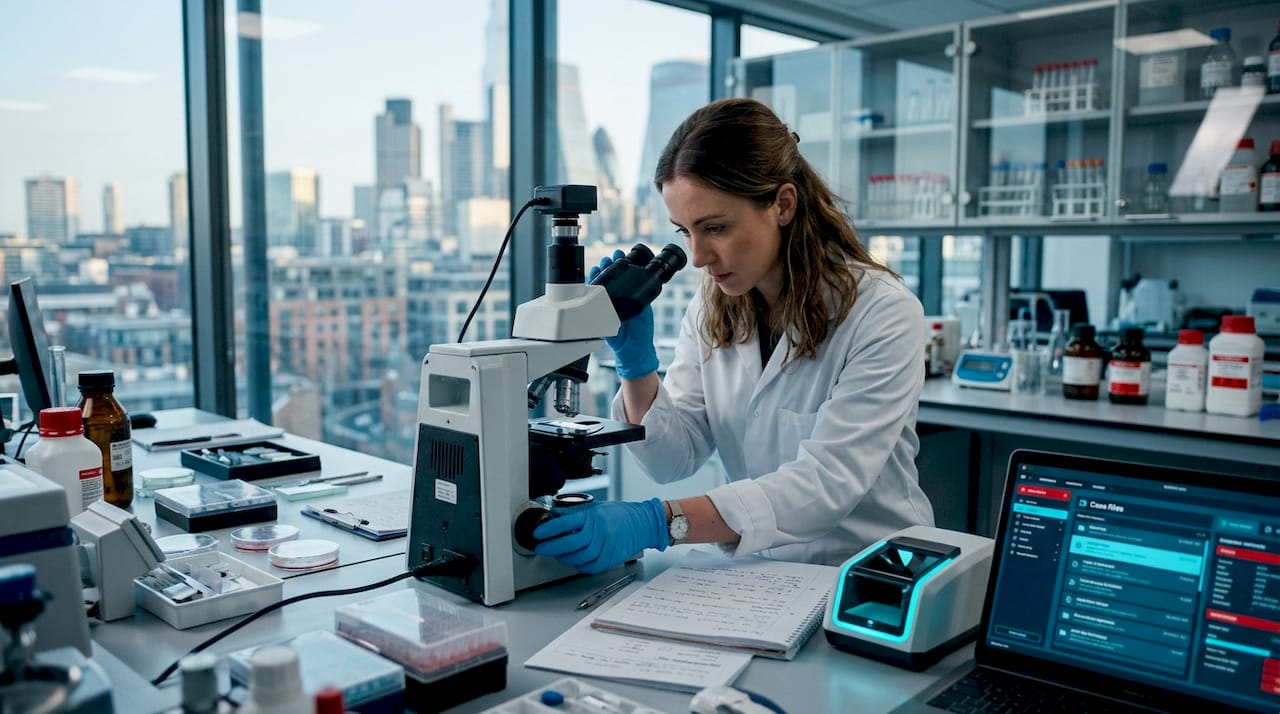
Before any forensic scientist training begins in a laboratory, you need the right academic credentials behind you. Most routes into forensic science require at minimum a bachelor’s degree in a relevant discipline. Accepted subjects typically include chemistry, biology, biochemistry, or a forensic science degree awarded by an accredited institution. In the UK, many universities now offer dedicated BSc Forensic Science programmes, and internationally, options range from three to four-year undergraduate qualifications through to master’s level specialisations.
The difference between a general science degree and a forensic-specific degree is more significant than it might appear. A chemistry degree gives you strong analytical foundations, but it won’t teach you chain of custody, evidence handling protocols, or the legal standards governing forensic testimony. A forensic science degree structures those legal and procedural elements directly into the curriculum, which is why many employers and certification bodies favour them.
Accreditation is a critical filter when choosing your programme. In the United States, the Forensic Science Education Programs Accreditation Commission (FEPAC) sets the benchmark. The UK operates under its own quality assurance frameworks. Institutions such as the National Forensic Science University in India offer structured forensic programmes at undergraduate, postgraduate, and diploma level, each with defined admission criteria and academic thresholds. Studying at an accredited institution isn’t just about prestige. It directly affects whether your qualification is recognised by labs, agencies, and certification bodies.
When choosing a programme, consider your intended specialism. Digital forensics, forensic toxicology, forensic anthropology, and crime scene investigation each have distinct knowledge requirements. Selecting a degree with relevant electives or specialist modules will give you a meaningful head start.
- Biology or chemistry BSc: Solid foundation for trace evidence, toxicology, or DNA-based disciplines
- Forensic science BSc: Integrates legal, procedural, and analytical training from year one
- MSc forensic science: Preferred for advanced or specialist roles; often required for laboratory leadership positions
- Diploma and certificate programmes: Suitable for career changers or those supplementing existing qualifications
Pro Tip: If you’re choosing between two accredited programmes, look at their placement records and whether they operate a working forensic laboratory on campus. Hands-on access during your degree pays dividends when you later apply for structured on-the-job training.
Specialised training pathways and certification

A degree gets you to the door. What happens inside the door is where forensic science training becomes genuinely demanding. Most accredited forensic laboratories run structured on-the-job training programmes that new analysts must complete before they qualify as independent practitioners. The Virginia Department of Forensic Science, for example, requires candidates to complete laboratory-based training, pass proficiency assessments, and demonstrate courtroom testimony competency before receiving qualified scientist status. That last element catches many trainees off guard.
Alongside laboratory programmes, specialised courses and certificates exist for specific forensic roles. Forensic technician courses cover the investigative basics that practitioners need before working active cases. TEEX’s Forensic Technician Certificate programme, for example, addresses evidence collection and fingerprint techniques at a standard accepted by official training frameworks. For crime scene roles specifically, TEEX’s Crime Scene Investigation course requires 100% attendance for certification, covering photography, fingerprinting, and DNA evidence collection in practical settings. That attendance requirement is non-negotiable. Miss a session, lose the certificate.
There is also an important distinction between crime scene investigator roles and forensic scientist roles that catches many newcomers out. A crime scene investigator collects and preserves physical evidence at a scene. A forensic scientist analyses that evidence in a laboratory. The two roles overlap in knowledge but differ considerably in day-to-day function, required qualifications, and training pathways. Many practitioners train in both, but most careers specialise in one or the other.
For a more structured academic entry, TEEX’s Collegiate Technical Investigation Skills Program provides 272 hours of forensic training and awards both collegiate credit and professional certificates. It uses blended learning, combining digital instruction with hands-on practical application. Eligibility requires a Federal Criminal History Background Check and identity verification, so candidates should account for that administrative process well before course start dates.
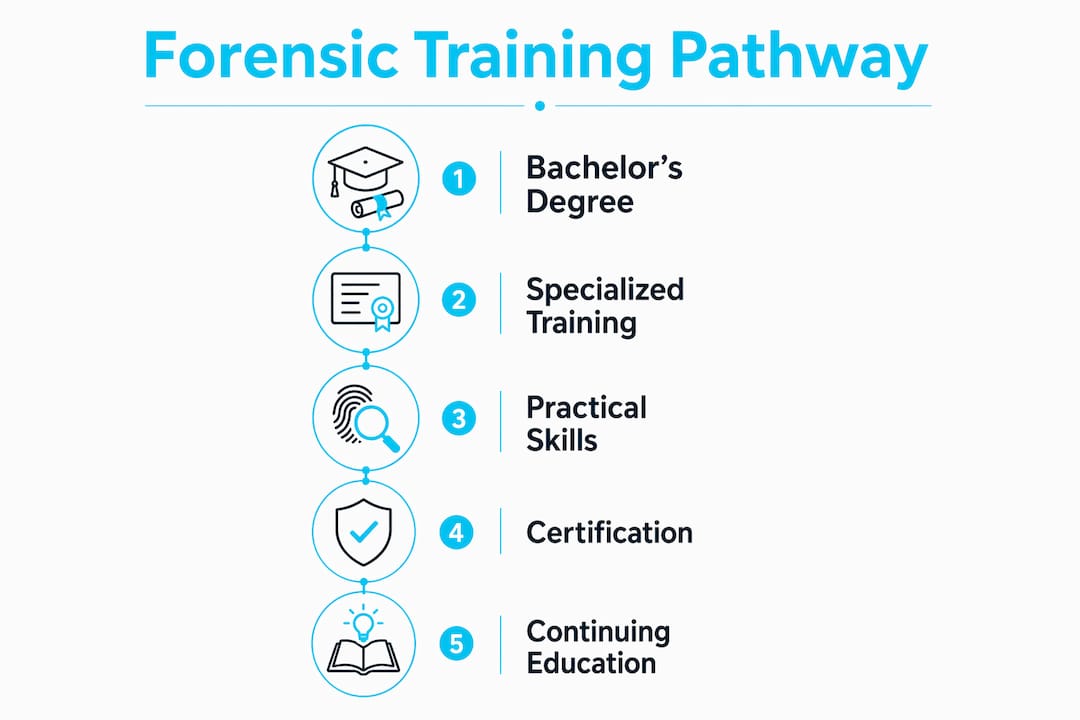
Here is a clear sequence for approaching your certification pathway:
- Complete your undergraduate degree in a relevant accredited programme
- Identify the specific forensic discipline you intend to work in
- Research certification bodies and their stated prerequisites for your chosen discipline
- Enrol in accredited forensic technician courses or crime lab training relevant to your specialism
- Complete structured laboratory or investigative training within an accredited facility
- Pass all competency assessments, including courtroom testimony preparation
- Apply for formal certification through the relevant professional body
Pro Tip: Start researching certification requirements before you finish your degree, not after. Bodies like the American Board of Criminalistics publish detailed competency frameworks online. Reading them early shapes how you approach both your studies and your practical placements.
Practical skills development in forensic training
Classroom learning and certification exams describe what you should be able to do. Practical training proves that you actually can. The core techniques you’ll develop during forensic analysis education include physical evidence collection, chain of custody documentation, specimen analysis, photography, and report writing. Each of these requires repetition in realistic settings before a trainee develops genuine competency.
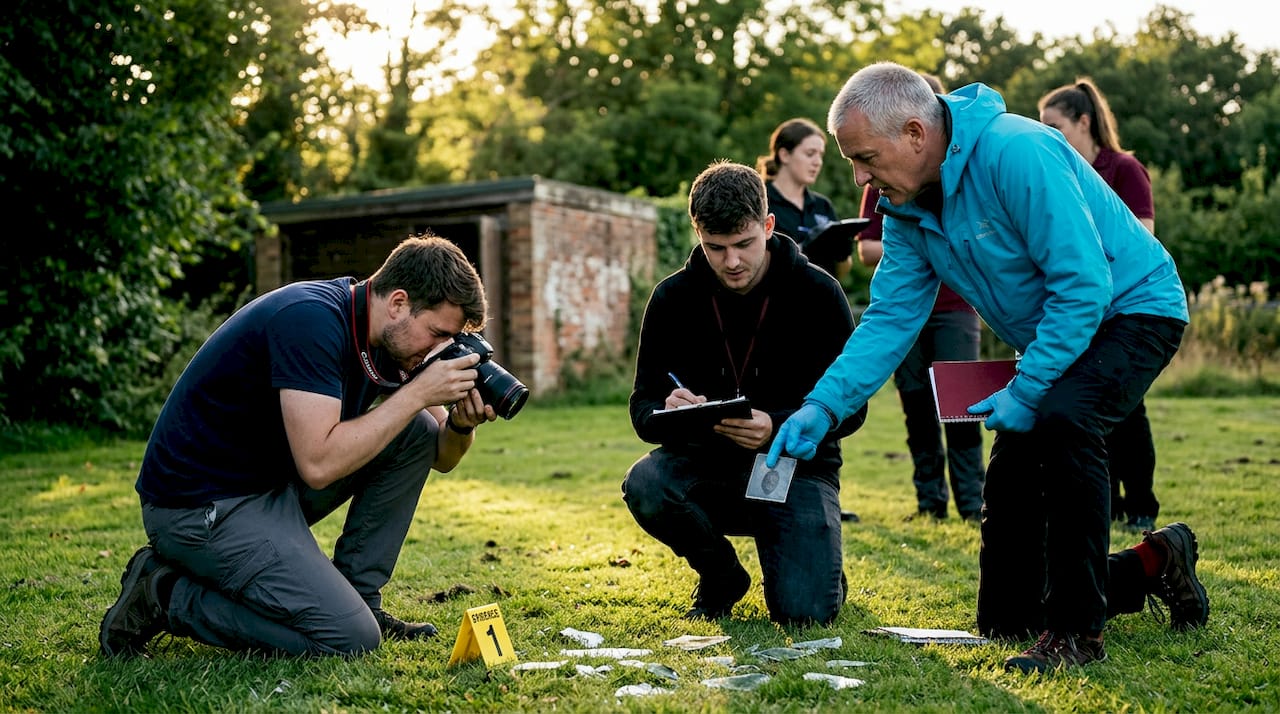
Many high-quality programmes now use simulated crime scenes as a training tool. These controlled environments allow trainees to practise search patterns, collect mock evidence, and produce formal documentation without the legal consequences of errors in live cases. The feedback loop is faster and the learning is deeper than textbook instruction alone.
Report writing deserves more attention than it typically receives in training discussions. A forensic scientist’s findings only matter if they can be communicated clearly and precisely to non-specialist audiences, including solicitors, juries, and judges. Understanding forensic reporting standards for UK legal contexts is part of professional development, not an optional extra.
Common pitfalls during training include:
- Underestimating the time required to develop proficiency with analytical instruments
- Neglecting documentation discipline in favour of getting results quickly
- Treating courtroom preparation as a box to tick rather than a genuine skill to develop
- Failing to understand the accreditation standards governing your specific laboratory
- Ignoring the administrative requirements (background checks, identity verification) until they become urgent
Blended learning formats combine the flexibility of online forensic science training with the rigour of in-person laboratory work. For candidates managing work commitments alongside study, this structure makes continuous development realistic. The key is to treat every practical session as a professional rehearsal, not just coursework.
Continuing professional development and advanced training
Forensic science does not stand still. DNA analysis techniques, digital evidence standards, and legal admissibility rules all evolve. A qualification you earned five years ago may not reflect current best practice, which is precisely why continuing professional development is built into the professional standards of most reputable forensic bodies.
Advanced training opportunities cover the full breadth of forensic sub-disciplines. Digital forensics, forensic toxicology, CBRN (chemical, biological, radiological, nuclear) forensics, and forensic entomology each have dedicated advanced courses, workshops, and seminars. Idaho State Police, for example, operates a forensics training resource that offers advanced workshops and on-demand presentations to help practitioners stay current with emerging investigative methods.
Professional bodies play a central role in setting recertification standards. The American Academy of Forensic Sciences publishes formal education and certification standards for forensic toxicology and other sub-disciplines, specifying not just initial training but ongoing continuing education requirements. These standards indicate a clear industry direction: specialised certification is replacing generic forensic credentials across the field.
| Training stage | Format | Purpose |
|---|---|---|
| Initial degree | Full-time study, 3 to 4 years | Academic foundation in science and forensic principles |
| Laboratory on-the-job training | Supervised practical, 1 to 2 years | Competency development in accredited lab settings |
| Specialist certification courses | Short courses, blended or in-person | Sub-discipline proficiency and credential award |
| Advanced workshops and seminars | Ongoing, variable | Skills currency and recertification compliance |
| Online forensic science training | Self-paced modules | Supplementary knowledge and CPD hours |
Career advancement in forensic science correlates directly with the breadth and currency of your credentials. Analysts who add digital forensics training to a traditional lab background, for example, become significantly more versatile in the current investigative environment, where digital evidence increasingly sits at the centre of criminal cases.
My perspective on getting forensic training right
I’ve seen plenty of people approach forensic science with the right academic grades and entirely the wrong expectations. The qualification gets you noticed. What keeps you employed and trusted in this field is something harder to quantify: the ability to perform under scrutiny, document precisely under pressure, and hold your position clearly when cross-examined in court.
In my experience, the trainees who advance fastest are those who treat courtroom preparation as a core skill from day one, not an afterthought before their first testimony. The Virginia Department of Forensic Science’s model of requiring demonstrated courtroom competency before scientist status is awarded reflects what the best labs worldwide already understand. Your analysis is only as valuable as your ability to defend it.
My honest advice on choosing a specialisation: pick the area that genuinely holds your interest, not the one that sounds most employable. Forensic toxicology, digital forensics, and trace evidence analysis all offer solid career paths, but each demands years of focused development. You won’t sustain that focus in a field that bores you by year three. I’ve also found that candidates who research forensic best practices early, before finishing their degrees, arrive at their first laboratory placement with a professional maturity that sets them apart immediately.
The other thing I’d flag: don’t underestimate the administrative gatekeeping. Background checks, identity verification, attendance requirements. These aren’t bureaucratic inconveniences. They reflect the legal weight carried by forensic evidence. If you’re serious about this career, treat every procedural requirement with the same rigour you’d apply to an evidence sample.
— Computer
How Computerforensicslab supports your forensic development
If your training path is pointing towards digital forensics, Computerforensicslab offers specialist services and expertise grounded in real investigative work. Based in London and active in high-profile cases including Discovery+’s 999 Murder Calling, the team brings operational depth that formal courses alone cannot replicate. Whether you’re looking to understand digital forensics investigations in practice or need to see how evidence analysis works at professional standards, the Computerforensicslab portfolio covers data recovery, mobile device examination, cloud analysis, and expert witness reporting. For those serious about digital specialism, exploring the digital forensics services on offer provides a direct view of what the field looks like at the professional level.
FAQ
What qualifications do you need to start forensic scientist training?
A bachelor’s degree in a relevant subject such as chemistry, biology, or forensic science is the standard entry point. From there, structured on-the-job training within an accredited laboratory is typically required before a candidate can qualify as an independent forensic scientist.
How long does forensic science training take?
The full pathway from undergraduate degree to qualified forensic scientist typically takes five to seven years, combining a three to four-year degree, one to two years of supervised laboratory training, and specialised certification courses in your chosen discipline.
Is 100% attendance really required for forensic courses?
Yes, for many accredited programmes it is. TEEX’s Crime Scene Investigation course, for example, mandates full attendance as a condition of certification eligibility. Missing sessions can disqualify you from receiving a certificate regardless of your assessment performance.
What is the difference between a forensic scientist and a crime scene investigator?
A crime scene investigator collects and preserves physical evidence at the scene of a crime. A forensic scientist analyses that evidence in a controlled laboratory setting. Both roles require forensic science training but follow different qualification and certification pathways.
How do I prepare for a forensic scientist interview?
Focus on demonstrating practical competency, familiarity with accreditation standards, and an understanding of forensic science in criminal cases. Interviewers in accredited labs will probe your knowledge of chain of custody, documentation discipline, and how you would approach testifying as an expert witness.