
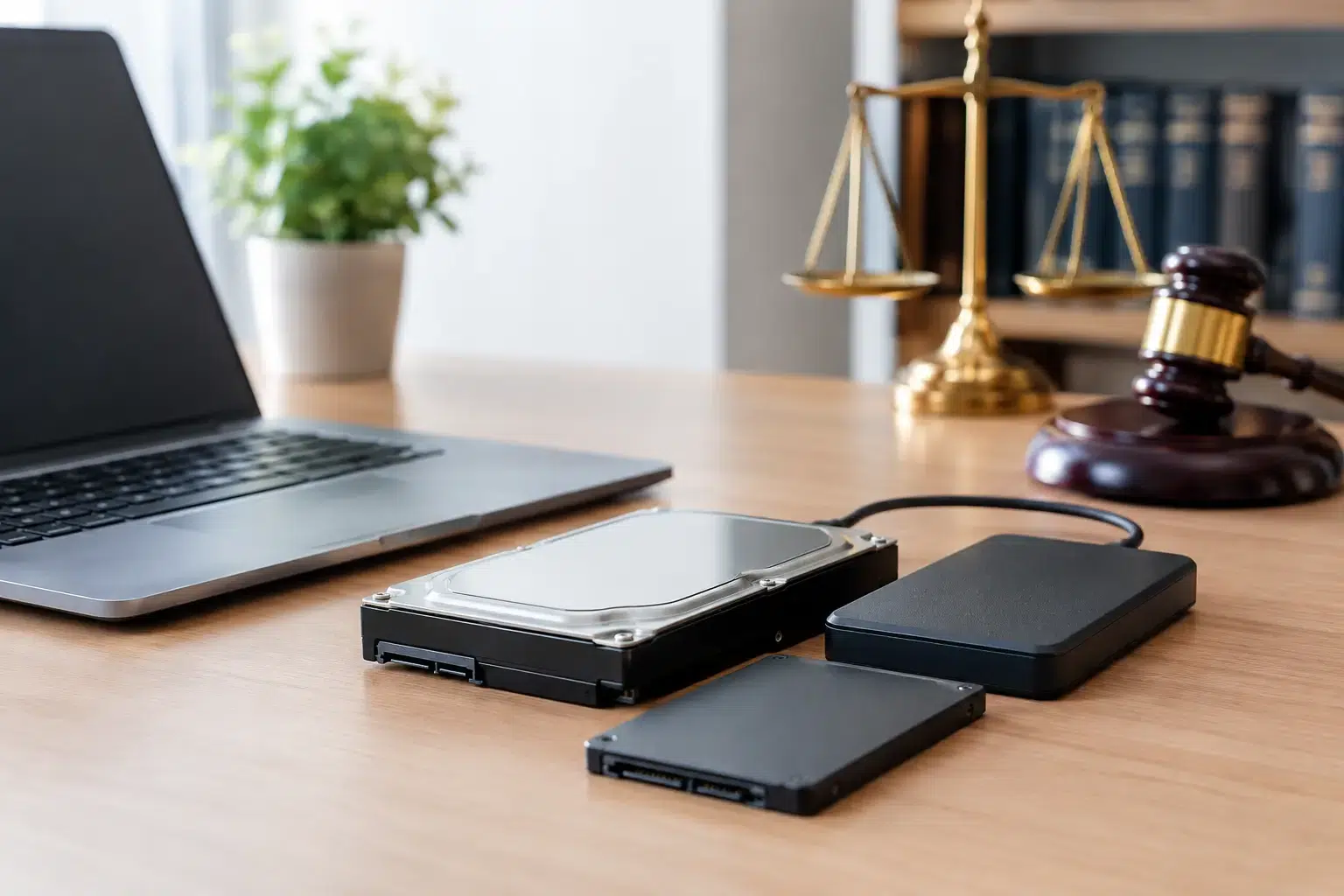
A disputed WhatsApp message, a deleted spreadsheet or a laptop linked to alleged misconduct can change the direction of a case. Yet the evidence is often handed over as a USB drive, cloud download or routine IT backup. The distinction between a forensic copy versus backup is critical: one may support a defensible investigation, while the other may be useful context but unable to establish what was originally present on a device.
For solicitors, businesses and private clients, this is not a technical distinction for its own sake. It affects disclosure decisions, expert instructions, evidential weight and the ability to explain digital findings under cross-examination.
Forensic Copy Versus Backup: The Core Difference
A backup is created to restore information after loss, hardware failure, accidental deletion or a cyber incident. It is designed for business continuity and convenience. Backups may copy selected files, synchronise folders, retain only recent versions, compress data, exclude system areas or alter metadata during the backup process.
A forensic copy, often called a forensic image or forensic acquisition, is created to preserve digital evidence for examination. The objective is not simply to keep accessible files. It is to capture data in a manner that allows an expert to account for the source, verify the integrity of the acquisition and, where appropriate, examine artefacts beyond the files a user can readily see.
The appropriate acquisition method depends on the device and circumstances. A full physical acquisition may be possible for some media, while a logical, file-system or cloud acquisition may be the proportionate and technically available option elsewhere. What matters is that the method, limitations and resulting data are clearly documented rather than assumed away.
What a Backup Can Miss
A backup can be highly valuable. It may preserve emails, documents, photographs, application data or historical versions that no longer exist on the live device. In an urgent commercial dispute, it can also help identify relevant material quickly.
But a backup is rarely a complete evidential record. It may not retain unallocated space, deleted data, partition information, operating system artefacts, application databases, event logs, registry information or the metadata needed to establish when a file was created, accessed or modified. It may also omit external storage, encrypted containers and content held only within a particular user profile.
Consider an employee accused of copying confidential data before leaving a business. A routine backup may show that sensitive documents existed. It may not show whether USB media was connected, whether files were copied, whether cloud-sync activity took place, which account was active, or whether relevant files were later deleted. Those questions commonly require examination of the original device or a properly acquired forensic copy.
The same issue arises in family, criminal and civil matters. A screenshot or exported chat may show words on a page, but not necessarily the account context, surrounding communications, timestamps, device attribution or signs of alteration. It is evidence to assess, not automatically evidence to rely upon without further enquiry.
Why Integrity Changes the Evidential Value
The defining feature of a forensic acquisition is reproducibility. The examiner records what was received, how it was handled, the tools and method used, and the results of integrity checks. Cryptographic hash values are commonly used to demonstrate that the forensic copy has not changed from the point of acquisition.
A hash value is a unique digital fingerprint calculated from data. If an image is acquired and its hash matches when later verified, the examiner can show that the examined copy is materially the same as the one originally captured. A backup can also be hashed, but hashing it does not transform it into a forensic image. It confirms the integrity of that backup file, not the completeness or evidential quality of its original collection.
Chain of custody is equally important. A court or opposing party may ask who had possession of a device, when it was collected, whether it was powered on, what actions were taken and whether any person could have altered its contents. Gaps do not always make evidence inadmissible, but they can reduce weight and create avoidable avenues of challenge.
A disciplined forensic process therefore separates preservation from analysis. The original device is protected wherever possible, a verified working copy is examined, and each material step is recorded. This supports independent review and enables the expert to present findings impartially.
When a Backup May Be Enough
It depends on the issue in dispute. Not every matter requires a full forensic image, and instructing one without a defined evidential question can increase cost, time and data protection exposure.
A backup may be sufficient where the question is narrow and the provenance is not disputed. For example, a business may need to recover a known version of a contract from an established backup system, or parties may agree the authenticity of exported records. In e-disclosure, a targeted collection may be proportionate where the relevant custodians, date range and data sources are already clear.
A backup may also be the only available source because the original device has been lost, wiped, replaced or damaged. That does not make the data worthless. It means the report should state precisely what was available, how it was obtained and what the source cannot establish. Transparent limitations are a strength in expert evidence, not a weakness.
The risk arises when a backup is presented as if it were a complete forensic capture. That claim can unravel quickly if the case turns on deletion, user activity, hidden data, chronology or allegations that the material was manipulated.
When a Forensic Copy Is the Safer Course
A forensic acquisition should be considered early where the device itself is central to the dispute or where facts are likely to be contested. This includes suspected insider misconduct, unauthorised access, fraud, harassment, IP theft, alleged fabrication of digital material, cybercrime and disputes over communications.
Speed matters. Continued use of a computer or mobile phone can overwrite deleted material, change timestamps, update applications and generate new system activity. Switching on a device, entering a passcode, allowing it to connect to Wi‑Fi or asking an employee to search it can all affect the evidence. Even well‑intended IT intervention can complicate later interpretation.
Mobile phones require particular care. A conventional phone backup may omit content depending on settings, encryption, app design and cloud synchronisation. Some application records are retained on the device, others in cloud accounts, and others only in server-side systems. A defensible approach identifies the relevant sources before collection, rather than treating one exported archive as the whole evidential picture.
Preserving Digital Evidence Before Examination
If a matter may lead to litigation, disciplinary action, regulatory scrutiny or police involvement, preservation should begin before anyone starts reviewing files. The immediate aim is to prevent loss while maintaining a clear record of events.
Record who identified the device or account, when and where it was found, who has handled it, and its visible condition. Avoid browsing folders, opening messages or attempting to recover deleted files on the original. For a computer, isolate it from networks only where appropriate to the risk and circumstances; for a mobile device, seek specialist advice promptly because connection state, encryption and remote‑wipe risk require case‑specific handling.
Do not rely on screenshots as a substitute for preservation. They can assist an initial account, but they are selective and may not capture the information needed to authenticate the underlying material. Keep any available backup, export or cloud record in its original form and document how it was created.
A forensic provider should be instructed with clear questions. Is the issue whether files were copied? Whether a message was sent from a specific device? Whether data was deleted? Whether an account was accessed without authority? Focused questions help determine whether a full image, targeted collection, cloud acquisition, data recovery exercise or combination of methods is proportionate.
Reporting That Can Withstand Scrutiny
The final issue is not merely what data was found, but how the findings are explained. A useful forensic report distinguishes observed facts from opinion, identifies the data source, describes the acquisition method and records relevant limitations. It should avoid overstating what timestamps, account names or artefacts can prove.
For example, a report may establish that a USB device was connected to a computer at a particular time and that files were accessed shortly afterwards. It may not, without further evidence, prove who was physically present or why the device was connected. That distinction protects the integrity of the evidence and assists the court.
Computer Forensics Lab approaches digital evidence with this evidential discipline: preserve the source, examine a verified copy, document the method and present clear findings capable of independent scrutiny. Where a backup is all that remains, it can still be examined carefully, with its evidential boundaries stated plainly.
The right question is not whether a backup is useful. It often is. The question is whether it can answer the issue that matters without leaving a gap that the opposing party can expose. Where the stakes are high, early forensic preservation gives the facts their best chance of being heard clearly.