When files matter for litigation, a criminal investigation or a regulatory enquiry, professional forensic recovery is required rather than consumer software, because the recovery method itself can determine whether the evidence is later admissible. The immediate action is to stop using the device, photograph its condition, and contact a qualified forensic provider or your legal counsel before anything else happens to it.
TL;DR:
- Forensic recovery is essential when files may be used as evidence in litigation, criminal investigations, or regulatory inquiries to ensure admissibility.
- Early instruction to a qualified forensic provider preserves more recovery options and reduces risks of data overwriting or loss.
- Imaging and acquisition must follow strict protocols like creating cryptographic hashes and avoiding unnecessary power cycling to maintain data integrity.
- Recovery success depends on several factors, including media condition, encryption, and proper chain-of-custody, with many limitations such as SSD TRIM erasing deleted data.
- Choosing an accredited provider with transparent processes, clear documentation, and availability for expert testimony reduces operational and legal risks.
Table of Contents
- When to instruct a forensic lab for professional recovery
- Immediate preservation steps for custodians and investigators
- What happens during forensic imaging, acquisition and analysis
- Limitations, risks and common pitfalls to expect
- Chain of custody and evidence documentation requirements
- Timeline and cost drivers for forensic recovery
- How to choose a forensic provider: a procurement checklist
- What examiners see most often on the ground
- How we can help with forensic recovery and reporting
- FAQ
- Sources
When to instruct a forensic lab for professional recovery
Not every lost file calls for a forensic lab. Routine IT support is adequate for ordinary business continuity, but certain circumstances change the calculation entirely because the data may later need to stand up in court or before a regulator.
- Active or anticipated litigation, where lost or deleted files may become disclosable evidence.
- Criminal investigations involving computer misuse, fraud or data theft.
- Regulatory enquiries where data handling itself is under scrutiny.
- Suspected spoliation, where a party may have deliberately deleted or altered files.
Early instruction preserves options that disappear quickly once a device continues to be used. We recommend notifying legal counsel, naming an evidence custodian and opening a dialogue with a forensic lab’s intake team as the first three calls, in that order, before any internal recovery attempt is made.
Immediate preservation steps for custodians and investigators
Staff who encounter a device before forensic examiners arrive carry real responsibility for what can still be recovered. The handling in the first hour often shapes what is achievable weeks later.
- Photograph the device from multiple angles, noting serial numbers, visible damage and whether it is powered on or off.
- Leave the power state as found: do not power cycle, restart or shut down a running device unless a forensic examiner has advised otherwise.
- Disconnect the device from networks and disable Wi-Fi or mobile data where this can be done without touching the file system, to prevent remote wiping or cloud sync overwriting local data.
- Preserve any paired peripherals, cables, SIM cards and the credentials needed to access the device or associated accounts.
- Where relevant data may sit with a third party, send a written preservation request to the cloud provider promptly, since providers often require formal legal process before releasing data and may supply it in proprietary formats that need conversion.
Pro Tip: Never attempt your own recovery software on a device that may become evidence: installing anything writes new data to the drive and can overwrite the very files you are trying to save.
What happens during forensic imaging, acquisition and analysis
A forensic lab’s workflow exists to answer one question for a court: can this copy be trusted as a true representation of the original? Everything else follows from that.
- Imaging: examiners create a bit-for-bit copy of the media and generate a cryptographic hash of both the original and the image, a step NIST guidance identifies as central to proving the copy’s integrity.
- Live versus dead acquisition: when a device holds volatile memory or encryption keys that would be lost on shutdown, examiners perform a live capture first; SWGDE guidance recommends this sequencing specifically for full disk encryption and RAM-resident material.
- Recovery methods: deleted or unallocated data is approached through logical recovery, physical recovery on damaged media, or chip-off extraction for devices that cannot be read conventionally. Our overview of recovery techniques sets these out in more detail.
- Analysis and reporting: examiners work exclusively from the image, never the original, following the working-copy principle set out in NIST’s incident response guide, and document tool versions so another examiner could reproduce the same result.
More on what formally preserved recovery means for a legal case is covered in our guidance for legal teams.
Limitations, risks and common pitfalls to expect
Recoverability is never guaranteed, and a competent examiner will say so plainly rather than overpromise.
- SSD TRIM and garbage collection routinely erase deleted data at the firmware level before an image is ever taken.
- Encrypted volumes without an available key often cannot be recovered at all once the device has been shut down.
- Recovered files may be partial, corrupted or unrelated to the matter, which is why examiners validate relevance rather than hand over a raw file list.
- Gaps in chain of custody or handling by untrained staff can make otherwise sound recovery inadmissible.
NIST’s forensic science review notes that TRIM and file-system behaviour on solid-state drives are recognised constraints on recovery, meaning deleted data is sometimes permanently unrecoverable regardless of the tools used. (NIST IR 8354) Our page on what recovery actually means in computer forensics explains overwritten data in more depth.
Chain of custody and evidence documentation requirements
Courts do not simply ask whether data was recovered; they ask whether its journey from device to courtroom can be fully accounted for.
- Every transfer is logged with a unique identifier, the names of the transferor and receiver, the date and time, and the stated purpose of the transfer, which SWGDE’s best practice standard sets as the minimum contemporaneous record.
- Hashes of the original and every working image are verified and retained, so any later challenge to integrity can be checked against the original record.
- Original images are stored securely with logged access, separate from working copies used for day-to-day analysis.
- A credible lab supplies intake forms, acquisition logs, a record of tool versions used and a sample of its reporting format on request.
Our chain of custody checklist sets out the fields a lawyer should expect to see completed at every stage.
Timeline and cost drivers for forensic recovery
Forensic recovery moves through distinct phases: triage, imaging, targeted recovery, full analysis, reporting and, where needed, review ahead of disclosure or trial. Each phase adds time, and the overall timeline depends heavily on the case.
- Physically damaged media or chip-off extraction adds significant time compared with a straightforward logical image.
- Larger data volumes and full disk encryption both extend imaging and analysis time.
- Cloud preservation introduces its own delay, since providers often require formal legal process before releasing data.
- Expert witness preparation, including report drafting and availability for cross-examination, is typically scoped separately from recovery itself.
Expedited processing is usually available at a premium where a court deadline or urgent investigative need demands it. Legal teams should factor evidence retention and ongoing disclosure obligations into the instruction from the outset, not as an afterthought.
How to choose a forensic provider: a procurement checklist
Selecting a provider is where many of the risks above are either closed off or left wide open, so the questions asked at instruction stage matter.
- Ask for evidence of accredited methods, a sample redacted report and documented tool validation.
- Confirm what will actually be delivered: forensic images, working copies, export formats compatible with your review platform, and full supporting documentation.
- Establish whether an examiner will be available as an expert witness, since repeatable, well-documented methods are what allow testimony to withstand challenge.
- Get clear service levels, a transparent price structure and a stated storage and retention policy before instructing.
Pro Tip: Vagueness about chain-of-custody practice at the enquiry stage is one of the clearest early warning signs that a provider is not set up for evidential work.
Our practical guidance for legal investigations sets out these questions in the context of a formal instruction letter.
What examiners see most often on the ground

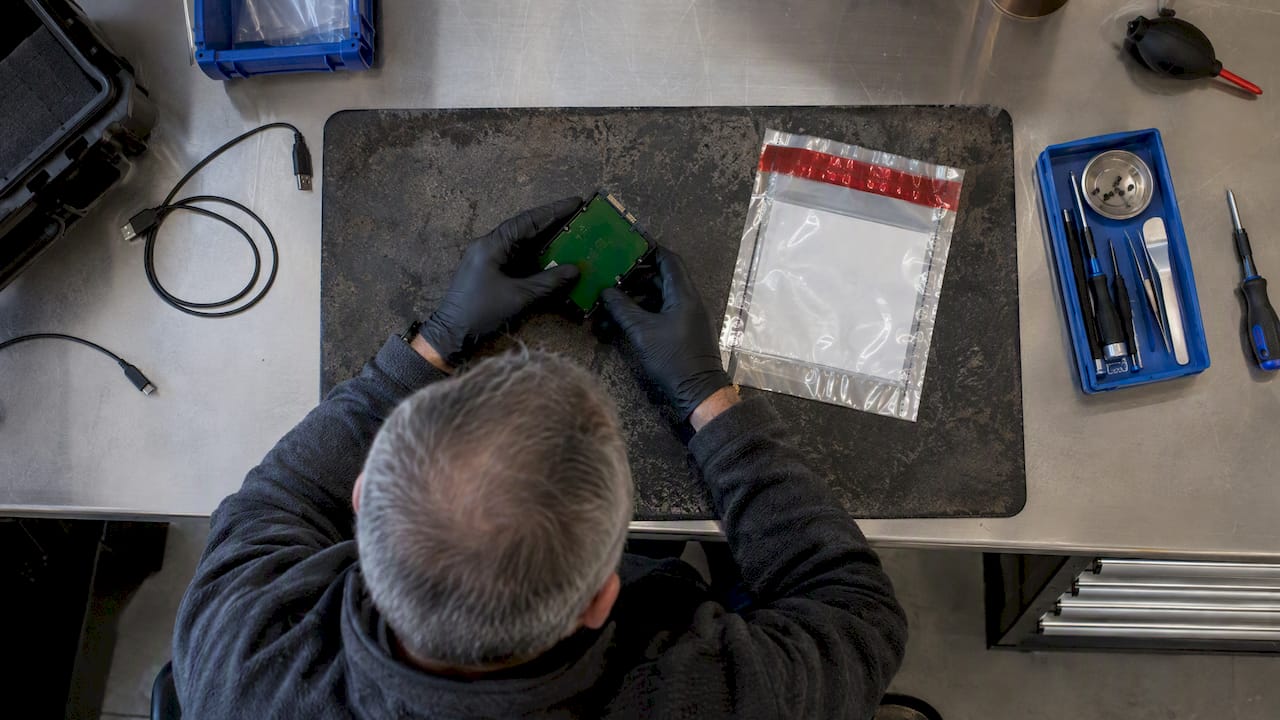
Cases are frequently instructed days or weeks after the data loss, by which point normal use has already overwritten what might have been recoverable. The most common mistake is well-intentioned: someone runs recovery software or simply keeps using the device while deciding what to do.
Early instruction, even before the full scope of a matter is clear, consistently preserves more. A device secured and imaged on day one keeps options open that are permanently closed by day ten.
— Computer
How we can help with forensic recovery and reporting
We provide forensic data recovery, chain-of-custody management and expert witness reporting services to clients who need recovered data to stand up to scrutiny. Our specialist services for legal professionals cover acquisition, analysis and court-ready reporting as a single instructed engagement.
When you contact us, it helps to have ready:
- The device type, make and current physical condition.
- The urgency of the matter and any court or regulatory deadline.
- The legal basis for the instruction, such as litigation, a criminal matter or an internal investigation.
Instructions can be arranged directly through our digital forensics for legal professionals page, where a member of our team will confirm scope and next steps.
This article is general information, not a substitute for advice from a qualified lawyer. Consult a qualified legal professional about your own circumstances before acting on anything here.
FAQ
Can deleted files always be recovered forensically?
No, recovery is never guaranteed. Solid-state drives in particular use TRIM and garbage collection processes that can permanently erase deleted data at the firmware level, as NIST’s forensic science review notes, so an examiner’s first task is honest triage rather than a promise of full recovery.
What is the difference between physical and logical data recovery?
Logical recovery works within an intact file system to retrieve deleted or inaccessible files, while physical recovery addresses damaged, corrupted or otherwise unreadable media at the hardware level, sometimes down to chip-off extraction. Our guide to recovery techniques sets out when each approach applies.
Why does chain of custody matter for recovered files?
Chain of custody is the contemporaneous record of who handled evidence, when, and why, and gaps in that record can render otherwise sound recovery inadmissible. SWGDE’s best practice standard sets out the minimum fields a contemporaneous log should include.
How long does forensic data recovery usually take?
Timelines vary with the condition of the media, the volume of data and whether encryption or cloud preservation is involved, so a straightforward logical image is far quicker than physical recovery from damaged hardware. Expedited processing is often available where a deadline requires it, usually at an additional cost.
What does Computer Forensics Lab deliver at the end of an engagement?
An engagement typically concludes with a forensic image, a working copy for review, full supporting documentation and a report suitable for court, with expert witness availability where the matter requires testimony. Specific deliverables and scope are confirmed at instruction through our specialist computer forensics services.
Sources
- Digital Investigation Techniques: A NIST Scientific Foundation Review
- Guide to Integrating Forensic Techniques into Incident Response
- Best Practices for Digital Evidence Acquisition, Preservation, and Analysis from Cloud Service Providers (SWGDE)