

Misunderstanding electronic disclosure can put your british cybercrime case at risk. Over 80 percent of legal errors in technology-related litigation involve incorrect handling of digital evidence. For London criminal solicitors, grasping the complex interplay of metadata, cloud platforms, and regulatory requirements is vital. This guide clarifies the unique challenges and hidden pitfalls that distinguish electronic disclosure from traditional methods, helping legal professionals protect their clients and uphold best practices in a rapidly evolving British legal landscape.
Table of Contents
- Electronic Disclosure Explained And Misconceptions
- Types Of Electronic Documents In Disclosure
- Legal Framework For Electronic Disclosure In The UK
- Steps And Processes In Electronic Disclosure
- Obligations, Risks And Mistakes To Avoid
Key Takeaways
| Point | Details |
|---|---|
| Understanding Electronic Disclosure | Electronic disclosure involves managing electronically stored information (ESI) for legal proceedings, requiring a grasp of both legal and technological aspects. |
| Importance of Metadata | Metadata provides vital context in legal investigations, revealing information about file history that is not visible in traditional documents. |
| Navigating Legal Frameworks | UK regulations like UK GDPR and Civil Procedure Rules guide the management of electronic evidence, highlighting the need for compliance and data protection. |
| Mitigating Risks | Legal professionals must be aware of obligations in electronic disclosure to avoid pitfalls such as incomplete disclosure and data breaches. |
Electronic disclosure explained and misconceptions
Electronic disclosure is a critical legal process that involves identifying, collecting, and producing electronically stored information (ESI) for legal proceedings. Unlike traditional paper-based discovery, electronic disclosure requires specialised understanding of digital evidence and its unique characteristics. Electronic discovery represents a complex intersection of legal procedure and technological investigation.
Digital evidence differs significantly from paper documents in several key aspects. Electronic files contain metadata – hidden information about file creation, modification, and access – which can provide crucial context in legal investigations. These digital footprints can reveal details that traditional documents cannot, such as precise timestamps, author information, and document revision history. Moreover, electronic files exist across multiple platforms: email systems, cloud storage, mobile devices, and corporate networks, making comprehensive collection challenging.
Here’s a concise comparison of digital evidence versus traditional paper documents:
| Aspect | Digital Evidence | Paper Documents |
|---|---|---|
| Metadata Presence | Contains hidden data layers | Lacks embedded metadata |
| Accessibility | Found across multiple platforms | Typically stored physically |
| Tampering Detection | Easier due to audit trails | Hard to identify alterations |
| Preservation Challenges | Requires technical safeguards | Relies on physical protection |
Common misconceptions about electronic disclosure often stem from underestimating its complexity. Many legal professionals mistakenly believe electronic document sharing is straightforward. However, secure document disclosure requires sophisticated approaches to prevent accidental data breaches. Key risks include:
- Inadvertently sharing sensitive metadata
- Overlooking hidden spreadsheet cells
- Failing to properly anonymise personal information
- Inadequate digital evidence preservation techniques
Professional tip: Always engage digital forensics experts who understand both legal requirements and technological nuances to ensure comprehensive and compliant electronic disclosure.
Types of electronic documents in disclosure
Electronic disclosure encompasses a diverse range of digital documents that legal professionals must comprehensively understand. UK legal procedures define electronic documents broadly, encompassing multiple digital formats that can serve as critical evidence in legal proceedings. These documents extend far beyond traditional paper records, representing a complex digital landscape of potential evidence.
The primary categories of electronic documents include:
-
Emails and Communication Records
- Corporate email threads
- Instant messaging logs
- Social media communications
- Text messages
-
Digital Office Documents
- Word-processed files
- Spreadsheets
- Presentation decks
- PDF documents
-
Specialised Digital Files
- Database exports
- Cloud storage records
- Mobile device data
- Archived digital backups
Metadata represents a particularly critical component within electronic documents. These hidden information layers provide contextual details about file creation, modification timestamps, author identities, and access histories. Electronic document production guidelines emphasise understanding these intricate digital footprints, which can often reveal more information than the visible document content itself.

Professional tip: Always request native file formats during electronic disclosure to preserve complete metadata and ensure comprehensive digital evidence collection.
Legal framework for electronic disclosure in the UK
The legal landscape for electronic disclosure in the United Kingdom is comprehensively governed by sophisticated regulatory mechanisms designed to ensure data protection and procedural integrity. Data protection regulations establish stringent guidelines that legal professionals must navigate when managing electronic evidence, balancing the need for comprehensive information disclosure with robust privacy protections.
Two primary legislative frameworks form the cornerstone of electronic disclosure regulation:
-
UK General Data Protection Regulation (UK GDPR)
- Governs personal data handling
- Ensures lawful and secure document management
- Mandates strict compliance procedures
-
Civil Procedure Rules (Practice Direction 31B)
- Defines electronic document parameters
- Establishes search and preservation protocols
- Provides procedural guidelines for litigation
The Civil Litigation Electronic Disclosure Rules specifically outline critical requirements for legal professionals. These include mandating reasonable document searches, preserving electronic evidence, discussing disclosure parameters with opposing parties, and ensuring proportional and cost-effective information exchange. The rules emphasise technology’s role in managing complex digital evidence while maintaining legal and ethical standards.
The Information Commissioner’s Office (ICO) plays a pivotal enforcement role, providing guidance and ensuring organisations adhere to data protection principles during electronic disclosure processes. Their oversight helps maintain the delicate balance between comprehensive evidence gathering and individual privacy rights.
The following table summarises key UK regulatory authorities and their electronic disclosure responsibilities:
| Authority | Main Role | Impact on Disclosure |
|---|---|---|
| ICO | Data protection oversight | Provides guidance, enforces privacy compliance |
| Courts | Legal procedure management | Sets rules for evidence handling |
| Legal Firms | Practise and implementation | Ensure process and regulatory adherence |
Professional tip: Consult digital forensics experts early in litigation to ensure your electronic disclosure strategy fully complies with UK legal frameworks and technological best practices.
Steps and processes in electronic disclosure
Electronic disclosure represents a systematic approach to managing digital evidence through carefully structured processes. Electronic disclosure procedures involve multiple intricate stages that legal professionals must navigate with precision and technological expertise.
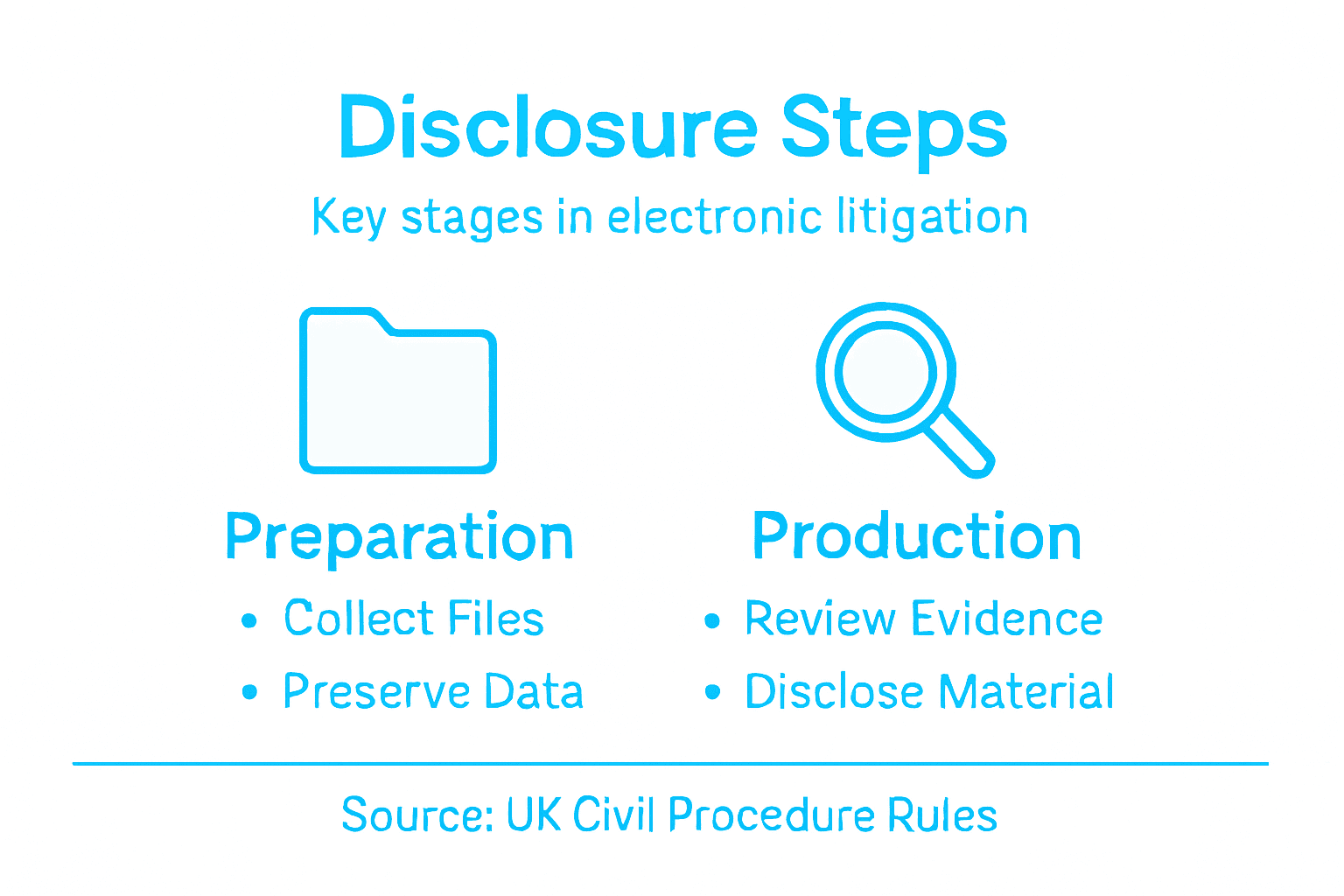
The comprehensive electronic disclosure workflow typically encompasses five critical stages:
-
Document Identification
- Locate all potentially relevant electronic documents
- Map digital information sources
- Determine scope of potential evidence
-
Preservation
- Suspend existing document deletion policies
- Create forensically sound digital copies
- Prevent accidental data modification
-
Collection
- Extract electronic documents securely
- Maintain strict chain of custody
- Document collection methodology
-
Processing and Review
- Apply keyword and automated search techniques
- Review metadata and document contents
- Filter and categorise relevant materials
-
Production and Disclosure
- Convert documents to agreed formats
- Redact sensitive information
- Share approved electronic documents
Electronic disclosure strategies require meticulous attention to technological capabilities and legal compliance. Proportionality remains a key consideration, ensuring that disclosure efforts remain reasonable and cost-effective while maintaining comprehensive evidence gathering.

Professional tip: Engage digital forensics specialists early to design a robust electronic disclosure strategy that balances technological sophistication with legal requirements.
Obligations, risks and mistakes to avoid
Electronic disclosure carries substantial legal and ethical responsibilities that demand meticulous attention to detail and robust procedural safeguards. Disclosure document security requires comprehensive strategies to mitigate potential risks and prevent inadvertent data breaches.
Key obligations and potential pitfalls include:
Legal Compliance Risks
- Failing to preserve electronic documents
- Incomplete or selective disclosure
- Overlooking metadata and hidden information
- Breaching data protection regulations
Technical Vulnerabilities
- Inadequate document redaction
- Unintentional exposure of sensitive information
- Compromising digital chain of custody
- Using inappropriate document processing tools
Professional Responsibilities
- Maintaining transparency in evidence collection
- Ensuring comprehensive and accurate disclosure
- Protecting individual privacy rights
- Demonstrating due diligence in document management
Disclosure obligations in litigation fundamentally require legal professionals to approach electronic evidence with exceptional rigour. Negligent handling can potentially undermine entire legal proceedings, compromise case integrity, and attract significant professional sanctions.
Professional tip: Develop a standardised electronic disclosure checklist and conduct multiple independent reviews to minimise human error and ensure comprehensive compliance.
Streamline Your Litigation with Expert Electronic Disclosure Support
Navigating the complexities of electronic disclosure demands precision and specialised knowledge to avoid risks like incomplete evidence preservation or unintended data breaches. This article highlights the critical importance of handling metadata, safeguarding chain of custody, and complying with UK legal frameworks—challenges that any legal professional handling digital evidence cannot afford to overlook. If you seek to eliminate uncertainty and ensure a seamless electronic disclosure process, expert assistance is essential.
At Computer Forensics Lab, we understand these demands. Our expert team specialises in comprehensive digital investigations covering the full spectrum of electronic evidence. Explore how our electronic evidence services combine forensic expertise with legal insight to protect your case integrity and maintain regulatory compliance. Do not risk costly mistakes or delays—partner with professionals who can provide clear, reliable digital evidence collection, analysis, and expert witness reporting.
Secure your litigation strategy today by visiting Computer Forensics Lab or learn more through our detailed infographics. Take the first step towards confident and compliant electronic disclosure now.
Frequently Asked Questions
What is electronic disclosure in litigation?
Electronic disclosure is a legal process involving the identification, collection, and production of electronically stored information (ESI) for court proceedings. It differs from traditional discovery by focusing on digital evidence and its intricacies.
What types of electronic documents are involved in disclosure?
Electronic disclosure encompasses various digital documents, including emails, communication records, digital office documents (like Word and Excel files), specialised files (like database exports), and data from cloud storage or mobile devices.
Why is metadata important in electronic disclosure?
Metadata provides critical contextual details about electronic files, such as creation dates, modification timestamps, and author identities. This hidden information can reveal insights that are not visible in the document’s content itself.
What are the common risks associated with electronic disclosure?
Common risks include accidental sharing of sensitive metadata, failing to properly anonymise personal information, and inadequate preservation of digital evidence. These risks can lead to data breaches and compromise the integrity of legal proceedings.