

Over 60 percent of British organisations have experienced at least one cybersecurity incident in the past year. For compliance officers in London, understanding digital forensics is no longer optional when facing complex threats and growing legal scrutiny. This resource equips you with the critical knowledge to distinguish fact from myth, adopt proven forensic strategies, and build robust incident response plans that align with British regulatory demands.
Table of Contents
- Defining Digital Forensics And Its Misconceptions
- Primary Types And Methods In Business Settings
- Digital Forensics Process And Best Practices
- Legal Obligations And Regulatory Frameworks
- Mitigating Risks And Supporting Incident Response
Key Takeaways
| Point | Details |
|---|---|
| Digital Forensics Definition | Digital forensics is a specialised field focused on recovering and analysing digital evidence from various technological devices, not just computers. |
| Common Misconceptions | Digital forensics is often misunderstood as a quick fix for data recovery, while in reality, it faces numerous technical challenges. |
| Best Practices | Establishing strict evidence handling protocols and maintaining detailed documentation are essential for ensuring legal admissibility during investigations. |
| Incident Response Importance | Integrating digital forensics within incident response frameworks is crucial for effectively mitigating risks and managing cybersecurity incidents. |
Defining Digital Forensics and Its Misconceptions
Digital forensics represents a sophisticated branch of forensic science dedicated to recovering, investigating, and analysing digital evidence from technological devices. Digital forensics was originally a synonym for computer forensics but has dramatically expanded to encompass investigations across multiple digital platforms including mobile phones, computers, networks, and cloud storage systems.
The discipline emerged from the personal computing revolution and now plays a critical role in supporting criminal investigations, civil litigation, private sector inquiries, and cybersecurity response strategies. Modern digital forensics incorporates multiple specialised sub-disciplines, including computer forensics, network forensics, mobile device forensics, and forensic data analysis. Forensic techniques aim to recover and analyse digital evidence without introducing new information or compromising existing data, maintaining strict scientific and legal standards.
Common misconceptions about digital forensics often portray the field as a magical solution that can instantly recover any deleted information. In reality, digital forensic professionals face significant challenges, such as incomplete evidence discovery, technical limitations in data recovery, and complex technological barriers. Skilled forensic experts must navigate sophisticated encryption, fragmented data storage, and rapidly evolving technological landscapes to extract meaningful insights.
Pro tip: When selecting a digital forensics expert, always verify their professional certifications and specific technical expertise in your required investigation domain.
Primary Types and Methods in Business Settings
Digital forensics in business settings encompasses several specialised investigative methods designed to recover, analyse, and preserve digital evidence across various technological platforms. Forensic techniques include comprehensive device-level investigations covering computers, mobile devices, networks, and cloud environments, enabling organisations to address complex technological challenges with scientific precision.
Key methods in business digital forensics typically involve multiple strategic approaches: static data acquisition examines stored information without altering system states, while live data acquisition captures active system data during investigation. Network forensics focuses on analysing digital traffic patterns, examining logs, and tracing potential security breaches. Cybersecurity professionals are trained to apply forensic principles across diverse digital environments, capturing network traffic using specialised tools like Wireshark and conducting thorough cloud forensic investigations.
Businesses frequently utilise digital forensic methods to investigate potential misconduct, intellectual property theft, compliance violations, and internal security incidents. Forensic experts meticulously document evidence collection processes, maintain strict chain of custody protocols, and employ advanced technological techniques to extract meaningful insights from complex digital landscapes. These investigations require profound technical expertise, understanding of legal requirements, and ability to navigate sophisticated technological challenges.
Here is an overview of key digital forensics types used in business environments:
| Forensics Type | Main Focus Area | Business Application |
|---|---|---|
| Computer Forensics | Hard drives, desktops | Investigate device misuse |
| Mobile Device Forensics | Smartphones, tablets | Assess employee data leakage |
| Network Forensics | Network traffic, logs | Analyse security breach patterns |
| Cloud Forensics | Cloud storage, SaaS | Resolve cloud-based data incidents |
Pro tip: Develop a comprehensive digital forensics response plan that outlines clear protocols for evidence preservation, stakeholder communication, and potential legal reporting requirements.
Digital Forensics Process and Best Practices
Digital forensic investigation follows a rigorous methodological framework designed to ensure scientific precision, legal admissibility, and comprehensive evidence collection. The process typically encompasses four critical stages: identification, preservation, analysis, and documentation, with each phase requiring meticulous attention to detail and adherence to strict professional standards.

The forensic investigation begins with precise evidence identification, where investigators locate and isolate potential digital sources of information. This stage demands exceptional technical expertise and systematic approach, ensuring that no potential evidence is overlooked or inadvertently compromised. Forensic practitioners must follow comprehensive best practices that emphasise maintaining chain of custody, minimising evidence alteration, and ensuring complete documentation of all investigative procedures.
Critical best practices in digital forensics include using validated forensic tools, creating forensic duplicates of original evidence, maintaining detailed logs of all investigative actions, and preserving the integrity of digital evidence through write-blocking technologies. Forensic experts must also be prepared to articulate their methodological approach, demonstrate the reproducibility of their findings, and provide transparent documentation that can withstand rigorous legal and technical scrutiny.
The following table summarises essential best practices for digital forensic investigations:
| Practice | Benefit | Example Implementation |
|---|---|---|
| Validated forensic tools | Reliable, reproducible results | Certified software for data imaging |
| Forensic duplicates | Original evidence preservation | Use write-blocking technologies |
| Detailed documentation | Legal defensibility | Timely investigation activity logs |
| Chain of custody protocols | Prevent evidence tampering | Signed evidence transfer records |
Pro tip: Develop a standardised digital forensics workflow checklist that includes systematic procedures for evidence preservation, documentation, and validation to ensure consistent and legally defensible investigations.
Legal Obligations and Regulatory Frameworks
International standards governing digital forensics establish comprehensive guidelines for evidence handling and preservation, creating a robust framework that ensures legal admissibility and scientific integrity across diverse investigative contexts. These regulatory mechanisms require forensic practitioners to follow meticulously defined protocols for evidence collection, documentation, and analysis, with specific emphasis on maintaining the chain of custody and protecting digital evidence from potential contamination or inadvertent modification.
The legal landscape surrounding digital forensics demands strict adherence to professional ethical standards and jurisdictional requirements. Digital forensic professionals must navigate complex regulatory environments while maintaining unwavering commitment to ethical conduct, confidentiality, and professional integrity. This involves comprehensive understanding of international legal frameworks, data protection regulations, and the nuanced requirements for presenting digital evidence in various legal proceedings.
Key regulatory considerations include compliance with data protection legislation, maintaining transparent investigative processes, and ensuring that forensic methodologies can withstand rigorous legal scrutiny. Organisations must develop robust internal policies that align with national and international standards, incorporating comprehensive documentation practices, strict confidentiality protocols, and clear guidelines for handling sensitive digital evidence across different investigative scenarios.
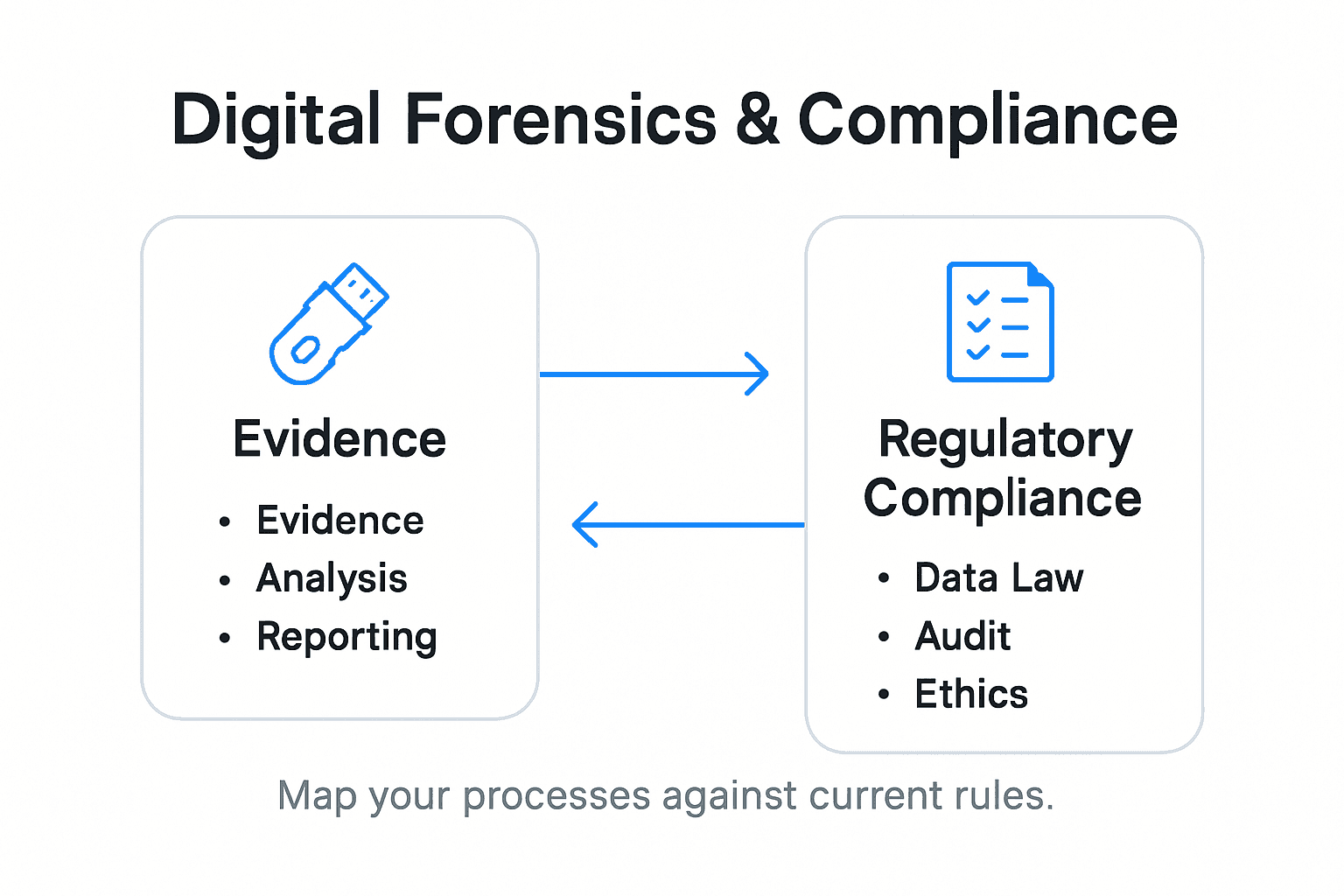

Pro tip: Develop a comprehensive compliance checklist that maps your digital forensics procedures against current legal and regulatory requirements, ensuring systematic alignment with evolving international standards.
Mitigating Risks and Supporting Incident Response
Digital forensics plays a critical role in developing comprehensive incident response frameworks that enable organisations to systematically detect, analyse, contain, and recover from cybersecurity incidents. These frameworks provide structured methodologies for identifying potential security breaches, conducting thorough investigations, and implementing strategic remediation processes that minimise organisational risk and potential damage.
Incident response training emphasises practical skills in evidence handling, forensic analysis, and documentation to facilitate rapid and effective cybersecurity interventions. Organisations must develop sophisticated incident response capabilities that incorporate advanced digital forensic techniques, enabling quick identification of security vulnerabilities, precise evidence collection, and comprehensive reporting mechanisms. This approach requires interdisciplinary collaboration between IT security professionals, legal teams, and digital forensic experts.
Effective risk mitigation strategies involve establishing proactive incident response protocols, conducting regular cybersecurity assessments, and creating robust documentation processes. Organisations should implement continuous monitoring systems, develop clear escalation procedures, and maintain detailed forensic readiness plans that can be quickly activated during potential security incidents. These strategies must balance technical sophistication with legal compliance, ensuring that all investigative procedures can withstand potential legal scrutiny and support organisational resilience.
Pro tip: Develop a cross-functional incident response team with clearly defined roles, communication protocols, and regular training to ensure swift and coordinated action during potential security breaches.
Enhance Your Business Compliance and Cybersecurity with Expert Digital Forensics
Navigating the complex landscape of digital forensics in business requires precise evidence handling, compliance adherence, and rapid incident response. The challenges explored in the article highlight the critical need for maintaining legal standards such as chain of custody and thorough digital evidence preservation. At Computer Forensics Lab, we understand these pain points and specialise in delivering advanced forensic services to support your business in managing cyber incidents, employee misconduct investigations, and data breach analysis.
Our team is equipped to employ proven best practices in Digital Evidence Preservation and expertly analyse a wide range of Electronic Evidence to ensure your investigations are solidly defensible and compliant with current regulations. Do not let uncertainty and risk cloud your organisational resilience. Visit Computer Forensics Lab today to secure your business with trusted digital forensic consultancy and forensic investigation services designed to meet the demands of modern compliance and response frameworks.
Frequently Asked Questions
What is digital forensics in a business context?
Digital forensics in a business context involves the recovery, analysis, and preservation of digital evidence from various technological platforms to support investigations related to misconduct, compliance violations, and security incidents.
How does digital forensics support compliance in organisations?
Digital forensics supports compliance by ensuring that organisations follow legal and regulatory frameworks, maintain a strict chain of custody, and document investigative processes which help in addressing any violations effectively.
What are the key methods used in business digital forensics?
Key methods in business digital forensics include computer forensics, mobile device forensics, network forensics, and cloud forensics, each focusing on different areas of digital evidence to aid in investigations.
Why is incident response training important for digital forensics?
Incident response training is crucial as it equips teams with practical skills in evidence handling, forensic analysis, and documentation, enabling rapid and effective responses to cybersecurity incidents.