

Nearly every major british cybercrime trial hinges on the reliability of digital evidence, yet misunderstandings about how this data is preserved and presented still persist across London courtrooms. Many criminal defense attorneys overlook just how easily digital records can be altered or challenged, directly impacting case outcomes. By mastering the distinct requirements and pitfalls of digital evidence, you can build stronger, defensible strategies for complex incidents involving data breaches or cyber offences.
Table of Contents
- Defining Digital Evidence And Common Misconceptions
- Types And Sources Relevant To Legal Cases
- Admissibility And UK Legal Framework
- Roles, Responsibility And Chain Of Custody
- Risks, Challenges And Common Mistakes
Key Takeaways
| Point | Details |
|---|---|
| Understanding Digital Evidence | Digital evidence requires specialised handling due to its mutable nature and reliance on digital attributes for authentication. |
| Importance of Chain of Custody | Maintaining an unbroken chain of custody is essential to preserve the integrity and admissibility of digital evidence in legal contexts. |
| Role of Forensic Experts | Engaging certified digital forensics experts is crucial for producing comprehensive reports that withstand judicial scrutiny and demonstrate scientific rigour. |
| Mitigation of Risks | To ensure the evidentiary value of digital data, proactive measures should be implemented to mitigate risks such as data tampering and improper handling. |
Defining Digital Evidence and Common Misconceptions
Digital evidence represents information stored or transmitted in digital form that can provide critical investigative value during legal proceedings. Unlike traditional physical evidence, digital evidence requires specialised handling and understanding due to its unique characteristics. Digital open source information (DOSI) has emerged as a significant source of evidence that challenges conventional expert testimony standards.
The complexity of digital evidence stems from its fundamental differences from traditional forensic materials. Digital records can be easily duplicated, modified, and transmitted, making their preservation and authentication crucial. Forensic experts must follow rigorous methodologies to ensure the integrity and admissibility of digital evidence in legal contexts. This involves maintaining precise documentation, establishing clear chains of custody, and employing transparent, replicable investigative techniques.
Common misconceptions about digital evidence often arise from misunderstandings about its nature and handling. Many legal professionals incorrectly assume that digital data is inherently permanent or unalterable. In reality, digital information requires careful preservation and expert analysis to maintain its evidentiary value. Factors such as file system structures, metadata, timestamps, and potential tampering must be meticulously examined to ensure the reliability of digital evidence.
Pro Tip: Always engage a certified digital forensics expert who can provide comprehensive documentation and expert testimony to strengthen the credibility of digital evidence in legal proceedings.
The following table summarises the key differences between digital and traditional physical evidence:
| Aspect | Digital Evidence | Physical Evidence |
|---|---|---|
| Nature | Intangible, in electronic form | Tangible, material objects |
| Fragility | Easily altered or duplicated | Generally more stable |
| Preservation needs | Requires specialised handling | Standard storage procedures |
| Authentication | Relies on metadata, logs | Involves physical examination |
| Chain of custody | Includes digital logs and access | Involves document sign-offs |
Types and Sources Relevant to Legal Cases
Digital evidence encompasses a wide range of data sources critical for legal investigations. Digital evidence types include communications data, transactional records, cloud storage, social media content, and web browsing history, each presenting unique challenges and opportunities for legal professionals.
Different digital platforms offer distinct sources of evidence. Computers and mobile devices remain primary repositories of critical information, capturing emails, documents, chat logs, and system metadata. Cloud services provide extensive records of user activities, including file storage, synchronisation logs, and collaboration histories. Social media platforms offer a rich landscape of communications, interactions, and digital footprints that can reveal significant insights into individual behaviours and relationships.

Network-based evidence presents another crucial category, encompassing server logs, firewall records, and digital communication trails. These sources can document digital interactions, demonstrate access patterns, and provide timestamped records of digital activities. Forensic experts must carefully extract and analyse these records, ensuring they maintain chain of custody and preserve the integrity of digital evidence for potential legal proceedings.
Pro Tip: Preserve original digital evidence by creating forensically sound bit-by-bit copies and always work from duplicated images to maintain the authenticity of the original data.
Admissibility and UK Legal Framework
In the United Kingdom, digital forensic evidence operates within a rigorous legal framework that demands exceptional standards of integrity and scientific precision. The admissibility of digital evidence hinges on demonstrating authenticity, completeness, and reliability through established forensic methodologies, ensuring that only credible and verifiable digital information can be presented in legal proceedings.
Key challenges in digital evidence admissibility revolve around maintaining an unbroken chain of custody and preventing potential tampering or contamination. UK courts require forensic experts to provide comprehensive documentation that traces the origin, collection, and preservation of digital evidence. Legal and technical harmonisation is crucial to address procedural complexities and ensure evidence can withstand judicial scrutiny, ultimately supporting fair trial requirements and upholding stringent evidentiary standards.
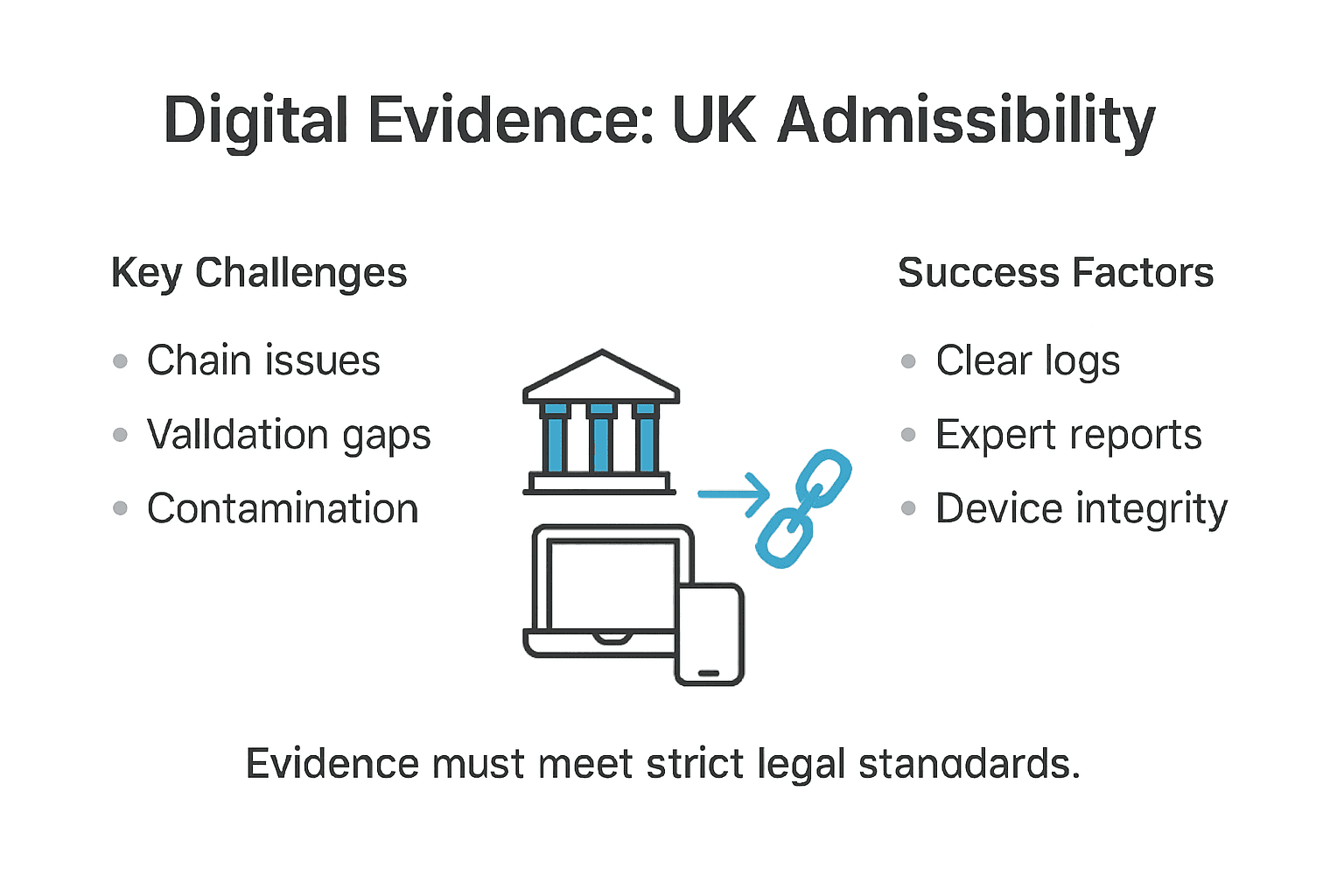

The judicial assessment of digital evidence involves examining multiple critical factors, including the credibility of forensic techniques, the qualifications of expert witnesses, and the potential for independent verification. Courts will closely evaluate whether digital evidence has been collected using internationally recognised protocols, whether the forensic analysis can be replicated, and whether the evidence provides clear, unambiguous insights relevant to the legal proceedings.
Pro Tip: Engage a certified digital forensics expert who can provide detailed, court-admissible reports demonstrating the scientific rigour and reliability of the digital evidence collection process.
Roles, Responsibility and Chain of Custody
Digital forensic investigations demand precise accountability from every professional involved in evidence handling. Chain of custody represents a critical chronological documentation process that tracks digital evidence from initial collection through legal proceedings, ensuring its integrity and preventing potential tampering or contamination.
Multiple professional roles contribute to maintaining robust digital evidence protocols. Digital forensic investigators are primarily responsible for systematic evidence collection, documenting every interaction with digital devices and preserving original data integrity. Legal teams must verify the comprehensive and meticulous nature of forensic documentation, ensuring that each piece of digital evidence can withstand rigorous judicial scrutiny. Cybersecurity experts often collaborate to validate technical methodologies and provide context for complex digital artefacts.
The chain of custody involves several critical documentation requirements. Each transfer of digital evidence must be explicitly recorded, including precise timestamps, personnel involved, purpose of transfer, and authentication mechanisms. Detailed logs must capture every interaction, demonstrating an unbroken record that validates the evidence’s authenticity. This systematic approach protects against allegations of evidence manipulation and provides transparent accountability throughout the investigative and legal processes.
Pro Tip: Implement a standardised digital evidence log that captures every single interaction, including who accessed the evidence, when, and for what specific purpose, to maintain an impeccable chain of custody.
Risks, Challenges and Common Mistakes
Digital forensic evidence presents numerous complex challenges that can critically undermine legal proceedings if not handled with exceptional precision. The Complete Guide to Digital Forensics for Defence Lawyers highlights the critical need for meticulous attention to technical and procedural details to mitigate potential risks.
Common mistakes in digital evidence collection include improper device handling, inadequate documentation, and failure to maintain a comprehensive chain of custody. Forensic investigators frequently encounter challenges such as device encryption, data fragmentation, deliberate digital tampering, and rapidly evolving technological landscapes. These complexities demand continuous professional training and adaptive investigative strategies that can navigate sophisticated digital environments while preserving evidentiary integrity.
Technical risks extend beyond collection methodologies. Potential vulnerabilities include unintentional data contamination, metadata alteration, improper forensic tool selection, and insufficient understanding of complex digital systems. Legal professionals must be acutely aware that seemingly minor procedural errors can potentially render entire collections of digital evidence inadmissible, undermining entire legal strategies and potentially compromising case outcomes.
The table below highlights common risks in digital forensics and strategies to mitigate them:
| Risk or Challenge | Potential Impact | Mitigation Strategy |
|---|---|---|
| Data tampering | Loss of evidentiary value | Use cryptographic hashes |
| Improper handling | Evidence becomes inadmissible | Train personnel in forensic procedures |
| Metadata alteration | Undermines data authenticity | Duplicate data before analysis |
| Outdated forensic tools | Missed or inaccurate findings | Regularly update forensic software |
| Incomplete documentation | Chain of custody disputes | Maintain detailed access logs |
Pro Tip: Regularly validate and update digital forensic tools and methodologies, ensuring your investigative techniques remain current with emerging technological challenges and legal standards.
Strengthen Your Legal Defence with Expert Digital Evidence Solutions
Facing the complexities of digital evidence in legal defence requires more than just understanding its nature and risks. Challenges such as maintaining an impeccable chain of custody and proper digital evidence preservation can make or break a case. If questions about authenticity, meticulous documentation, or expert testimony keep you up at night, the right support can provide crucial peace of mind.
At Computer Forensics Lab, we specialise in addressing these exact pain points. Our professional digital forensic investigation services follow rigorous procedures to protect the integrity and admissibility of your evidence. Whether you need comprehensive assistance with digital evidence preservation or expert handling of electronic evidence, our team delivers trusted results backed by extensive experience in legal and forensic standards.
Do not let uncertainty compromise your defence. Reach out today to ensure your digital evidence stands strong in court and secure the expert guidance that your case deserves.
Frequently Asked Questions
What is digital evidence?
Digital evidence refers to information stored or transmitted in digital form that holds investigative value in legal proceedings. It includes various data types such as communications, transactional records, and social media content.
Why is preserving digital evidence important in legal cases?
Preserving digital evidence is crucial because digital data can be easily altered or duplicated. Ensuring its integrity and authenticity is vital to its admissibility in court.
What role does chain of custody play in digital forensics?
Chain of custody is a documented process that tracks the collection, transfer, and handling of digital evidence. It ensures that the evidence remains untampered and credible throughout the legal process.
What are common challenges in collecting digital evidence?
Common challenges include device encryption, data fragmentation, improper handling, and potential tampering. These issues highlight the need for specialised knowledge and meticulous documentation in digital forensic investigations.