

Cloud-based evidence presents one of the biggest hurdles for British legal professionals involved in criminal investigations. As cybercrime evolves, more than 80 percent of digital evidence now resides in distributed cloud environments where traditional forensic approaches often fail. For criminal lawyers and forensic consultants across London, staying ahead means understanding both the technical barriers and the persistent myths complicating cloud investigations. This guide reveals actionable solutions for tackling forensic data challenges, navigating provider risks, and preserving evidence integrity within complex cloud infrastructures.
Table of Contents
- Defining Cloud Forensics And Common Myths
- Types Of Cloud Environments And Data Sources
- Processes For Evidence Acquisition In The Cloud
- Legal Frameworks And Jurisdictional Barriers
- Preserving Evidence Integrity And Chain Of Custody
- Risks In Provider Collaboration And Compliance
Key Takeaways
| Point | Details |
|---|---|
| Understanding Cloud Forensics | Cloud forensics requires specialised methodologies due to unique challenges such as multi-tenancy and jurisdictional complexities in cloud environments. |
| Cloud Environment Types | Different cloud models—public, private, hybrid, and multi-cloud—present varying levels of forensic complexity and data source difficulties. |
| Evidence Acquisition Protocols | Establishing formal data acquisition protocols with cloud providers is crucial for efficient evidence collection and maintaining chain of custody. |
| Navigating Legal Frameworks | Digital forensic practitioners must be well-versed in international legal instruments to effectively manage cross-border evidence collection challenges. |
Defining Cloud Forensics and Common Myths
Cloud forensics represents a sophisticated digital investigation discipline focused on collecting, preserving, and analysing evidence stored within cloud computing environments. Unlike traditional digital forensics, cloud forensics demands unique methodological approaches due to the complex, distributed nature of cloud infrastructure.
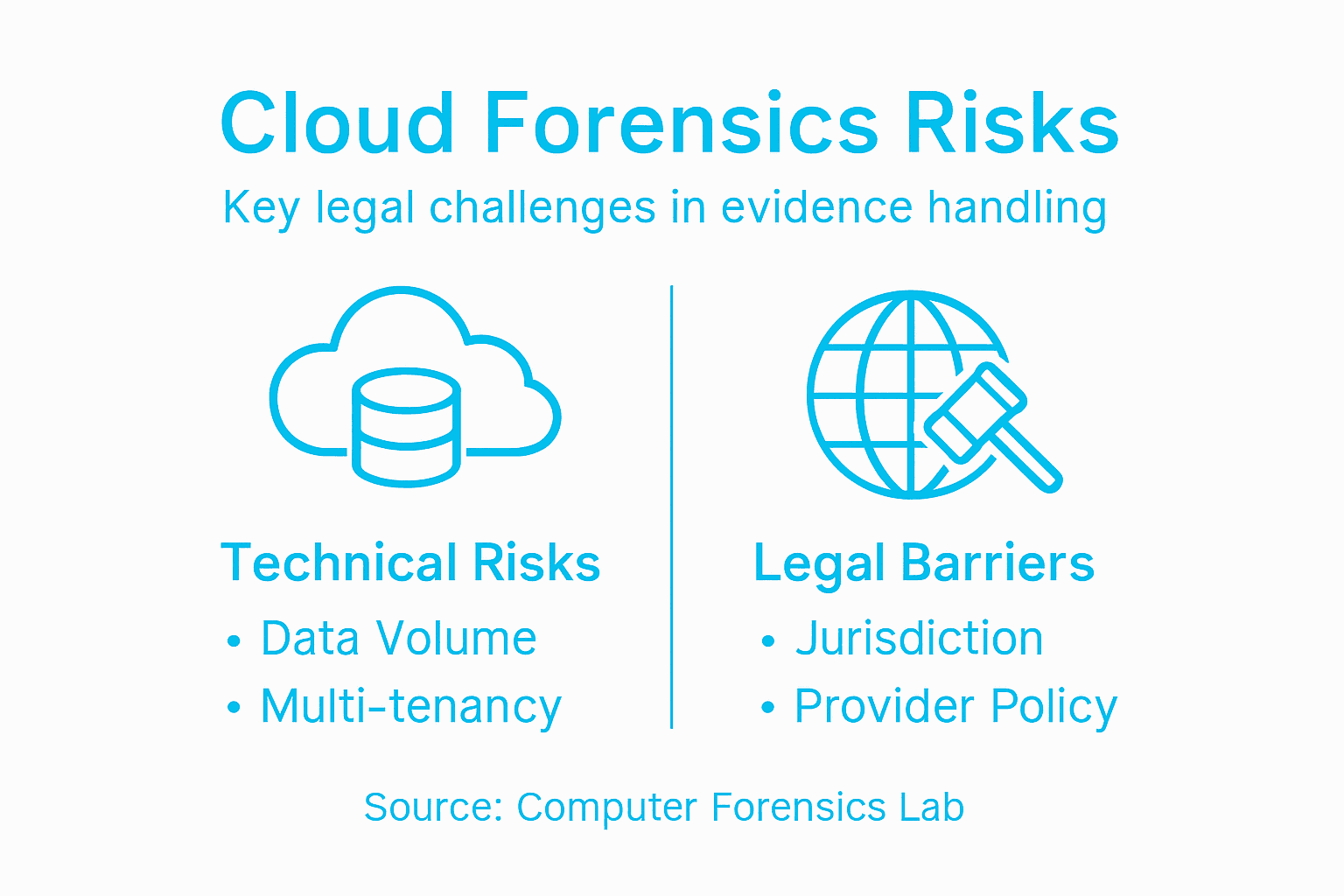
Traditional forensic techniques often fall short when applied to cloud settings because of fundamental differences in data storage and access. Complex cloud forensic frameworks require investigators to navigate challenges like multi-tenancy, virtualization, and jurisdictional complexities. Cloud environments introduce significant barriers such as:
- Distributed data storage across multiple geographical locations
- Limited direct access to physical hardware
- Shared computing resources
- Rapid data transformation and migration
- Complex authentication and permission structures
Common myths surrounding cloud forensics often mislead legal professionals and investigators. Many incorrectly assume that cloud data can be extracted identically to traditional digital evidence. In reality, cloud forensics necessitates specialised investigative methodologies that account for the unique characteristics of cloud computing infrastructures.
Pro tip: Always consult digital forensics specialists who understand cloud-specific investigation protocols before initiating any evidence collection process.
Types of Cloud Environments and Data Sources
Cloud computing encompasses diverse deployment models that significantly impact digital forensic investigations. Cloud environment classifications typically include four primary configurations: public, private, hybrid, and multi-cloud environments, each presenting unique forensic challenges and data collection complexities.
Public cloud platforms like Amazon Web Services, Microsoft Azure, and Google Cloud offer shared infrastructure where multiple tenants utilise identical computing resources. These environments generate extensive forensic data sources including:
- Virtual machine logs
- Network traffic records
- User authentication events
- Storage system metadata
- Application transaction records
Private and hybrid cloud architectures introduce additional forensic intricacies. Data source complexity in cloud architectures demonstrates how enterprise-specific configurations can dramatically alter evidence preservation strategies. Enterprise cloud deployments often integrate multiple data streams from Internet of Things (IoT) devices, enterprise applications, and interconnected network systems.
Multi-cloud strategies further complicate forensic investigations by distributing data across different service providers and geographic jurisdictions. Digital investigators must develop sophisticated approaches to correlate evidence from disparate cloud platforms while maintaining strict chain of custody protocols.

Pro tip: Develop comprehensive mapping documentation for your organisation’s cloud infrastructure to streamline potential future forensic investigations.
Here’s a quick comparison of cloud environment types and their forensic investigation complexity:
| Cloud Model | Shared Resources | Forensic Complexity | Key Data Sources |
|---|---|---|---|
| Public | High | Very challenging | VM logs, authentication events |
| Private | Low | Moderately complex | Internal network logs, custom apps |
| Hybrid | Variable | Complex | IoT, enterprise apps, mixed logs |
| Multi-cloud | Mixed providers | Extremely complex | Cross-platform logs, jurisdictional data |
Processes for Evidence Acquisition in the Cloud
Digital forensic practitioners face increasingly complex challenges when acquiring evidence from cloud environments. API-based evidence acquisition methods have emerged as critical strategies for navigating the intricate landscape of cloud-based data retrieval, addressing the fundamental difficulties inherent in distributed computing platforms.
The evidence acquisition process typically involves multiple sophisticated approaches:
- Obtaining official API access credentials
- Implementing secure authentication protocols
- Extracting forensically preserved log files
- Capturing comprehensive metadata
- Ensuring cryptographic integrity of retrieved data
- Documenting precise acquisition timestamps
Blockchain technologies are revolutionising cloud forensic practices by introducing automated evidence collection frameworks that enhance data verification and maintain unassailable chain of custody. These advanced methodologies incorporate encryption techniques, robust hashing algorithms, and comprehensive metadata logging to ensure the legal admissibility of digital evidence across complex international jurisdictions.
Multi-jurisdictional investigations demand rigorous standardisation of evidence acquisition processes. Forensic experts must develop adaptive strategies that can navigate diverse cloud service provider policies, technological infrastructures, and legal constraints while maintaining the highest standards of digital evidence preservation.
Pro tip: Always establish formal data acquisition protocols with cloud service providers before commencing any forensic investigation to ensure seamless evidence collection.
Legal Frameworks and Jurisdictional Barriers
Cloud forensic investigations represent a complex legal landscape where international boundaries create significant challenges for digital evidence collection. The global nature of cloud computing means that data may be stored across multiple countries, each with distinct legal regulations regarding digital evidence preservation and privacy protection.
Key jurisdictional challenges include:
- Divergent data protection laws
- Conflicting international privacy regulations
- Inconsistent legal standards for digital evidence
- Varying consent requirements for data access
- Complex cross-border investigation protocols
- Differing definitions of cybercrime across jurisdictions
Digital forensic practitioners must navigate intricate legal frameworks that often involve negotiating with multiple governmental authorities, cloud service providers, and international legal entities. Cloud forensics legal complexities demand a sophisticated understanding of international legal instruments, mutual legal assistance treaties, and jurisdictional constraints that can significantly impact evidence admissibility.
The extraterritorial nature of cloud infrastructure creates profound challenges for legal professionals. Investigations frequently require intricate negotiations with international service providers, careful interpretation of data sovereignty laws, and strategic approaches to overcome legal barriers that might prevent comprehensive digital evidence collection.
Pro tip: Develop comprehensive international legal consultation networks to effectively navigate complex cross-jurisdictional digital forensic investigations.
Preserving Evidence Integrity and Chain of Custody
Evidence integrity represents the cornerstone of successful digital forensic investigations, particularly within complex cloud environments. Advanced evidence preservation protocols have emerged to address the unique challenges of maintaining forensic data authenticity and confidentiality across distributed computing platforms.
Critical components of robust evidence preservation include:
- Comprehensive documentation of evidence acquisition
- Cryptographic hashing and digital signatures
- Immutable metadata tracking
- Secure evidence storage mechanisms
- Detailed forensic logging procedures
- Verifiable transmission protocols
Identity-based proxy re-encryption techniques provide sophisticated mechanisms for protecting digital evidence during transmission and storage. These advanced cryptographic approaches enable forensic investigators to establish unbreakable chains of custody, ensuring that digital evidence remains tamper-proof and legally admissible across diverse technological and jurisdictional landscapes.
Blended technological solutions combining blockchain technologies, steganography, and advanced encryption represent the future of digital evidence preservation. These innovative frameworks create multiple layers of security, allowing forensic experts to maintain comprehensive audit trails while protecting sensitive information from potential compromise.

Pro tip: Implement rigorous documentation protocols and leverage multiple technological safeguards to create an unassailable chain of custody for digital evidence.
Risks in Provider Collaboration and Compliance
Cloud forensic investigations frequently encounter significant challenges when collaborating with cloud service providers, particularly regarding data access, evidence preservation, and regulatory compliance. Complex provider collaboration risks demonstrate the intricate landscape of negotiating forensic data retrieval across diverse technological and legal environments.
Key risks in provider collaboration include:
- Inconsistent log preservation practices
- Variable response times for evidence requests
- Proprietary data formatting challenges
- Incomplete audit trail documentation
- Jurisdictional compliance discrepancies
- Limited investigator access protocols
Cloud forensics compliance challenges highlight the critical need for standardised communication channels between digital forensic investigators and cloud service providers. These challenges manifest through opaque security policies, fragmented regulatory frameworks, and significant variations in data handling procedures across different technological platforms.
Successful forensic investigations demand proactive strategies for mitigating provider collaboration risks. Investigators must develop comprehensive agreements, establish clear communication protocols, and maintain flexible approaches to navigating the complex landscape of multi-provider cloud environments.
The table below summarises major risks and best mitigation strategies when collaborating with cloud service providers for forensics:
| Collaboration Risk | Impact on Investigation | Recommended Mitigation |
|---|---|---|
| Inconsistent log retention | Evidence loss or gaps | Pre-approved logging agreements |
| Proprietary data formats | Data processing delays | Technical consultations up front |
| Jurisdictional discrepancies | Legal inadmissibility | Early legal review, local counsel |
| Limited access protocols | Restricted evidence acquisition | Escalate through provider liaison |
Pro tip: Develop formal memoranda of understanding with cloud service providers before investigations, explicitly detailing evidence acquisition expectations and compliance requirements.
Overcome the Complexities of Cloud Forensics with Expert Support
Navigating the challenges outlined in “Challenges in Cloud Forensics – Key Risks for Legal Cases” requires specialised knowledge in data acquisition, legal frameworks, and evidence preservation within cloud environments. If you face issues like multi-jurisdictional barriers, provider collaboration risks, or maintaining a secure chain of custody, you are not alone. These pain points demand forensic experts who understand the complexities of digital investigations involving cloud data.
At Computer Forensics Lab, our professional team specialises in Cloud Forensic Analysis and offers tailored solutions for legal professionals and businesses confronting such hurdles. We provide comprehensive services including secure evidence collection, expert witness reports, and advanced forensic techniques to ensure your digital evidence withstands legal scrutiny.
Don’t let the unique challenges of cloud forensics jeopardise your case. Explore our full range of Digital Forensics services or learn more about our Computer Forensics expertise. Act now to safeguard your digital investigations by visiting Computer Forensics Lab to discuss your needs with our experienced team.
Frequently Asked Questions
What are the main challenges in cloud forensics?
The main challenges in cloud forensics include the complexities of multi-tenancy, limited access to physical hardware, jurisdictional barriers, varying data preservation practices, and the rapid transformation and migration of data.
How do jurisdictional barriers affect cloud forensics investigations?
Jurisdictional barriers complicate cloud forensics as data may be stored across multiple countries with differing data protection laws, privacy regulations, and legal standards that must be navigated for effective evidence collection.
What best practices should be followed for evidence preservation in cloud forensics?
Best practices for evidence preservation include comprehensive documentation of evidence acquisition, employing cryptographic hashing, maintaining immutable metadata tracking, secure evidence storage mechanisms, and establishing verifiable transmission protocols.
What risks are associated with collaborating with cloud service providers?
Risks in collaborating with cloud service providers include inconsistent log preservation practices, variable response times to evidence requests, technical challenges with proprietary data formats, and compliance discrepancies that can hinder investigations.