
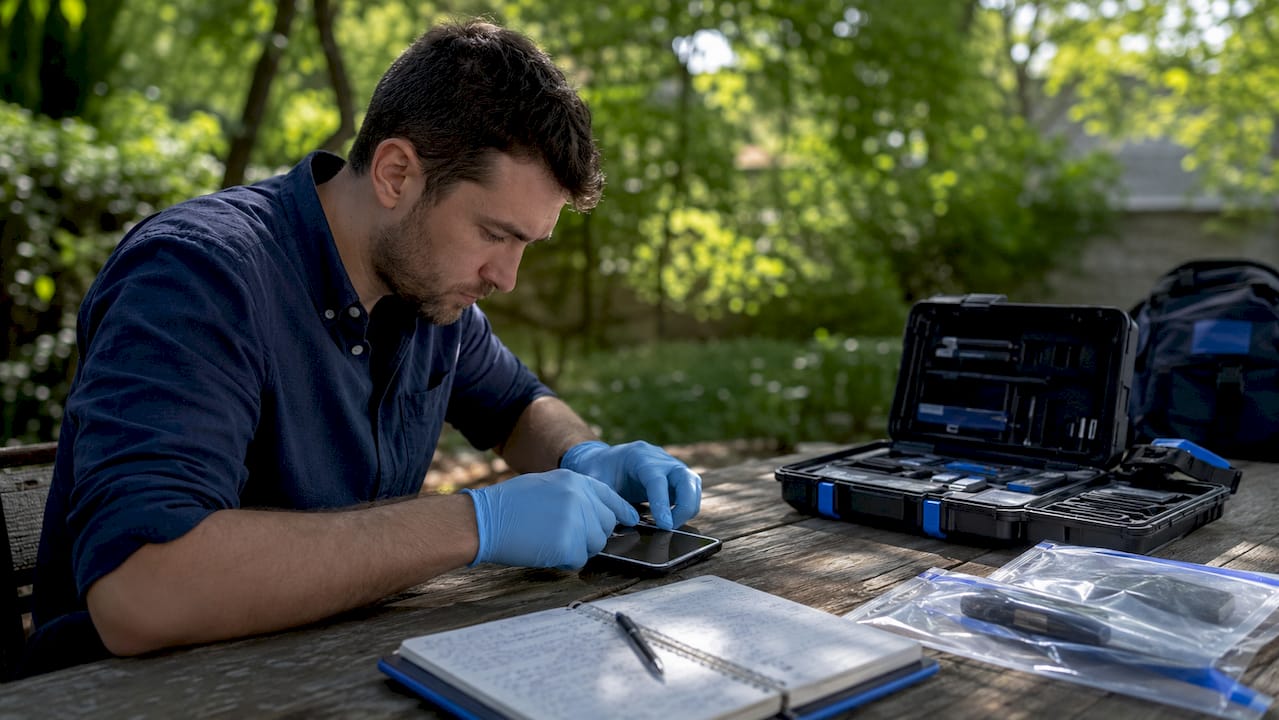
TL;DR:
- Device acquisition involves collecting data from digital devices for forensic or organizational purposes, emphasizing validation and strict documentation. Physical and logical methods are used, with physical copying being more comprehensive but sometimes impossible due to encryption. Proper procedures, including using Faraday bags and maintaining an unbroken chain of custody, are essential for legal admissibility and evidence integrity.
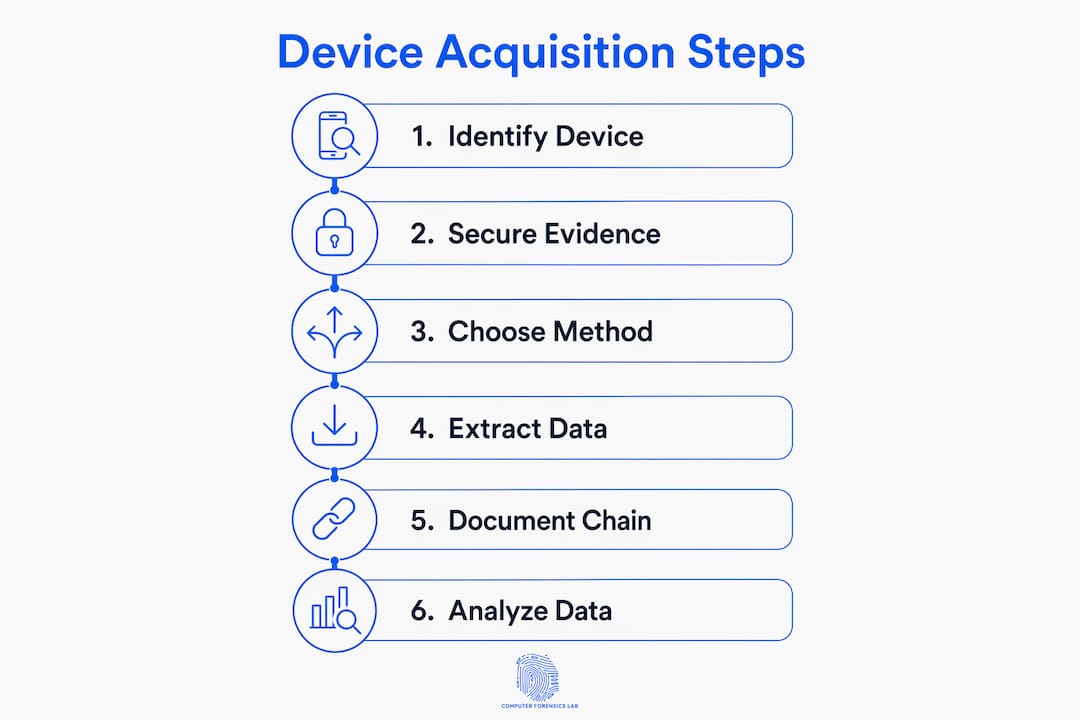
Device acquisition is defined as the systematic process of extracting data from digital devices, or procuring hardware at scale, to support forensic investigations, legal proceedings, or institutional deployment. In digital forensics, the term refers specifically to collecting device data while maintaining an unbroken chain of custody, using methods validated by bodies such as the Scientific Working Group on Digital Evidence (SWGDE) and the US Department of Homeland Security (DHS). For corporate and government clients, device acquisition also describes the structured procurement of hardware, from specification through to secure deployment. Both meanings share a common thread: compliance, documentation, and accountability at every stage.
What is device acquisition in forensic investigations?
Physical and logical acquisition are the two primary methods used in forensic device acquisition. Understanding the difference between them determines the scope of evidence available to investigators and, ultimately, what a court will accept.

Physical acquisition copies an entire storage medium bit for bit, including deleted files, unallocated space, and hidden partitions. This method gives investigators the most complete picture of a device’s history. Logical acquisition, by contrast, captures only the active files visible to the operating system. It is faster and less technically demanding, but it cannot recover deleted data or access areas outside the live file system.
SWGDE guidance confirms that forensic tools must be validated for specific device models and operating system versions before use. Validation matters because an unverified tool can alter data, rendering evidence inadmissible. Documentation must record the tool version, software hashes, and the precise state of the device at the point of seizure.
Key criteria for forensically sound acquisition include:
- Tool validation: Confirm the tool is tested against the target device model and OS version.
- Hash verification: Generate cryptographic hashes (SHA-256 or MD5) before and after acquisition to confirm data integrity.
- Device state recording: Photograph the device, note battery level, network status, and any visible damage before touching it.
- Write blocking: Use a hardware or software write blocker to prevent any data being written to the source device during extraction.
- Legal authority: Confirm the warrant or consent covers the specific device and the data categories sought.
Encryption adds a significant complication. Full-disk or file-based encryption can make physical acquisition impossible without the decryption key. In those cases, logical acquisition may be the only lawful and technically feasible option, even though it yields less data.
Pro Tip: Never power on a device that was found switched off. Powering it on can overwrite unallocated space, trigger automatic updates, or initiate a remote wipe, destroying the very evidence you need.

How does institutional device procurement differ from forensic acquisition?
Institutional device procurement is the process of acquiring hardware in volume for organisational use, covering everything from requirements specification to vendor selection, security provisioning, and delivery logistics. This is a distinct meaning of device acquisition, one that legal departments, IT managers, and corporate clients encounter when deploying devices across a workforce.
The procurement process follows a defined sequence:
- Requirements specification: Define device type, operating system, security features, and performance thresholds based on user roles.
- Vendor selection and budgeting: Evaluate suppliers against price, warranty terms, support agreements, and compliance credentials.
- Security provisioning: Integrate mobile device management (MDM) enrolment at the point of purchase using platforms such as Apple Business Manager or Android Zero-Touch Enrolment.
- Compliance checks: Verify that procurement meets applicable regulations, including ITAR/EAR controls for devices used in sensitive or export-controlled environments.
- Delivery and audit trail: Maintain records of serial numbers, delivery dates, and recipient details to create a procurement audit trail analogous to a forensic chain of custody.
Procurement failures most commonly result from skipping security provisioning at the point of purchase. Devices that reach users without MDM enrolment become unmanaged endpoints, creating security gaps that are difficult and costly to close retrospectively. Embedding Apple Business Manager or Android Zero-Touch enrolment into the procurement stage prevents this problem entirely.
The scale of institutional procurement, which can range from 100 to over 100,000 units, also introduces compliance obligations that retail purchasing does not. For organisations operating in regulated sectors, the procurement record serves a legal function: it proves provenance, ownership, and configuration at the time of deployment.
Pro Tip: Treat your procurement audit trail with the same rigour as a forensic chain of custody. If a device later becomes the subject of an investigation, a clean procurement record significantly accelerates the forensic process.
What practical challenges affect device acquisition in legal investigations?
Legal authority defines the outer boundary of any forensic acquisition. A warrant or consent order specifies which devices are covered and which categories of data investigators may access. Exceeding that scope, even unintentionally, risks excluding evidence and exposing the investigation to legal challenge.
The most immediate physical risk at the point of seizure is a remote wipe. MDM configurations allow device owners or administrators to erase a device’s contents remotely the moment it connects to a network. A single missed notification can destroy an entire evidence set in seconds.
Damaged devices present a separate category of challenge. Liquid-exposed or physically broken devices require specialist handling. The SWGDE recommends that damaged devices be delivered rapidly to a forensic laboratory without any attempt to power them on or charge them. General IT technicians who attempt recovery on damaged hardware frequently cause irreversible data loss.
Common practical challenges in forensic device acquisition include:
- Remote wipe risk: Devices connected to corporate or consumer MDM systems can be wiped remotely within seconds of seizure.
- Encryption barriers: Full-disk encryption without a known passcode blocks physical acquisition entirely.
- Device damage: Liquid exposure, physical trauma, or fire damage requires specialist forensic recovery, not standard IT support.
- Scope constraints: Warrants limit which data categories are accessible; over-collection creates admissibility risks.
- Privacy boundaries: Personal devices used for work (BYOD) contain mixed data, requiring careful scoping to avoid capturing legally protected personal information.
For IoT devices and connected hardware, compliance considerations around data ownership and acquisition rights add another layer of legal complexity that investigators must address before extraction begins.
Pro Tip: Place every seized device in a Faraday bag immediately upon seizure. A Faraday bag blocks all wireless signals, preventing remote wipe commands, network synchronisation, and location tracking from altering the device’s state before acquisition begins.
What documentation and chain of custody protocols ensure reliable device acquisition?
Documentation is the mechanism that converts a technical process into legally admissible evidence. Without it, even a technically perfect acquisition can be challenged and excluded. Forensic documentation must record every action taken on a device from the moment of seizure to the point of analysis.
The chain of custody tracks who handled a device, when, and for what purpose. Any gap in that record creates an opportunity for a defence team to argue that evidence was tampered with or contaminated. Courts treat an unbroken chain of custody as a prerequisite for admissibility, not a procedural nicety.
The table below summarises the core documentation requirements and chain of custody steps for forensic device acquisition.
| Documentation element | Purpose and requirement |
|---|---|
| Device description and photographs | Records physical condition at seizure; prevents disputes about pre-existing damage |
| Seizure date, time, and location | Establishes the starting point of the chain of custody |
| Tool name, version, and validation status | Confirms the acquisition method meets evidentiary standards per SWGDE and DHS guidance |
| Cryptographic hash values (pre and post acquisition) | Proves the acquired copy is identical to the original; detects any alteration |
| Handler log with signatures | Records every person who accessed the device and the reason for access |
| Storage and transfer records | Documents where the device and its forensic image were stored and how they were transported |
Poor documentation produces predictable failures. Missing hash values mean the defence can argue the data was modified after seizure. An unsigned handler log creates doubt about who had access. Undocumented tool versions make it impossible to reproduce the acquisition process for court verification.
The device seizure forensic process requires that documentation begins before the device is touched. Photographing the screen state, recording network connectivity, and noting the battery level are all part of the initial record. These details become significant when the defence questions whether the device was in a particular state at the time of seizure.
Key takeaways
Forensic device acquisition requires validated tools, documented chain of custody, and legally scoped authority to produce evidence that courts will accept.
| Point | Details |
|---|---|
| Two acquisition methods | Physical acquisition recovers deleted data; logical acquisition is faster but limited to active files. |
| Faraday bag at seizure | Blocking network access immediately prevents remote wipe and preserves evidence integrity. |
| Documentation is non-negotiable | Hash values, tool versions, and handler logs are prerequisites for court admissibility. |
| Procurement needs an audit trail | Institutional device procurement requires records of serial numbers, enrolment, and delivery to support future investigations. |
| Legal authority defines scope | Warrants and consent orders determine which devices and data categories are lawfully accessible. |
The part of device acquisition that most investigations get wrong
Working with legal teams and law enforcement on complex cases, the single most consistent failure point is not the technology. It is the gap between the moment a device is identified as relevant and the moment a qualified forensic examiner takes control of it.
Officers, solicitors, and IT managers frequently handle devices before forensic protocols are applied. A device is plugged in to check if it works. A passcode is entered to confirm it is the right phone. A laptop is opened and connected to a network to retrieve a file. Each of these actions, however well intentioned, can overwrite data, trigger synchronisation, or initiate a remote wipe. By the time the device reaches a forensic laboratory, the evidence window has narrowed or closed entirely.
The procurement side of device acquisition carries a parallel risk. Organisations that deploy devices without MDM enrolment create a situation where, if a device later becomes the subject of an investigation, there is no reliable record of its configuration, ownership, or data state at deployment. That gap makes forensic analysis harder and legal arguments weaker.
The fix for both problems is the same: treat device acquisition as a process that begins the moment a device becomes relevant, not the moment a forensic examiner arrives. Legal professionals who brief their clients on forensic acquisition principles before an investigation begins consistently achieve better evidence outcomes than those who engage forensic support after the fact.
— Computerforensicslab
How Computerforensicslab supports device acquisition and evidence collection
Computerforensicslab provides specialist digital forensics services for legal professionals, law enforcement agencies, and corporate clients across the UK. The team handles forensic device acquisition from initial seizure through to court-ready expert witness reports, maintaining full chain of custody at every stage. Whether you are dealing with a mobile device in a criminal investigation, a corporate laptop in an employment dispute, or a damaged device requiring specialist recovery, Computerforensicslab applies validated acquisition methods and rigorous documentation standards. Contact the team directly to discuss your case and receive tailored acquisition support.
FAQ
What is device acquisition in simple terms?
Device acquisition is the process of extracting data from a digital device for forensic investigation, or procuring hardware at scale for institutional deployment. In forensic contexts, it follows strict chain of custody and validation standards to ensure evidence is admissible in court.
What is the difference between physical and logical acquisition?
Physical acquisition copies an entire storage medium bit for bit, including deleted files and unallocated space. Logical acquisition captures only the active files visible to the operating system, making it faster but less complete.
Why is a Faraday bag used during device seizure?
A Faraday bag blocks all wireless signals, preventing remote wipe commands, network synchronisation, and location tracking from altering a device after seizure. SWGDE guidance identifies network isolation as a critical first step in preserving evidence integrity.
How does encryption affect forensic device acquisition?
Full-disk or file-based encryption can make physical acquisition impossible without the decryption key. In encrypted cases, logical acquisition may be the only technically and legally feasible option, though it yields significantly less data.
What records are required for a valid chain of custody?
A valid chain of custody requires device photographs, seizure date and time, tool name and version, cryptographic hash values before and after acquisition, a signed handler log, and storage and transfer records. Any gap in these records creates grounds for a legal challenge to evidence admissibility.