
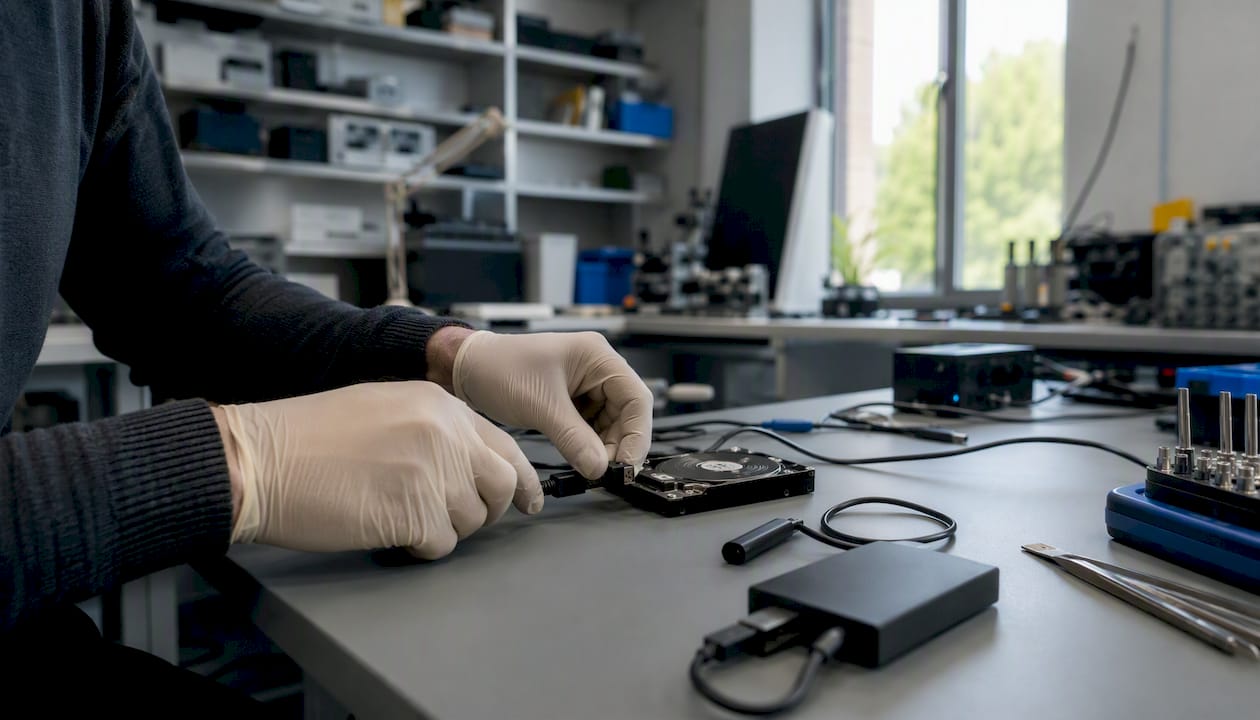
- A forensic data recovery program prioritizes admissible evidence integrity, validation, and compliance with legal standards.
- It involves a disciplined workflow with verified imaging, hash verification, and detailed documentation to ensure court acceptance.
A forensic data recovery programme is a laboratory-run service that retrieves, preserves, and validates digital data specifically for use as admissible evidence in legal proceedings. It is not consumer file-restore software. The distinction matters: where standard recovery tools prioritise getting files back quickly, a forensic programme prioritises evidential integrity, documented methodology, and compliance with the Criminal Procedure Rules, the Forensic Science Regulator (FSR), and ISO/IEC 17025 laboratory accreditation standards. Computerforensicslab’s internal case records indicate that 80% of digital evidence is preserved when forensic protocols are followed from the point of seizure.
A properly conducted forensic data recovery programme delivers:
- Write-blocked, bit-stream imaging of original media to prevent any alteration
- Cryptographic hash generation (MD5/SHA-256) to verify evidential integrity at every stage
- A validated toolset with documented version records
- A complete chain of custody log from seizure to court
- A structured expert witness report, including scope, methodology, limitations, and opinion
Table of Contents
- What does a forensic data recovery programme involve?
- What can forensic data recovery actually retrieve?
- UK legal standards: what makes recovered data admissible?
- Timelines, costs, and what drives both
- How to instruct a forensic data recovery programme
- What deliverables should a forensic report contain?
- When does a case require a forensic programme rather than corporate IT?
- Key takeaways
- The case for getting the process right from day one
- Computerforensicslab: forensic data recovery for UK legal cases
- Authoritative UK sources for further reading
What does a forensic data recovery programme involve?
The workflow follows a fixed sequence, and any deviation must be documented and justified. Forensic imaging guidance from the UK government confirms that devices must be imaged before analysis to avoid altering originals, with validated image formats and processing logs that link each step to the exhibit.
The core stages are:
- Evidence seizure and packaging — devices are received with seizure notes, attributed to a named custodian, and logged immediately.
- Write-blocked imaging — a hardware or software write-blocker prevents any write operation to the original; a forensic image is created and hashed.
- Hash verification — MD5 or SHA-256 values are recorded before and after imaging; any mismatch invalidates the exhibit.
- Secure storage — originals and images are stored in access-controlled conditions with a documented audit trail.
- Analysis — examiners work only on verified copies, using validated tools such as EnCase, FTK, or Cellebrite, with all steps logged.
- Peer review — a second examiner reviews methodology and conclusions before the report is finalised.
- Reporting and retention — the expert witness report is served under CrimPR; exhibits and images are retained per the lab’s documented retention policy.
Operational roles are equally defined: the examiner conducts the technical work, a peer reviewer checks it, a chain of custody custodian maintains the exhibit log, and the expert witness provides the court opinion, which is a distinct function from the technical examiner role.
What can forensic data recovery actually retrieve?
The answer depends heavily on device type, acquisition method, and what has happened to the data since deletion or damage.
Acquisition types determine what is recoverable:
- Physical acquisition captures a full bit-stream of the storage medium, including deleted partitions, unallocated space, and slack space. This is the gold standard for HDDs and many mobile devices.
- Logical acquisition extracts the active file system only. Faster, but recovers less.
- Artefact parsing targets specific data types (call logs, messages, app data) where full physical access is unavailable.
Device-specific considerations vary considerably. Hard disk drives (HDDs) remain the most amenable to physical recovery of deleted data. Solid-state drives (SSDs) present a significant challenge: the TRIM command, active on most modern SSDs, instructs the controller to zero deleted blocks, often before imaging is possible. Encrypted volumes require the encryption key or a known vulnerability; without either, the data is practically unrecoverable regardless of the technique applied. Mobile devices, RAID arrays, cloud accounts, and IoT devices each carry their own acquisition constraints, and specialist techniques such as chip-off or JTAG are sometimes the only viable route for physically damaged hardware. Further detail on these methods is available in Computerforensicslab’s guide to data recovery techniques.
Common causes of irrecoverability include overwriting, TRIM, secure erase commands, and full-disk encryption without key access. Partial recovery is often possible even in these scenarios, but limitations must be recorded explicitly in the report.
Pro Tip: Preserve the device in its current state before contacting a lab. Do not power on a device if its state is uncertain, and do not attempt any data access. Every write operation after an incident reduces the recoverable data set.
UK legal standards: what makes recovered data admissible?
Admissibility turns on process, not just outcome. CPS guidance on expert evidence is unambiguous: an expert’s duty is to assist the court, and that duty overrides any obligation to the instructing party. Reports must provide the scientific criteria that enable a judge or jury to test the conclusions independently.
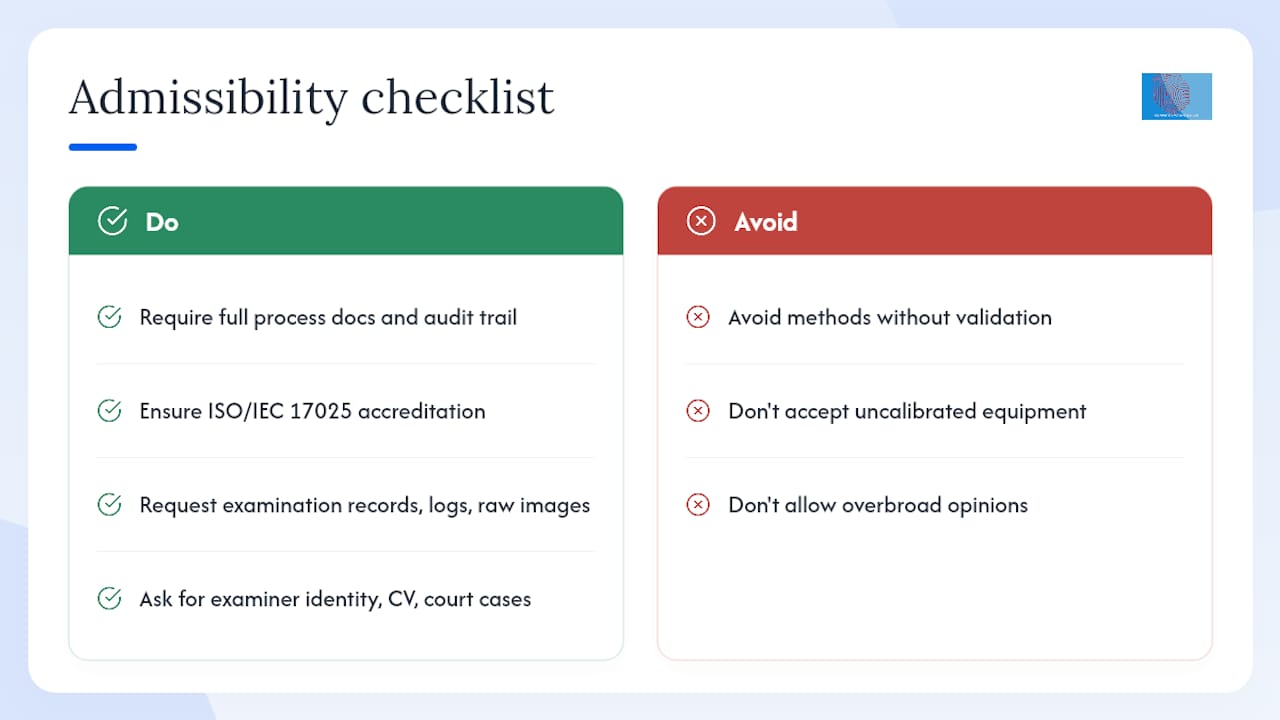
The Forensic Science Regulator sets quality standards for forensic activity in England and Wales. Laboratory functions, including the recovery and imaging of electronic devices, must be accredited to ISO/IEC 17025 where required by the FSR Code. Accreditation to this standard signals that the lab’s methods are validated, its equipment is calibrated, and its results are reproducible.
Under CrimPR 19.3, the expert must serve a report that includes the record of examinations, processing logs, and raw images on request. BCS commentary on presenting digital evidence notes that practitioner bias and methodology gaps are actively scrutinised under the Criminal Procedure Rules, making a complete and transparent audit trail non-negotiable.
Experts must also limit opinions to their demonstrable specialism. Academic and practitioner literature warns that overstating expertise is a recognised admissibility risk; an examiner qualified in mobile forensics should not offer opinions on server-side cloud architecture without documented competence in that area.
Pro Tip: When drafting instructions, ask the lab to identify the specific examiner, their specialism, and the cases in which they have given evidence. A CV and court experience list should be standard disclosure.

Timelines, costs, and what drives both
Turnaround varies with device condition, complexity, and service priority. Routine cases on standard media typically complete within two to four weeks. Priority work, where court deadlines are imminent, can be expedited, often within days, at a premium. Urgent triage, for example where a device is physically unstable, may require same-day imaging to prevent further data loss.
Primary cost drivers include:
- Device type and condition — physically damaged hardware requiring chip-off or JTAG work is significantly more resource-intensive than a functioning HDD.
- Encryption — attempts to access encrypted volumes, or to recover keys from other artefacts, add examiner time.
- Data volume — large datasets require longer processing and, where eDiscovery integration is needed, additional tooling.
- Expert witness time — drafting, peer review, and court attendance are billed separately from the technical examination.
UK government eDiscovery guidance confirms that integrating forensic images with eDiscovery platforms can reduce review time significantly while preserving forensic integrity, which is worth considering for large-scale disclosure exercises.
How to instruct a forensic data recovery programme
Provide the following on instruction:
- Chain of custody paperwork and device provenance records
- Seizure notes, including who seized the device, when, and from where
- Court timelines and any preservation notices (including s. 22 Police and Criminal Evidence Act notifications where applicable)
- A clear statement of the issues in dispute and the data types sought
Ask the lab these questions before confirming instruction:
- What accreditations does the lab hold, and is ISO/IEC 17025 current?
- What tool validation records are available, and which tools will be used?
- Can the examiner provide a CV and a list of cases in which they have given expert evidence?
- What is the data retention and evidence handling policy after the case concludes?
Red flags that should prompt further scrutiny: an unclear or undocumented methodology; refusal to provide hash values or processing logs; absence of a written chain of custody; or any pressure to narrow the scope in a way that would limit what must be disclosed. The forensic data recovery process guide from Computerforensicslab sets out what a properly structured instruction should look like.
What deliverables should a forensic report contain?
A properly constituted forensic data recovery programme produces:
- Forensic images with corresponding hash values (pre- and post-acquisition)
- Examiner logs recording every action taken on the exhibit, timestamped
- Processing and analysis notes detailing the tools used, versions, and settings
- Extracted artefacts and dedicated evidence export sets in a format suitable for disclosure
- The expert witness report, which must include: scope of instruction, methodology, tools and versions, hash verification records, a limitations statement, an exhibits list, and a clearly bounded opinion
The limitations statement deserves particular attention. Where data is unrecoverable, the report must say so explicitly and explain why. A report that claims completeness without addressing gaps is a disclosure risk. Sample report structures and redacted examples are available from Computerforensicslab on request.
When does a case require a forensic programme rather than corporate IT?
| Scenario | Appropriate service | Reason |
|---|---|---|
| Criminal proceedings or regulatory investigation | Forensic data recovery programme | Admissibility, chain of custody, expert duty |
| Civil litigation with contested digital evidence | Forensic data recovery programme | Disclosure obligations, reproducible methodology |
| Operational IT restore after accidental deletion | Corporate IT department | Speed; evidential integrity not required |
| Employee misconduct with potential court disclosure | Forensic data recovery programme | Contested chain of custody, potential criminal referral |
| Simple file restore, no legal dispute | Consumer recovery service | Cost-proportionate; no evidential requirement |
The determining factor is risk: criminal sanction, regulatory penalty, or civil liability all demand a forensic programme. Where there is any prospect of court disclosure, the cost of getting the process wrong far exceeds the cost of instructing a qualified lab from the outset.
Key takeaways
A forensic data recovery programme is the only appropriate service when digital evidence must withstand scrutiny in UK legal proceedings; consumer or corporate IT tools cannot satisfy the chain of custody, accreditation, and expert duty requirements that courts expect.
| Point | Details |
|---|---|
| Forensic vs consumer tools | Only a forensic programme produces admissible evidence; consumer software lacks chain of custody and validated methodology. |
| ISO/IEC 17025 accreditation | Confirm the lab holds current accreditation before instructing; it is the primary quality signal courts and regulators recognise. |
| Expert duty to the court | The expert’s overriding obligation is to the court, not the instructing party; reports must enable independent testing of conclusions. |
| Preserve devices immediately | Do not power on or access a device before imaging; every write operation reduces the recoverable data set. |
| Computerforensicslab | Provides forensic data recovery, expert witness reporting, and secure evidence handling for UK legal, law enforcement, and corporate clients. |
The case for getting the process right from day one
The most common and costly mistake in digital evidence cases is not a technical failure. It is an instructing party who waits too long, powers on a damaged device, or engages a service without asking about accreditation. By the time a forensic lab is instructed, the window for physical recovery may have closed, TRIM may have cleared the unallocated space, or the chain of custody may be broken in a way that no subsequent process can repair.
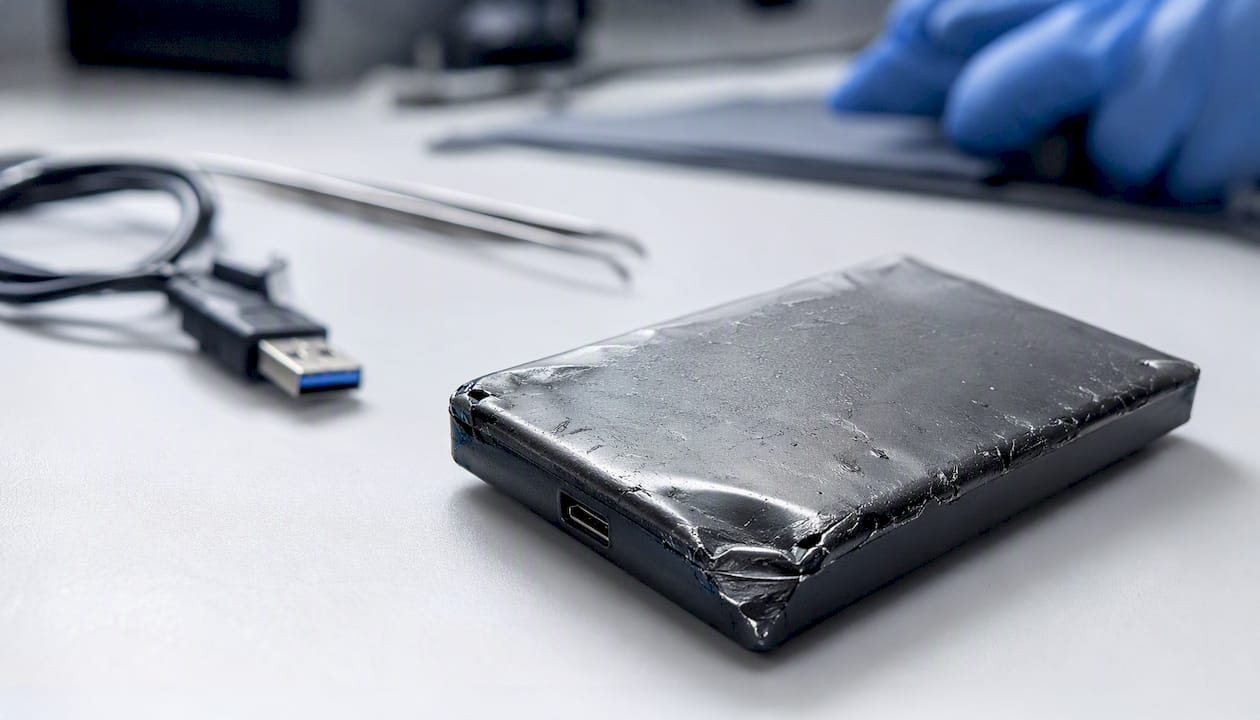
Forensic data recovery is not a salvage operation. It is a disciplined, documented process that must begin at the point of seizure. The legal framework, the FSR Code, the Criminal Procedure Rules, and ISO/IEC 17025, exists precisely because courts have seen what happens when it does not. Instructing parties who treat forensic recovery as an afterthought, or who select a lab on price alone without checking accreditation and examiner CVs, routinely find that their evidence is challenged on methodology rather than on its substance.
The practical implication is straightforward: instruct a qualified forensic lab early, provide complete seizure documentation, and insist on a written methodology before work begins.
Where Computer Forensics Lab fits into your eDiscovery process
Our electronic discovery specialists provide end-to-end support for the identification, preservation, collection, processing, searching, review and organisation of electronically stored information (ESI). We work with data held across a wide range of digital sources, including computers, laptops, hard drives, mobile devices, removable media, email systems, cloud platforms, cloud endpoints and other local, remote or hosted electronic storage environments. This can include data from services and endpoints such as Microsoft 365, Exchange Online, OneDrive, SharePoint, Teams, Google Workspace, cloud storage repositories, virtual machines, remote user accounts and other enterprise cloud environments. Our services are designed to assist solicitors, barristers, litigation teams, investigators, corporate legal departments and law enforcement agencies in locating relevant evidence, managing large volumes of electronic data and preparing defensible datasets for legal proceedings, investigations and regulatory matters.. More about our e-discovery services.
Authoritative UK sources for further reading
The following primary sources are recommended for legal teams verifying standards, disclosure obligations, and expert duties:
- Expert Evidence — Crown Prosecution Service: CPS guidance on expert duties, CrimPR 19.3 requirements, and streamlined forensic reporting tiers. Use this when drafting instructions or reviewing a report for disclosure compliance.
- FSR Legal Landscape — Forensic Science Regulator: Sets out the Regulator’s role, the FSR Code, and ISO/IEC 17025 accreditation requirements for laboratory functions including digital recovery.
- eDiscovery in Digital Forensic Investigations — UK Government: Practical guidance on integrating forensic imaging with eDiscovery workflows; useful for large-volume disclosure exercises.
- Disclosure Manual Chapter 30 — CPS: Governs digital material disclosure strategy, including early prosecutor-investigator engagement and device attribution.
- Presenting Digital Evidence in Court — BCS: Practitioner commentary on methodology scrutiny, interpretative expertise, and the risks of practitioner bias under CrimPR.
When forming expert instructions, cross-reference the FSR Code against the lab’s stated accreditation scope, and confirm that the examiner’s CV covers the specific device types and data categories in dispute.