
TL;DR:
- Becoming a CSI requires a relevant degree, practical experience, and professional certification, typically taking three to five years.
- There are multiple pathways into CSI work, including university routes, civilian applications, and internal police progression, each with distinct advantages.
- Building strong technical skills, soft skills, and gaining supervised scene experience are essential for a successful forensic career.
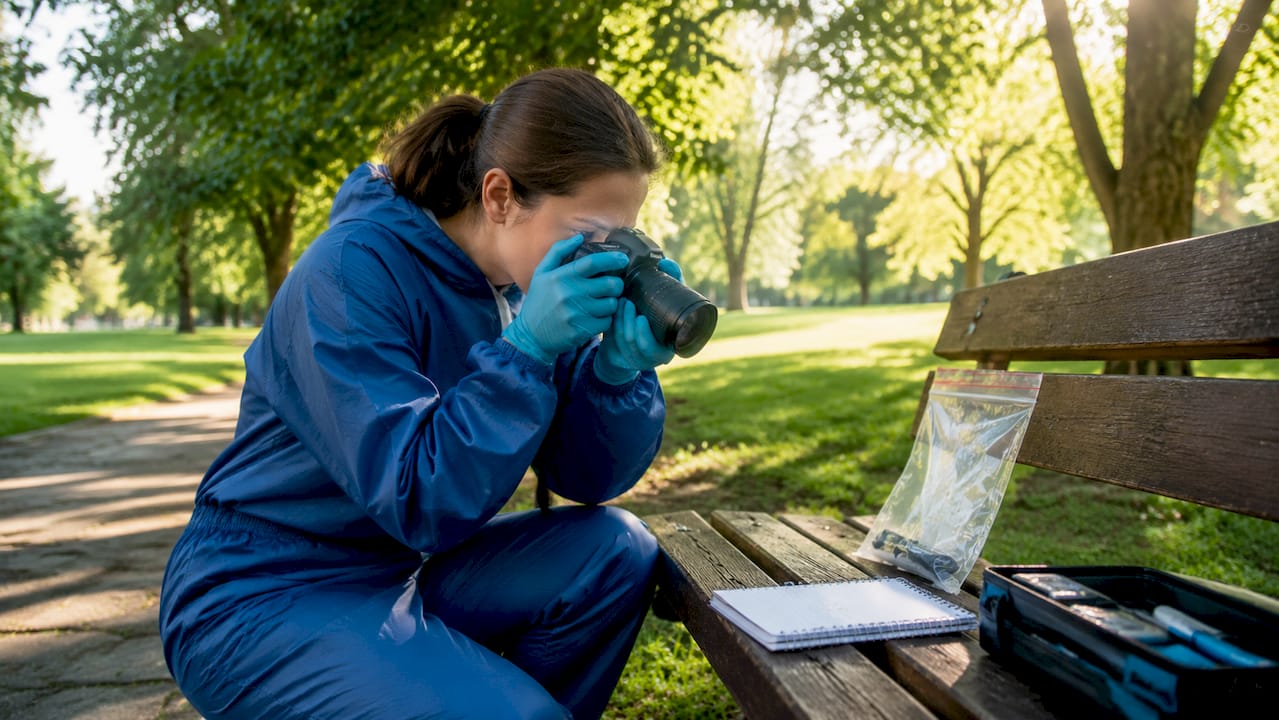
A crime scene investigator (CSI) is a forensic specialist responsible for identifying, collecting, and preserving physical evidence at crime scenes to support criminal prosecutions. The steps to be a crime scene investigator follow a structured path: complete relevant academic qualifications, gain hands-on experience, pass agency vetting, and pursue professional certification. This guide covers every stage of that path, from GCSEs to senior CSI roles, with specific advice for UK applicants in 2026.
What are the key educational requirements to become a CSI?
Education is the foundation of any credible CSI career. Most competitive roles require a bachelor’s degree in forensic science, biology, chemistry, or criminal justice, though some agencies accept associate degrees paired with relevant field experience. A degree signals to hiring panels that you can handle scientific rigour, interpret evidence correctly, and document findings to a legal standard.
For UK applicants, the typical academic route begins with strong GCSEs in science and English, followed by A-levels in biology, chemistry, or psychology. Degree programmes at universities such as Staffordshire, Huddersfield, and Anglia Ruskin offer dedicated forensic science courses that combine laboratory work with crime scene simulation. These programmes are designed specifically to prepare graduates for the realities of scene examination, not just theoretical study.
A degree is not mandatory for every UK police force, but applicants almost always compete against degree holders, making it the most reliable way to stand out in a crowded field. The practical reality is that without a degree, you will need exceptional field experience to compensate.
Professional certification strengthens your application further. The Certified Crime Scene Investigator (CCSI) credential, awarded by the International Association for Identification (IAI), is widely recognised. In the UK, the College of Policing sets the competency framework that governs CSI training programmes, and completing their endorsed courses demonstrates professional credibility to any hiring force.
Key subjects and qualifications to prioritise:
- GCSEs in biology, chemistry, and English (grade 4 or above)
- A-levels in biology, chemistry, or psychology
- BSc in forensic science, biology, chemistry, or criminal justice
- Certified Crime Scene Investigator (CCSI) from the IAI
- College of Policing endorsed training programmes
Pro Tip: Explore CSI courses for UK professionals before committing to a degree programme. Some specialist short courses count towards professional development hours and help you assess whether the day-to-day work suits you before investing three years in a full degree.
What are the different career paths into crime scene investigation?
There is no single route into CSI work, and understanding the options helps you choose the path that fits your background and goals. The three main routes are the university graduate pathway, direct application to police forces as a civilian, and internal progression from another police support role.
-
University graduate route. Complete a relevant degree, then apply directly to a police force’s scientific support unit as a trainee CSI. This is the most common route for school leavers and offers the strongest academic grounding before entering the field.
-
Direct civilian application. Civilian CSI roles focused on evidence collection are increasingly common, with more agencies hiring civilian personnel who do not require police academy training or firearms certification. This route suits candidates who want to focus purely on forensic work without the broader policing responsibilities.
-
Internal progression. Join a police force in a support capacity, such as a police community support officer or custody detention officer, then apply for internal CSI vacancies. This route builds institutional knowledge and relationships that external candidates cannot replicate.
-
Evidence technician to CSI. Start as an evidence technician or forensic lab assistant, gain supervised scene experience, and progress to a full CSI role once you meet the competency thresholds set by your force.
-
Sworn officer pathway. In some forces, serving police officers can transfer into CSI roles after completing additional forensic training. This route is less common in the UK than in the United States but remains an option for officers seeking a specialism.
Each route has trade-offs. The graduate route is academically strong but can feel disconnected from real scene work until placement. Internal progression is slower but produces candidates who understand police culture and procedure from the inside. Choose based on where your existing strengths lie.
What practical experience and skills are essential for CSIs?
The complexity of the CSI career path demands practical experience and technical training in equal measure to academic qualifications. A degree alone will not prepare you for the sensory and procedural demands of an active crime scene.
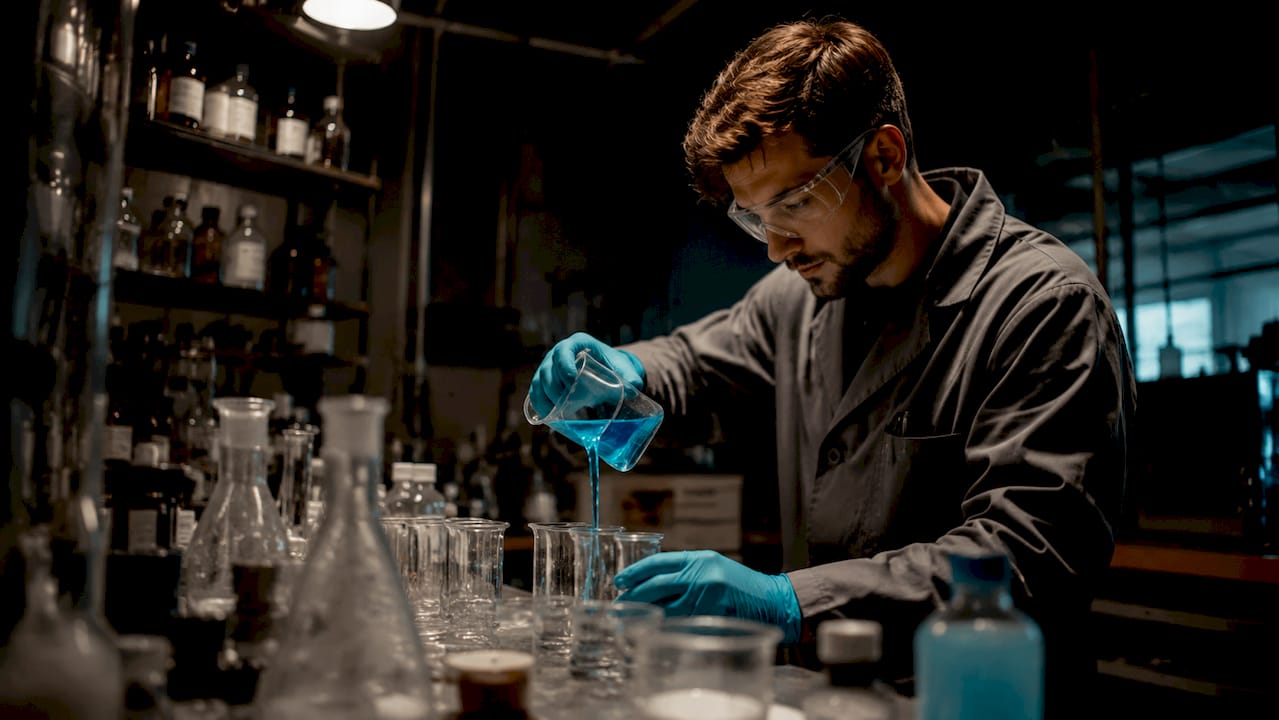
Entry-level positions such as evidence technician, forensic lab assistant, or property clerk provide the supervised exposure you need. Starting in these support roles is the most effective way to build contacts within law enforcement agencies and secure permanent CSI positions. Volunteering with university forensic societies or applying for internships with police scientific support units also accelerates your development significantly.
The technical skills you will use daily include fingerprint recovery using aluminium powder and cyanoacrylate fuming, biological sample collection, photography and scene sketching, and the use of alternate light sources to detect trace evidence. Understanding evidence collection procedures and maintaining an unbroken chain of custody is non-negotiable. A single procedural error can render evidence inadmissible in court.
Beyond technical competence, soft skills are equally vital. Calmness under pressure, precise written communication, and ethical conduct are the qualities that separate effective CSIs from technically capable but professionally unreliable ones. You will work at scenes involving serious trauma, and your ability to remain methodical and composed directly affects evidence quality.
Critical skills to develop before applying:
- Attention to detail in documentation and photography
- Written communication for scene reports and court statements
- Calmness and composure at distressing scenes
- Knowledge of forensic biology, chemistry, and toxicology
- Familiarity with evidence management software and digital tools
Pro Tip: Practise your scene photography and note-taking skills during university placements or mock scene exercises. Hiring panels often ask candidates to describe their documentation process in detail during interviews, and specific examples from real or simulated scenes carry far more weight than theoretical answers.
How long does it take to become a fully qualified CSI?
Becoming a fully independent CSI typically takes between three and five years from the start of a relevant degree to completing probationary training and achieving full operational status. That timeline extends further for senior and specialist roles.
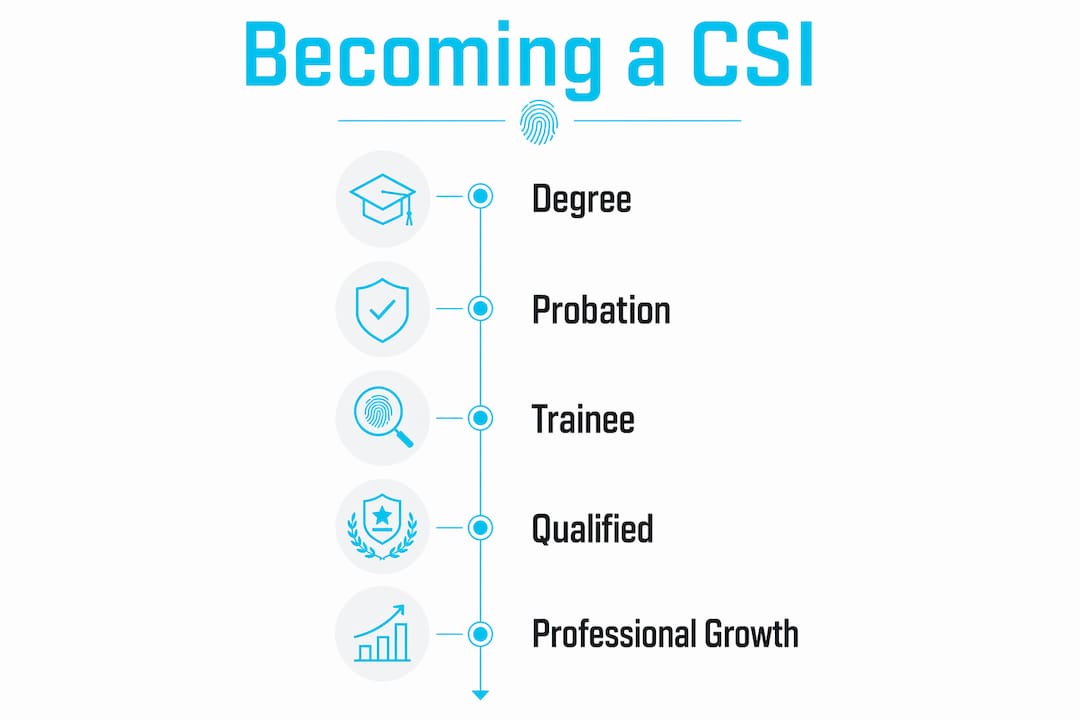

Probationary training in UK forces lasts six to twelve months and consists of supervised scene visits and competency assessments conducted under the College of Policing framework. This is not classroom study. Trainees attend real scenes alongside experienced CSIs, building procedural confidence and technical accuracy under direct supervision.
After probation, progression through the tiered CSI system depends on accumulated experience and demonstrated competency. Entry-level roles require two to five years of field experience before progression to standard CSI grade, while advanced and senior roles demand over five years of professional practice.
| Career stage | Typical timeframe | Key requirement |
|---|---|---|
| Trainee CSI | 0 to 12 months post-hire | Supervised scene work, probationary assessments |
| CSI (standard grade) | 2 to 5 years total experience | Independent scene examination, full report writing |
| Senior CSI | 5 or more years | Specialist techniques, mentoring trainees |
| Crime scene manager | 8 or more years | Scene strategy, multi-agency coordination |
Ongoing professional development is not optional at any stage. Forensic science evolves continuously, with advances in DNA analysis, digital evidence recovery, and trace evidence techniques requiring regular upskilling. Many CSIs pursue specialist qualifications in areas such as bloodstain pattern analysis, digital forensics, or fire investigation to increase their value and promotion prospects.
What common challenges should aspiring CSIs prepare for?
The CSI job market is competitive, and candidates who underestimate the selection process often find themselves unprepared. Academic credentials matter, but so does the background vetting process, which is among the most rigorous of any civilian profession.
Physical fitness and medical tests are required even for civilian CSI roles, covering vision tests and physical assessments relevant to active scene conditions. Candidates who assume civilian status exempts them from fitness requirements are frequently surprised during the selection process.
“Successful CSIs blend strong ethical standards and communication skills with technical forensic techniques to ensure evidence integrity and case success.” This means that any lapse in professional conduct, whether at a scene or in documentation, carries consequences that extend beyond the individual case to the credibility of the entire investigation.
Media portrayals of CSI work, particularly American television dramas, create persistent misconceptions about the pace, glamour, and scope of the role. Real CSI work is methodical, documentation-heavy, and often unglamorous. Candidates who enter the field expecting the television version rarely last beyond their probationary period. Build your expectations on the forensic role in legal cases rather than on dramatised fiction.
Key takeaways
Becoming a crime scene investigator requires a structured combination of academic qualifications, verified practical experience, and continuous professional development across a minimum of three to five years.
| Point | Details |
|---|---|
| Education is the baseline | A bachelor’s degree in forensic science or a related subject is the most reliable route into competitive CSI roles. |
| Civilian routes are growing | More UK forces now hire civilian CSIs, removing the requirement for police academy training. |
| Probation takes up to a year | UK probationary training lasts six to twelve months under College of Policing supervision. |
| Experience accelerates progression | Starting as an evidence technician builds the contacts and scene exposure needed for permanent CSI positions. |
| Soft skills determine longevity | Calmness, ethical conduct, and precise communication are as critical as any technical forensic skill. |
What I have learned about building a real forensic career
The candidates who succeed in CSI roles are rarely those with the highest grades. They are the ones who treated every placement, every mock scene exercise, and every entry-level role as a genuine opportunity to practise professional conduct. At Computerforensicslab, we work alongside investigators and legal professionals daily, and the pattern is consistent: the most effective forensic practitioners are those who understood early that evidence integrity is a discipline, not just a procedure.
The digital dimension of crime scene work is also expanding faster than most training programmes acknowledge. Physical and digital evidence now intersect at almost every serious crime scene, from mobile phone data to cloud-stored communications. Aspiring CSIs who develop even a foundational understanding of digital forensic evidence alongside their physical scene skills will find themselves considerably more employable than peers who treat the two disciplines as separate. The field is converging, and the investigators who recognise that early will define the next generation of forensic practice.
— Computer
How Computerforensicslab supports forensic careers
Digital evidence is now central to criminal investigations, and CSIs who understand how physical and digital forensics intersect are in high demand. Computerforensicslab provides professional digital forensic investigations covering mobile devices, cloud data, and computing systems, working alongside law enforcement and legal professionals on complex cases. If you are building a career in forensic investigation, understanding how digital evidence is collected, preserved, and presented in court is a skill set that will set you apart. Explore our services and resources to see how digital forensics complements the physical scene work at the core of CSI practice.
FAQ
What qualifications do you need to become a CSI in the UK?
Most competitive UK CSI roles require a bachelor’s degree in forensic science, biology, chemistry, or criminal justice. Strong GCSEs and A-levels in science subjects form the academic foundation before degree study.
How long does crime scene investigator training take?
Probationary training in UK forces typically lasts six to twelve months under College of Policing supervision, following degree completion. Full operational independence as a CSI generally takes three to five years from the start of relevant education.
Do you need to be a police officer to become a CSI?
No. Civilian CSI roles are increasingly common across UK forces, focusing on evidence collection without requiring police academy training or arrest powers. Both sworn officer and civilian pathways exist, depending on the force.
What skills are most important for a crime scene investigator?
Attention to detail, calmness under pressure, precise written communication, and ethical conduct are the defining soft skills. Technical competencies include fingerprint recovery, biological sample collection, scene photography, and evidence chain-of-custody management.
Can you become a CSI without a degree?
Some UK forces accept candidates without a degree if they have substantial relevant experience, but applicants almost always compete against degree holders. A degree remains the most reliable way to secure a competitive CSI position.