Deleted photos on Android can sometimes be recovered, but only when the device is preserved and acquired forensically: instruct a lab immediately rather than attempting consumer recovery tools. Standards from organisations such as SWGDE and NIST govern what counts as admissible evidence, and we at Computer Forensics Lab apply them to every instruction we receive. Recovery success depends heavily on device state, encryption and how much time has passed since deletion.
TL;DR:
- If the handset is on and unlocked, keep it powered, isolate it from networks, and record its identifiers; leave an already powered off device untouched.
- Logical extraction rarely recovers deleted files; physical imaging offers the strongest chance but risks device damage, while RAM imaging may recover temporary camera frames.
- In one YAFFS2 test under test conditions, a deleted block was erased in 7 minutes and 53 seconds; continued use can overwrite data sooner.
- A defensible report should document acquisition method, tool version, image hashes, recovered file details, limitations, and an unbroken custody record that another examiner can reproduce.
- Instruct a lab immediately for locked or encrypted devices, high value evidence, or recent deletion, and provide legal authority, device history, current state, and urgency.
Table of Contents
- Immediate preservation steps at seizure
- Which forensic acquisition method recovers deleted photos
- How quickly deleted photos disappear for good
- Building a court-ready report and evidence trail
- When to instruct a forensic lab and how to brief it
- What practitioners wish legal teams understood
- How we support legally defensible photo recovery
- FAQ
- Sources
Immediate preservation steps at seizure
What happens in the first minutes after a device is secured often decides whether deleted photographs can ever be recovered. The device’s network connection, power state and physical handling all affect whether volatile evidence survives.
- Isolate the device from networks: switch on Aeroplane Mode if it is safe to touch the screen, or place the handset in a Faraday bag to block remote wipe commands and incoming data that could overwrite deleted blocks.
- Respect the power state: if the device is on and unlocked, keep it powered and unlocked where possible, since volatile memory can hold recoverable image data; if it is off, leave it off and seize the charger alongside it.
- Photograph the device and scene before moving anything, and record the make, model, IMEI or serial number together with the legal authority for seizure, whether a warrant, consent form or engagement letter.
- Package in antistatic materials, avoid heat and direct sunlight during transport, and begin a contemporaneous chain of custody log the moment the device changes hands.
These steps mirror SWGDE guidance on mobile device evidence collection, which recommends keeping unlocked devices powered where volatile data matters and processing removable media separately when practical. Our guide on restoring deleted Android files while preserving admissibility covers the escalation process in more detail.
Pro Tip: Never let a well-meaning colleague attempt a factory reset or a third-party “undelete” app before the device reaches a lab: both actions can permanently destroy the deleted data they were meant to save.
Which forensic acquisition method recovers deleted photos
The acquisition method chosen determines what deleted material can realistically be recovered, and each carries different risks to the original evidence.
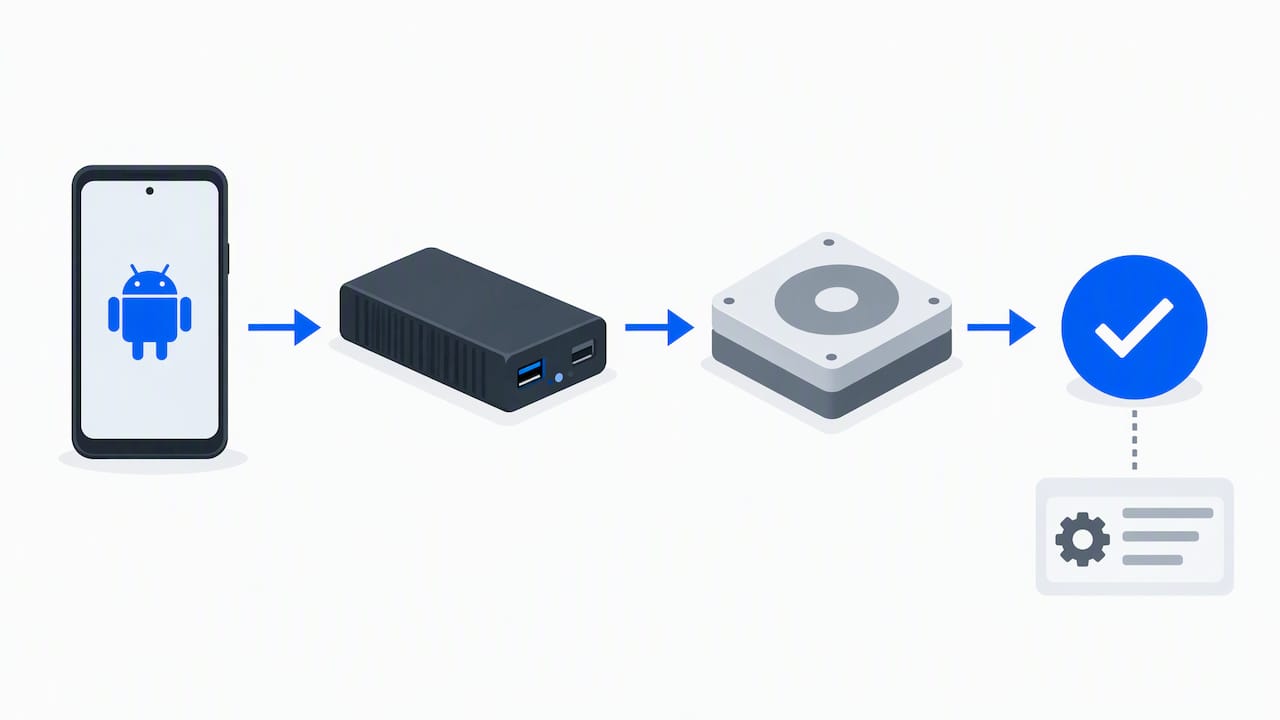
- Logical acquisition (after first unlock, or before first unlock on supported devices) extracts accessible active data efficiently but rarely reaches deleted files, since it reads through the operating system rather than the raw storage.
- File system or full file system extraction can sometimes expose remnants in unallocated space, depending on the device model, Android version and how the storage controller manages deleted blocks.
- Physical or bit-for-bit acquisition, achieved through bootloader exploitation, JTAG, in-system programming or chip-off techniques, gives the best chance of recovering deleted photographs because it images every addressable block rather than only what the file system currently reports. NIST’s guide to mobile device forensics confirms that physical acquisitions recover deleted artefacts inaccessible to logical methods, though these techniques demand specialist equipment and carry a higher risk of device damage.
- Memory or RAM imaging captures data that was never written to permanent storage at all. Our technical page on physical data extraction and recovery sets out how these methods are applied in practice.
Research into memory forensics shows that camera preview frames and video frames held temporarily in RAM can be recovered across Android platforms before they are overwritten, which matters when a photograph was taken and deleted within seconds, long before it was ever committed to the file system.
Every acquisition, regardless of method, should run through a write blocker, be hashed using MD5 or SHA algorithms immediately after imaging, and have the tool name and version number recorded, as NIST’s mobile device forensic tool test specification requires for any tool claiming to present recoverable deleted artefacts without modifying the source image.

How quickly deleted photos disappear for good
Time works against recovery from the moment a photograph is deleted, and the mechanisms responsible are largely automatic and invisible to the user.
- TRIM and garbage collection routinely reclaim storage blocks marked as deleted, and research into YAFFS2 file systems recorded a deleted block being erased in just 7 minutes and 53 seconds under test conditions, illustrating how narrow the recovery window can be on NAND-based storage.
- Android version, vendor customisations and how full the storage is all affect how aggressively garbage collection runs, and continued use of the device after deletion shortens the window further by generating new write activity.
- Encryption, whether file-based or full-disk, can block physical acquisition entirely on a locked device, which is why memory imaging becomes critical when a handset cannot be unlocked but was recently in active use.
- Any known or estimated deletion timestamp should be recorded and passed to the lab immediately, since it determines how the acquisition is prioritised and sequenced.
Given these mechanics, SWGDE’s best practices for mobile phone forensics treats network isolation and rapid escalation as priorities precisely because volatile and recently deleted data erode on a timescale measured in minutes, not days.
Building a court-ready report and evidence trail
A recovered photograph is only useful as evidence if the process that produced it can withstand cross-examination. Legal teams should expect the following from any forensic report before relying on it in proceedings.
- Chain of custody documentation: contemporaneous entries recording the device’s unique identifiers, the legal authority for seizure, the date and time of every transfer, and the signature of each person who handled it, consistent with SWGDE’s best practices for digital evidence collection.
- Acquisition records: the level of acquisition performed (logical, full file system, physical or memory), the tool name and version used, and a hash value for every image file produced.
- Report content: the scope of the examination, the methods applied, a list of recovered artefacts with file names, storage offsets and timestamps, a statement of limitations, and the examiner’s professional statement.
- Quality controls: hash verification, alignment with NIST and SWGDE test assertions, peer review of findings, and the examiner’s readiness to give evidence in court.
Pro Tip: Ask any lab, before instructing them, whether another competent examiner could reproduce their findings from the report alone. If the answer is unclear, the report is not yet court-ready.
Our guide to preserving chain of custody for digital evidence includes a checklist suitable for insertion directly into case files.
When to instruct a forensic lab and how to brief it
Certain circumstances make professional instruction non-negotiable rather than optional.
- The device is locked or encrypted and ordinary access attempts risk triggering a wipe or further data loss.
- The deleted material carries high evidential value, such as photographs central to a dispute, criminal allegation or regulatory investigation.
- Time sensitivity is acute, particularly where deletion was recent or the device remains powered and in use.
When instructing a lab, provide the legal authority for the examination, the device’s history and current state, a case contact, a note of any preservation steps already taken, and the priority level of the matter. In return, expect forensic images of the device, any recovered photographs together with their metadata, a signed chain of custody record, a written expert report, and confirmation of availability for court testimony. Our field steps for Android forensic triage sets out escalation criteria in more detail for teams handling multiple devices.
What practitioners wish legal teams understood
Deletion is rarely binary: a photograph marked as removed can persist, partially persist, or vanish entirely within minutes, depending on factors the user never sees. Recovery chances vary case by case, and a recovered image’s metadata, timestamps and surrounding file remnants often carry more evidential weight than the picture itself. Procedural integrity, meaning a contemporaneous, unbroken chain of custody, is frequently what decides whether a court accepts recovered material at all, regardless of how clear the photograph is. Investigators do best when they treat preservation as the first and most consequential forensic act, not an afterthought before the “real” recovery work begins. Preservation habits learned for sentimental reasons, such as those described in a partner guide to backing up wedding photographs, echo the same underlying principle that applies in evidential contexts: once an original is gone, no amount of skill recreates it.
— Computer
How we support legally defensible photo recovery
When deleted photographs matter to a case, we provide the acquisition and reporting work that consumer tools and ad hoc IT support cannot deliver, covering mobile phone forensics, data recovery, evidence acquisition, chain of custody management and expert witness reporting from a single instruction. Work proceeds from the legal authority and device history provided, preserving the device using write-blocked, hashed acquisition methods, and returning forensic images, recovered photographs with metadata, and a signed custody record alongside a written report.
- Mobile phone forensics: acquisition and analysis across locked, encrypted and damaged Android devices, detailed on our mobile phone forensics service page.
- Advanced and emergency data recovery: for time-critical instructions where deletion was recent or the device remains active, outlined on our specialist computer forensics services page.
- Expert witness reporting: reports structured for cross-examination, with the examiner available to give evidence in court.
To instruct us on an urgent Android recovery matter, reach our team through Computer Forensics Lab with the device details, legal authority and priority level, and we will confirm the acquisition plan the same day.
FAQ
Should I turn a deleted-photo Android device off or leave it on?
Leave it exactly as found: if it is on and unlocked, keep it powered and unlocked where safe to do so, since volatile memory may hold recoverable image data. If it is already off, leave it off and preserve the charger, then isolate it from networks using Aeroplane Mode or a Faraday bag.
Can permanently deleted photos actually be recovered from Android?
Recovery is possible in many cases but never guaranteed, and it depends on the acquisition method used, the device’s encryption state and how much time has passed since deletion. Garbage collection on some file systems can erase deleted blocks within minutes, so a forensic lab should be instructed immediately rather than after delay.
What does a court-ready forensic report include?
A court-ready report records the scope and methods of the examination, lists recovered artefacts with timestamps and file details, states any limitations, and includes hash values for every forensic image produced. It should also demonstrate chain of custody documentation sufficient for another examiner to reproduce the findings.
Why would a lab image RAM instead of just the storage?
Some photographs, particularly camera preview frames, exist briefly in memory before ever being written to storage, and ordinary storage acquisition will never find them. Memory forensics research has demonstrated recovery of these preview and video frames directly from RAM images, making this technique essential when a photo was taken and deleted almost immediately.
Sources
- Best practices for digital evidence collection (SWGDE)
- YAFFS2 forensic analysis and deleted data recoverability (academic study)
- VCR: Recovering photographic evidence from smartphone memory (academic paper)
- Mobile device forensic tool test specification (NIST)