
TL;DR:
- Over 90% of UK litigation involves digital evidence, which requires independent expert analysis for court admissibility. Expert witnesses ensure technical findings are reliable, understandable, and withstand cross-examination. Proper selection, thorough instructions, and strict evidence chain protocols are essential to effective digital forensic testimony.
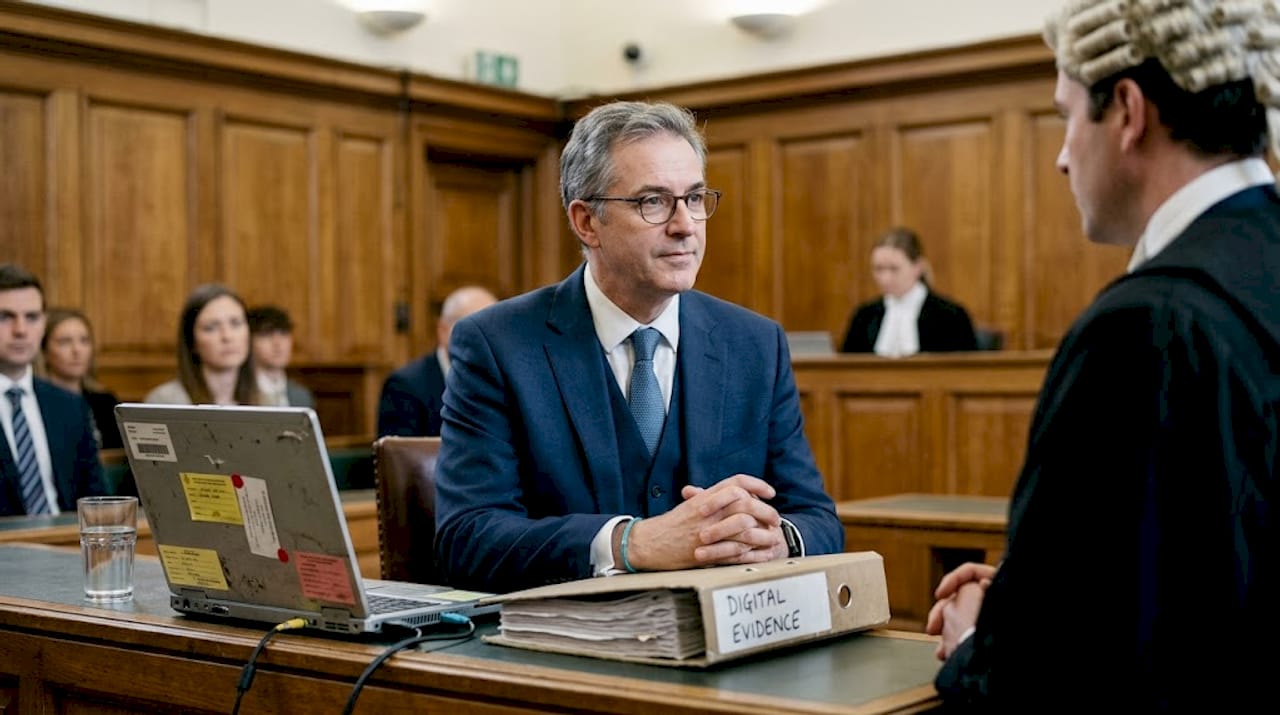
Over 90% of UK litigation cases now involve digital evidence in some form, yet a persistent misconception remains: that lawyers can simply explain the technology to a judge or jury themselves. They cannot. Courts impose strict evidential standards that require independent, qualified technical analysis, and failing to meet those standards can sink an otherwise strong case. Whether you are dealing with cybercrime, a corporate data breach, or employee misconduct, the question is not whether digital evidence matters. It is whether your expert can make it stand up in court.
Table of Contents
- Why digital forensics cases require expert witnesses
- What expert witnesses actually do in digital forensics cases
- Legal standards and evidential risks: what can go wrong?
- Choosing and instructing the right digital forensic expert
- The uncomfortable truth: most digital forensic evidence is only as good as the expert
- Need a digital forensic expert witness for your next UK case?
- Frequently asked questions
Key Takeaways
| Point | Details |
|---|---|
| Courtroom clarity | Expert witnesses bridge the gap between technical evidence and judicial understanding, ensuring your evidence is properly heard. |
| Risk management | The right expert witness mitigates risks of evidence exclusion and adverse judgements by meeting court standards. |
| Admissibility safeguard | Objective, independent experts are vital for preserving digital evidence integrity and ensuring their findings withstand cross-examination. |
| Strategic selection | Choosing a qualified expert with relevant experience is essential for persuading courts and winning complex cyber-litigation. |
Why digital forensics cases require expert witnesses
Digital evidence is not like a signed contract or a witness statement. It exists in formats that require specialist tools to extract, interpret, and authenticate. Metadata, deleted file fragments, encrypted communications, and server logs are meaningless without someone who understands what they represent and how they were obtained. Judges and juries are rarely equipped to assess that independently.
This is precisely why courts in England and Wales require expert witnesses in cases where technical matters exceed ordinary understanding. The Civil Procedure Rules (CPR) Part 35 governs expert evidence and makes clear that experts owe their primary duty to the court, not to the instructing party. That independence is not optional. It is a condition of admissibility.
“Expert witnesses in UK litigation, particularly for digital forensics in cybercrime, data breaches, and employee misconduct, provide independent technical analysis that courts require due to the complexity beyond lay understanding.”
Consider the scenarios you are most likely to encounter:
- Cybercrime prosecutions where attribution of a network intrusion depends on log analysis and malware reverse engineering
- Data breach litigation where the source, scope, and impact of an incident must be precisely established
- Employee misconduct cases involving deleted emails, covert data transfers, or misuse of company devices
- Intellectual property theft where forensic timelines prove when files were accessed or copied
In each scenario, a lay description of what happened is insufficient. Courts need an expert who can explain the digital forensics role in producing reliable, reproducible findings. Without that, opposing counsel will challenge the evidence at every turn, and they will often succeed.
The practical consequence is stark. Cases have been lost not because the underlying facts were weak, but because the technical evidence was presented without adequate expert support. A forensic report that cannot withstand cross-examination is worse than no report at all. It creates doubt where there should be certainty.
What expert witnesses actually do in digital forensics cases
Understanding the stages of expert involvement helps you instruct effectively and manage client expectations. This is not a single-step process.
- Evidence preservation — The expert creates forensic images of devices or data sources, ensuring the original evidence is not altered. Every action is logged.
- Forensic analysis — Using specialist tools, the expert examines file systems, access logs, network traffic, deleted data, and malware artefacts.
- Attribution and interpretation — The expert identifies who did what, when, and from where, drawing conclusions the evidence supports.
- Report preparation — A formal expert witness report is produced, compliant with CPR Part 35 requirements, setting out methodology, findings, and opinions.
- Courtroom testimony — The expert presents findings clearly, answers questions from both sides, and maintains impartiality throughout.
Experts analyse network architecture, access logs, malware, and deleted data to attribute activity and ensure evidence integrity via a rigorous chain of custody before translating findings into courtroom testimony.
Pro Tip: When instructing a digital forensic expert, specify the exact devices, accounts, and time periods in scope. Vague instructions produce vague reports, and vague reports fail under cross-examination.
The distinction between an expert witness and a factual witness is critical and often misunderstood.
| Feature | Expert witness | Factual witness |
|---|---|---|
| Duty | Owed to the court | Owed to the truth of personal knowledge |
| Opinion evidence | Permitted | Not permitted |
| CPR Part 35 compliance | Required | Not applicable |
| Technical conclusions | Central to role | Outside scope |
| Cross-examination focus | Methodology and credentials | Direct observations only |
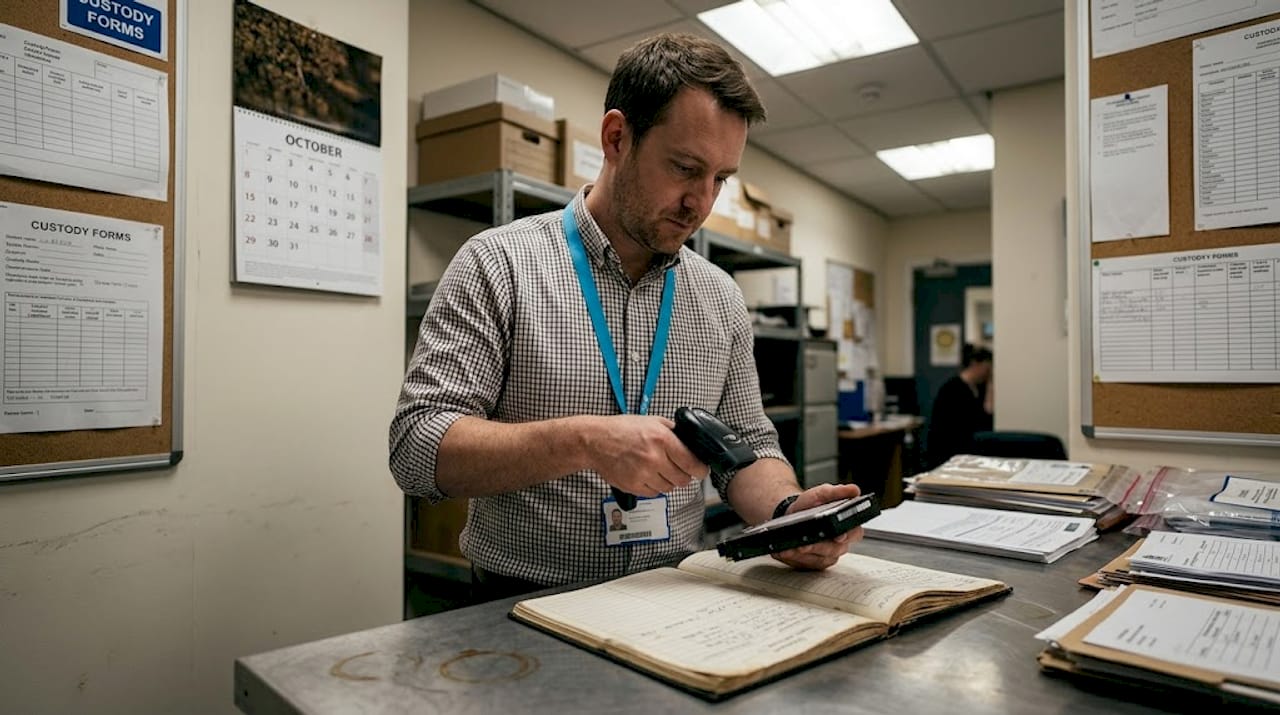
Robust chain of custody protocols are what separate admissible forensic evidence from material that opposing counsel can have excluded. Every transfer, access, and analysis step must be documented. This is not bureaucracy. It is the foundation of evidential integrity. For a fuller picture of what this looks like in practice, expert witness testimony guidance sets out the procedural expectations in detail.
Legal standards and evidential risks: what can go wrong?
The legal threshold for admissible expert evidence is not simply a matter of having someone with a technical background sign a report. Courts scrutinise the expert’s qualifications, methodology, and independence. Get any of those wrong and the evidence risks exclusion.
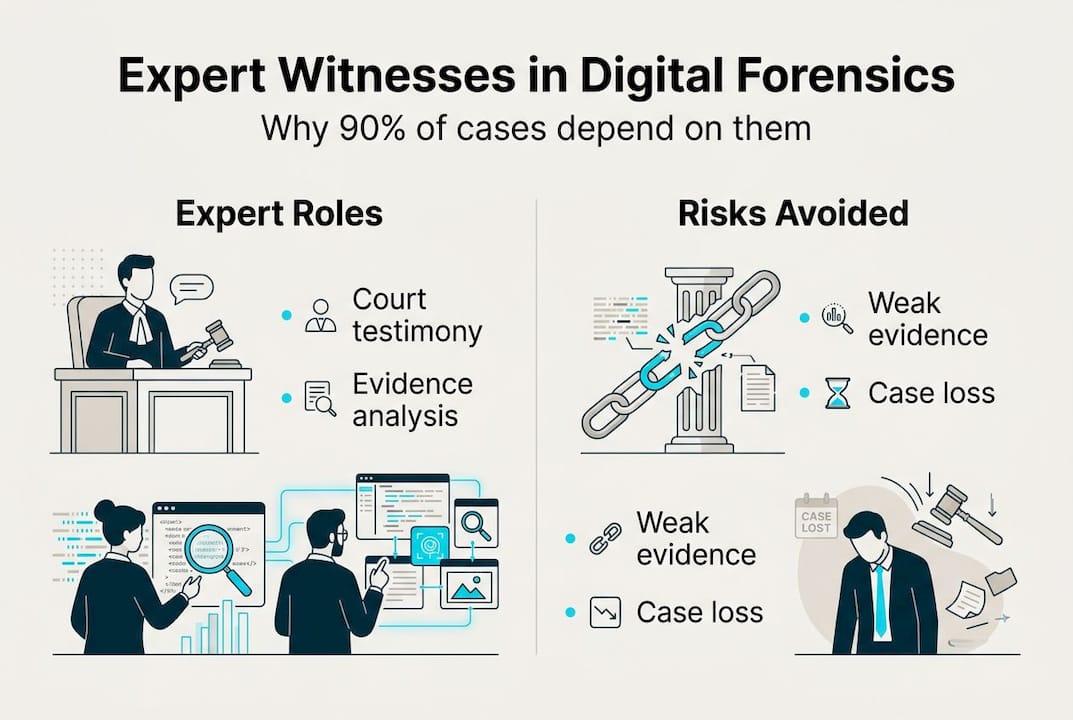

The risks of inadequate experts are high. Opponents will cross-examine aggressively on any mismatch between credentials and the opinions offered. A witness who overstates their expertise or strays outside their specialism will be dismantled.
The Wagatha Christie trial offered a high-profile illustration. The IT evidence presented on one side was widely criticised for being technically imprecise and poorly explained. The judge found it unconvincing. The lesson is not that digital evidence is unreliable. It is that poorly supported digital evidence actively damages credibility.
The Morrisons data breach case highlighted a different but equally important dimension: the need for expert analysis on causation and vicarious liability in data breach claims. Technical evidence on how the breach occurred and who was responsible was central to the Supreme Court’s reasoning.
| Risk factor | Consequence |
|—|—|—|
| Unqualified expert | Evidence excluded or given no weight |
| Biased or partial opinion | Judicial criticism, adverse costs |
| Poor methodology | Cross-examination destroys credibility |
| Inadequate chain of custody | Admissibility challenged successfully |
| Scope overreach | Expert disqualified mid-proceedings |
Pro Tip: Always request a CV and a sample of previous court reports before instructing. Check whether the expert has been subject to any adverse judicial comment in prior cases.
For cases where digital evidence in court is central, the standard you should hold your expert to is the same standard the judge will apply.
Choosing and instructing the right digital forensic expert
Selecting the right expert is arguably the most consequential decision you will make in a digitally complex case. The following checklist will help you avoid the most common and costly mistakes.
Credentials and experience to verify:
- Specific technical qualifications relevant to the case type (e.g., mobile forensics, network intrusion, cloud data)
- Demonstrable courtroom experience, including cross-examination under CPR Part 35
- Membership of recognised bodies such as the Chartered Institute of Information Security or the British Computer Society
- No prior adverse judicial findings on methodology or impartiality
- Published work or case studies that demonstrate depth in the relevant specialism
Red flags to watch for:
- Reluctance to confirm independence from either party
- Inability to explain methodology in plain language
- No experience of being cross-examined in the specific area of the case
- Reports that reach conclusions not clearly supported by the underlying analysis
- Overly broad claims of expertise spanning multiple unrelated disciplines
The risks of inadequate experts are not theoretical. Cases have been lost at significant cost because the instructing party failed to vet their expert with the same rigour that opposing counsel applied during cross-examination.
When drafting your letter of instruction, be precise. Identify the specific technical questions you need answered, the devices or data sources in scope, and the relevant time periods. A well-scoped instruction produces a focused report. A focused report survives scrutiny.
For a clear overview of expert witness roles and the duties experts owe the court, reviewing the procedural framework before instructing is time well spent. Understanding chain of custody importance from the outset also ensures you are asking the right questions about evidence handling before analysis even begins.
The uncomfortable truth: most digital forensic evidence is only as good as the expert
Here is what rarely gets said plainly: the tools do not win cases. The expert does. Every competent digital forensics laboratory uses broadly similar software. What differs is the professional who interprets the output, writes the report, and stands in the witness box.
We have seen cases where technically sound forensic analysis failed because the expert communicated poorly under pressure. We have also seen the reverse: modest technical findings presented with such clarity and composure that the court found them entirely persuasive. Impartiality, precision, and the ability to explain complex matters without condescension are not soft skills. They are the core of what makes forensic testimony in cybercrime cases effective.
A long CV is not a substitute for tested courtroom credibility. The expert who has been cross-examined repeatedly, who has faced hostile questioning and maintained composure, is worth far more than one whose credentials look impressive on paper but who has never been genuinely challenged. Choose accordingly.
Need a digital forensic expert witness for your next UK case?

If your case involves cybercrime, a data breach, employee misconduct, or any situation where digital evidence must stand up in court, Computer Forensics Lab provides qualified expert witness services built specifically for UK litigation. Our experts are experienced in CPR Part 35 compliance, cross-examination, and producing reports that courts find credible and persuasive. Explore our full range of digital forensics services or learn how we approach digital forensic investigations from evidence collection through to testimony. We also offer detailed analysis of digital footprints across devices, networks, and cloud platforms. Contact us to discuss your case in confidence.
Frequently asked questions
When is an expert witness required for digital evidence in UK courts?
An expert is required when technical evidence goes beyond ordinary understanding, which is almost always the case in cybercrime, data breaches, and complex misconduct. UK courts require independent technical analysis that lay witnesses simply cannot provide.
What qualifications should digital forensic expert witnesses have?
They should hold relevant technical qualifications, have direct courtroom experience under cross-examination, and demonstrate a record of impartial analysis. Scrutinise credentials deeply because opposing counsel certainly will.
How is evidence integrity preserved in digital forensic cases?
A strict chain of custody must be maintained from the moment of collection through to courtroom presentation. Evidence integrity via chain of custody is what makes forensic findings admissible and defensible.
What are the risks if an unqualified expert witness is used?
Unqualified experts risk having their evidence excluded, attracting adverse judicial comment, and wasting significant costs. Inadequate expert risks are high and opponents will exploit any weakness in credentials or methodology.
How do expert witnesses enhance the persuasiveness of digital evidence?
They translate technically complex findings into clear, accessible conclusions that courts can act upon. Experts translate digital evidence in a way that survives cross-examination and supports the trier of fact in reaching a sound decision.