
The single most consequential development in computer forensic news right now is CVE-2026-17583, a confirmed vulnerability in Thermo Fisher Scientific’s forensic DNA analysis software that allowed AI-assisted code to rewrite binary electropherogram output files rapidly, without leaving any trace detectable by conventional forensic review. Alongside that, two further developments demand immediate attention: the weaponisation of legitimate memory forensics tools by the Interlock ransomware group, and Forensic Focus reporting that the Metropolitan Police Service has processed a large number of devices through automated triage, exposing both the scale of adoption and a persistent gap in investigator wellbeing support.
Three stories to read now:
- DNA file integrity breach: CVE-2026-17583 affects Thermo Fisher’s GeneMapper software; historical case files remain unverifiable without cryptographic hashes. Full analysis below.
- DFIR tool weaponisation: Interlock ransomware actors used Volatility3 and WinPmem to harvest NTLM credentials from RAM, bypassing disk-based detection entirely.
- Triage at scale: Automated triage deployments are accelerating across UK law enforcement, raising both efficiency gains and chain-of-custody questions.
Subscribe to the Computerforensicslab newsletter for monthly digital forensics updates delivered directly to your inbox.
Key takeaways
The most urgent action in digital forensics right now is implementing cryptographic hashing at instrument output, because CVE-2026-17583 has demonstrated that the absence of that baseline renders historical forensic files legally unverifiable.
| Point | Details |
|---|---|
| Hash at instrument output | Record a cryptographic hash at the moment every forensic instrument generates its output file, before any analysis begins. |
| Patch and flag GeneMapper files | Apply the Thermo Fisher CVE-2026-17583 patch immediately and notify legal teams of all pre-patch files in active cases. |
| Restrict DFIR tool execution | Apply application control policies so Volatility3 and WinPmem run only on authorised forensic workstations, not production endpoints. |
| Document triage at scale | Ensure automated triage deployments log tool version, operator credentials, and output hashes for every session to preserve admissibility. |
| Monitor NCSC and vendor advisories | Establish a formal CVE monitoring process cross-referenced with NCSC supply chain guidance for all forensic instrument software. |
Bookmark the sources listed below and subscribe to Forensic Focus and the NCSC advisory feed to receive updates as these stories develop.
Table of Contents
- What is the latest computer forensic news this month?
- Deep dives: the three stories every UK practitioner needs to understand
- What tool and platform changes should labs act on now?
- UK legal and policy signposts for digital evidence in 2026
- What investigators and labs should change now
- How Computerforensicslab approaches these developments
- Where to follow ongoing digital forensics coverage
- Why these stories matter to UK practitioners specifically
- Primary sources and further reading
- Sources
What is the latest computer forensic news this month?
The table below captures the top stories circulating across trusted outlets in August 2026. Each entry notes the affected platform or toolset, the forensic verification need it creates, and where the original reporting appeared.
| Story | Affected platform / toolset | Forensic implication | Source |
|---|---|---|---|
| CVE-2026-17583: DNA file tampering via AI | Thermo Fisher GeneMapper (.fsa/.hid files) | Historical outputs unverifiable; hash at creation required | The Next Web |
| AI-assisted binary edits undetectable by standard review | Electropherogram binary formats | Baseline cryptographic hashing now a necessity, not best practice | TechTimes |
| Interlock ransomware weaponises Volatility3 and WinPmem | Windows endpoints, RAM | Application control and EDR verification urgently needed | Cybersecurity Times |
| Metropolitan Police triage deployment | ADF Pro, automated triage platforms | Chain-of-custody documentation at scale under scrutiny | Forensic Focus |
| Expert consensus: structural verification gap predates AI | All forensic instrument outputs | Decades of files lack baseline hashes; retrospective fix impossible | TechRadar |
| Offline AI processing adoption in DFIR labs | BelkaGPT-style local AI tools | Evidence stays within controlled environments; chain of custody preserved | Forensic Focus |
| Investigator wellbeing gap flagged in field reporting | All lab environments | Tick-box mental-health measures insufficient; structural support needed | Forensic Focus |
| Vendor patch scope limitation: forward-only signatures | Thermo Fisher GeneMapper | Pre-patch historical files cannot be retroactively authenticated | DeafNews / cybersecurity reporting |
“We’ve been behind the ball for so long.” That phrase, drawn from expert commentary reported by TechRadar, captures the consensus: the DNA file vulnerability is not a product of AI alone. It exposed a structural absence of cryptographic verification that has existed across forensic instrument outputs for decades.
Deep dives: the three stories every UK practitioner needs to understand
CVE-2026-17583 and the DNA file integrity crisis
The vulnerability centres on Thermo Fisher’s GeneMapper software, which produces electropherogram output files in .fsa and .hid binary formats. Researchers demonstrated that AI-assisted code can alter these files without leaving any modification artefact that conventional forensic tools would flag. The entire process took under 45 minutes.
The vendor’s patch introduces digital signatures for files generated after the update. That is the critical limitation: files produced before the patch carry no baseline hash and cannot be retroactively authenticated. Several decades of forensic DNA output files may now be considered evidentially unverifiable without additional corroborating documentation.
Artefacts and indicators to check:
- File metadata timestamps inconsistent with instrument log entries
.fsa/.hidfile sizes deviating from instrument-generated norms for the run type- Absence of a contemporaneous hash record in the case management system
- Instrument audit logs showing no corresponding run at the file’s creation timestamp
- Discrepancies between peak data in the binary file and any printed or PDF electropherogram produced at the time
“The problem isn’t AI — it’s that we never built verification into the output step.” That is the structural point experts made to TechRadar: the absence of cryptographic hashing at instrument output is a decades-old gap that AI tools have now made exploitable at speed.
For guidance on cryptographic hashing in forensic workflows, Computerforensicslab maintains a detailed technical reference.
Interlock ransomware and the weaponisation of DFIR tools
The Interlock group’s August 2026 campaign demonstrated a technique that should concern every security and forensics team: using Volatility3 and WinPmem, both legitimate and widely trusted memory forensics frameworks, to dump NTLM credential hashes directly from RAM on compromised Windows endpoints. Because these tools are recognised as authorised DFIR software, many endpoint detection and response (EDR) solutions did not alert on their execution.
The attack bypasses disk-based detection entirely. Credentials harvested from RAM can then be used for lateral movement or privilege escalation before any disk artefact is written. Investigators responding to incidents where these tools appear in execution logs must treat their presence as a potential indicator of compromise rather than routine forensic activity.
Key indicators of malicious tool use:
- Volatility3 or WinPmem executed from non-standard paths (e.g.,
%TEMP%, user profile directories) - Execution by accounts without documented forensic authorisation
- Network connections immediately following tool execution (credential exfiltration)
- No corresponding case reference or authorisation record in the DFIR management system
Metropolitan Police Service triage at scale
Forensic Focus reported that the Metropolitan Police Service has deployed automated triage tools, processing thousands of devices to reduce examination backlogs. ADF Pro is among the platforms in use for field triage, enabling officers to prioritise devices before full laboratory examination.
The forensic implication is procedural. When triage occurs at volume and speed, chain-of-custody documentation must keep pace. Each device triage event requires a contemporaneous record: device identifier, triage tool version, hash of any extracted data, and the officer’s authorisation. Without that record, the triage output may face admissibility challenges. The evidential handling best practices that apply to full laboratory examination apply equally to field triage.
What tool and platform changes should labs act on now?
Notable developments across tool categories
Three categories of forensic tooling are seeing significant change simultaneously, and each carries a different risk profile for labs.
Triage automation platforms such as ADF Pro are being deployed at scale by UK law enforcement. The benefit is throughput; the risk is documentation gaps when triage volume outpaces administrative process. Labs integrating these platforms should confirm that their case management systems automatically capture tool version, hash values, and operator credentials for every triage session.
Offline AI processing tools, including BelkaGPT-style local inference approaches, are gaining traction as a way to apply AI-assisted analysis without transmitting evidence data to external servers. This matters for chain of custody: cloud-based AI processing introduces questions about data sovereignty and third-party access that offline processing avoids. Labs should document which AI processing method was used and confirm that no evidence data left the controlled environment.
Memory forensics frameworks including Volatility3 and WinPmem now require a dual-use policy. As legitimate DFIR tools, they remain indispensable. As demonstrated by the Interlock campaign, they are also actively weaponised by threat actors. Labs must maintain an application control policy that restricts execution of these binaries to authorised forensic workstations only, and must verify that EDR coverage on those workstations is current.
Vendor patches that add forward-looking digital signatures do not solve the retrospective problem. Labs relying on historical instrument outputs for ongoing cases must treat those files as unverified until corroborating documentation, such as contemporaneous printed reports or instrument log exports, can be produced alongside them.
Compatibility and immediate actions:
- GeneMapper-affected instruments: Apply the Thermo Fisher patch immediately. Document the patch date, and flag all pre-patch case files for legal review.
- EOL forensic instruments: Isolate from networks; seek vendor guidance on decommissioning timelines; do not use for new casework without legal team notification.
- EDR on forensic workstations: Confirm coverage is current and that DFIR tool execution is logged and attributed to named operators.
- Cellebrite and EnCase updates: Review vendor release notes for any advisories affecting file format support or acquisition integrity; apply updates in a test environment before production deployment.
- Microsoft Project Freta: Monitor for updates to its cloud-based memory analysis capabilities, particularly regarding evidence data handling policies for UK-based deployments.
UK legal and policy signposts for digital evidence in 2026
The DNA file integrity story has direct admissibility implications for English and Welsh courts. The absence of a baseline hash at instrument output means that, for any case relying on pre-patch GeneMapper output files, the defence may legitimately challenge whether the file presented in court is identical to the file produced by the instrument. That challenge does not require proof of tampering; it requires only that the prosecution cannot demonstrate integrity.
The NCSC has published guidance on supply chain security and software integrity that is directly applicable to forensic instrument software. Labs should cross-reference NCSC advisories when evaluating whether a vendor patch adequately addresses a reported vulnerability, and should not rely solely on the vendor’s own characterisation of the fix’s scope.
The SANS Institute maintains commentary on adversarial AI and DFIR practice that, while US-originated, is directly relevant to England and Wales practitioners. SANS guidance on application control and memory forensics tool governance aligns with the Interlock incident’s lessons and is worth incorporating into lab policy documentation.
Practitioners should note that the digital asset audit trail requirements for enterprise investigations increasingly mirror the chain-of-custody standards courts expect from forensic labs. Aligning internal audit trail practices with those standards reduces admissibility risk across both criminal and civil matters.
Three practical legal signposts:
- Document at creation: Record a cryptographic hash of every instrument output file at the moment it is generated. For pre-patch historical files, produce a contemporaneous affidavit from the original operator confirming the file’s provenance where possible.
- Request from labs and vendors: Ask any external lab to confirm which tool version produced each output, whether a baseline hash was recorded, and whether the instrument was within its calibration and support lifecycle at the time of analysis.
- Notify legal teams promptly: Any case relying on GeneMapper output files produced before the CVE-2026-17583 patch date should be flagged to instructing solicitors immediately, so that disclosure obligations and expert witness instructions can be reviewed.
Pro Tip: When instructing an external forensic lab, request a written confirmation that all instrument outputs were hashed at generation and that the hash values are recorded in the case management system. This single document can pre-empt a defence integrity challenge.
What investigators and labs should change now
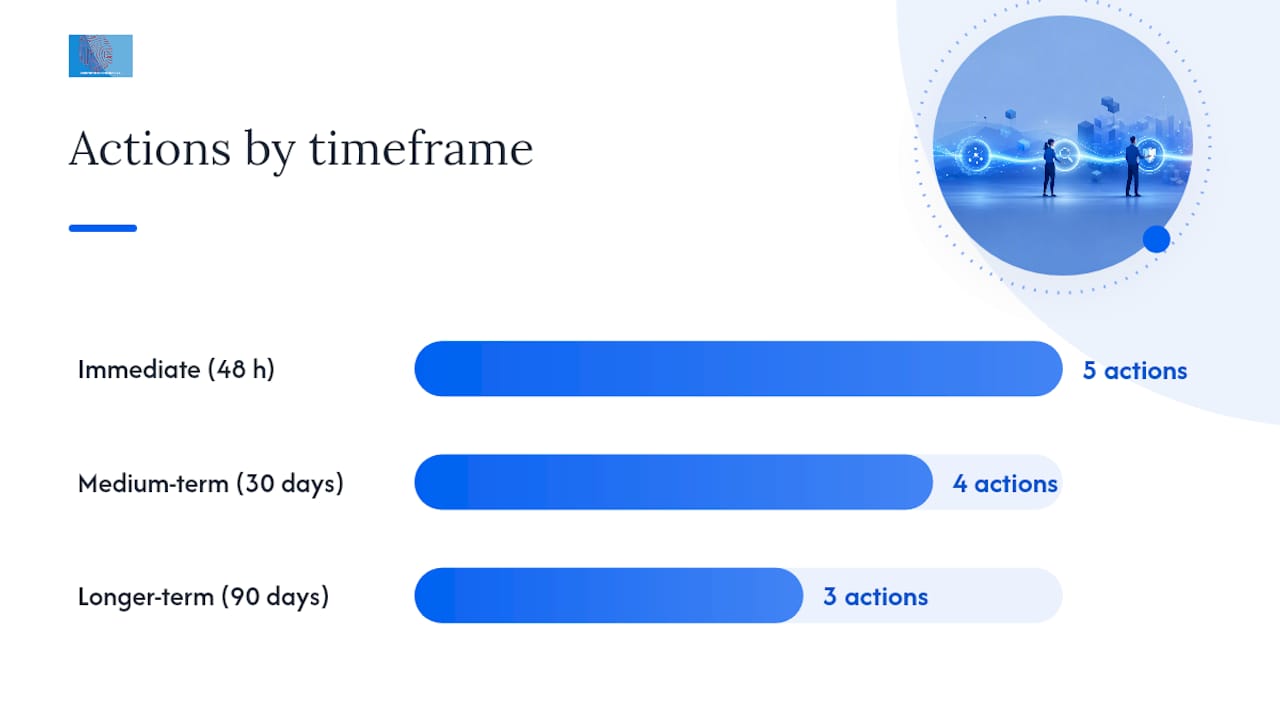
The following checklist converts the August 2026 news cycle into ranked, immediate actions. Short-term steps address acute risk; medium-term items build structural resilience.
**Immediate (within 48 hours):
**
- Apply the Thermo Fisher GeneMapper patch and record the patch date in the instrument log.
- Identify all active cases that include pre-patch
.fsaor.hidfiles and notify the supervising legal team. - Implement application control policies restricting Volatility3 and WinPmem execution to named forensic workstations only.
- Verify EDR coverage is active and current on all forensic workstations.
- Confirm that triage tool versions and operator credentials are being logged automatically for every Metropolitan Police or lab triage session.
Medium-term (within 30 days):
- Introduce a mandatory hash-at-output step for all forensic instrument workflows, documented in the lab’s standard operating procedures. The role of hashing in digital forensics provides a technical reference for implementing this correctly.
- Review all EOL instruments against vendor support timelines; isolate or decommission those without a patch pathway.
- Update the lab’s evidential handling procedures to include a dual-use tool policy covering DFIR frameworks that may also appear in attacker toolkits.
- Conduct a tabletop exercise simulating a tool-abuse incident to test whether current EDR and application control policies would detect the Interlock attack pattern.
Longer-term (within 90 days):
- Engage legal counsel to review the admissibility position of historical DNA case files in ongoing matters.
- Establish a formal CVE monitoring process for all forensic instrument software, cross-referenced with NCSC advisories.
- Review investigator wellbeing support structures. Forensic Focus reporting identifies a persistent gap between tick-box mental-health measures and the structural support investigators need; labs should audit their current provision against that benchmark.
Pro Tip: Wellbeing support for investigators handling distressing material should be built into case assignment protocols, not offered reactively. Structural support, such as mandatory debrief sessions and access to specialist counselling, reduces attrition and maintains the quality of evidence handling under pressure.

How Computerforensicslab approaches these developments
Computerforensicslab’s laboratory protocol requires a cryptographic hash to be recorded at the point of data acquisition, before any analysis begins. When instrument output files are received from external sources, the lab’s standard procedure is to request the originating instrument’s audit log and any contemporaneous hash record before accepting the file into the chain of custody. In the absence of those records, the file is treated as unverified and the instructing party is notified.
The CVE-2026-17583 vulnerability reinforces why that protocol exists. A file that arrives without a baseline hash cannot be authenticated by any post-hoc means, regardless of how sophisticated the subsequent forensic analysis is. The forensic imaging process Computerforensicslab uses for device acquisition applies the same principle: hash verification at acquisition, hash verification at analysis, and a documented chain of custody between the two.
When a client presents digital evidence that may have been handled outside a controlled forensic environment, Computerforensicslab’s first step is always to establish what verification records exist at the point of original capture. Without that baseline, the evidential weight of the material is fundamentally compromised, regardless of what the file appears to show.
For organisations that have experienced a potential data breach, ransomware incident, or employee misconduct matter, engaging an external lab early, before internal teams handle evidence further, preserves the integrity that courts require. Computerforensicslab provides digital forensic investigation services for legal, corporate, and law enforcement clients across the United Kingdom.
| Service area | When to engage an external lab |
|---|---|
| DNA / instrument file integrity disputes | Immediately upon identifying a pre-patch file in an active case |
| Ransomware incident response | Before internal IT teams remediate affected systems |
| Employee misconduct investigations | Before any device is accessed by HR or management |
| Expert witness instruction | As soon as litigation is anticipated, to preserve admissibility |
Where to follow ongoing digital forensics coverage
Staying current does not require monitoring dozens of feeds. A focused shortlist of authoritative sources covers the field without noise.
Trusted news and analysis feeds:
- The Hacker News: covers cybercrime and security incidents with technical depth; essential for tracking threat actor TTPs that affect forensic investigations.
- CYFOR: UK-based digital forensics firm that publishes case commentary and sector updates relevant to English and Welsh practitioners.
- SANS Institute blog: practitioner-level commentary on DFIR trends, adversarial AI, and tool governance; directly applicable to UK lab policy.
Podcasts and training resources:
- Forensic Focus podcast: interviews with practitioners on current cases and tool developments.
- EC-Council computer forensics resources: training materials and technique guides for practitioners building or refreshing core skills.
Subscription and monitoring checklist:
- Subscribe to the Forensic Focus weekly newsletter (free).
- Set a CVE alert for all forensic instrument software vendors (NVD RSS feed or vendor advisory mailing lists).
- Subscribe to NCSC alerts for software supply chain and critical infrastructure advisories.
- Follow SANS DFIR blog via RSS for practitioner commentary.
- Review vendor release notes for Cellebrite, EnCase, and ADF Pro on each release cycle.
Conference calendar (2026):
- Forensics Europe Expo: Annual event covering digital and physical forensics; sessions on tool validation and legal admissibility are particularly relevant for UK practitioners.
- SANS DFIR Summit: Practitioner-focused sessions on memory forensics, triage automation, and adversarial AI; prioritise sessions on tool governance and chain-of-custody documentation.
- NCSC CyberUK: Government-aligned conference covering policy, threat intelligence, and cross-sector collaboration; relevant for understanding the regulatory direction of travel.
For incident response planning, the digital asset incident response checklist provides a structured framework that complements the forensic protocols discussed throughout this article.
Why these stories matter to UK practitioners specifically
The CVE-2026-17583 vulnerability, the Interlock tool-abuse campaign, and the scale of automated triage adoption are not abstract developments. They affect the admissibility of evidence in UK courts, the integrity of ongoing casework, and the professional obligations of every practitioner who handles digital evidence under English and Welsh law. The NCSC’s supply chain guidance and the courts’ expectations around chain of custody are converging on a single requirement: verification at origin, not retrospectively.
UK practitioners who have not yet audited their instrument output workflows for baseline hashing should treat that as an urgent matter, not a future agenda item. Courts will not accept “the vendor did not require it” as a sufficient answer when a defence team challenges file integrity. The structural gap that experts described to TechRadar has existed for decades; the difference now is that it is publicly documented, technically exploitable, and legally consequential.
Computerforensicslab is available to advise on evidence integrity assessments, expert witness instruction, and incident response for matters where the provenance of digital evidence is in question. Contact the lab directly to discuss your specific case requirements.
Primary sources and further reading
| Category | Source | Coverage |
|---|---|---|
| News and analysis | Forensic Focus | DFIR community round-ups, triage deployments, wellbeing reporting |
| News and analysis | The Hacker News | Cybercrime incidents, threat actor TTPs, tool abuse |
| Vendor advisory / research | The Next Web: CVE-2026-17583 | DNA file tampering vulnerability, patch scope and limitations |
| Research coverage | TechTimes: AI-assisted DNA file edits | Demonstration of undetectable binary file alteration |
| Incident analysis | Cybersecurity Times: Interlock ransomware | Volatility3 and WinPmem weaponisation, NTLM credential harvesting |
| Expert commentary | TechRadar: structural verification gap | Historical context and expert reaction to DNA file vulnerability |
| Policy context | DeafNews: three decades without digital signatures | Retrospective verification impossibility for pre-patch files |
| Practitioner resources | SANS Institute blog | DFIR trends, adversarial AI commentary, tool governance |
| Training and background | EC-Council computer forensics | Core forensics techniques and educational programmes |
| Internal guidance | Hashing in digital forensics | Cryptographic hashing best practice for forensic workflows |
| Internal guidance | Evidential handling best practices | Chain of custody and evidence handling procedures |
| Internal guidance | Forensic imaging process | Acquisition integrity and imaging verification steps |