
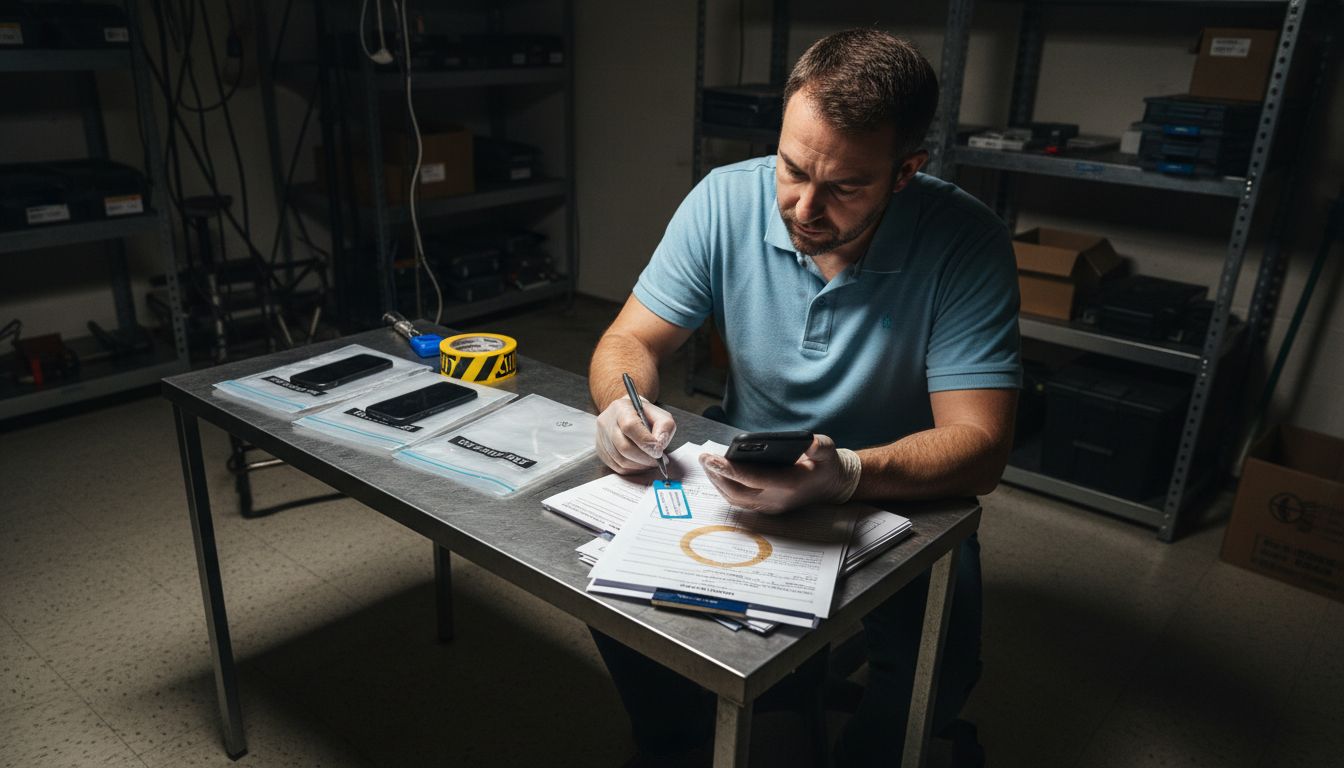
Digital forensics teams face huge challenges as mobile devices become ever more sophisticated, with over 80 percent of criminal investigations now involving smartphones or tablets as evidence sources. For British investigators and security professionals, even one misstep in isolating or handling a device can jeopardize the entire legal process. This guide unpacks clear steps and proven strategies so you can safeguard digital evidence while meeting the highest investigation standards.
Table of Contents
- Securing and Isolating Mobile Devices
- Documenting Device Condition and Chain of Custody
- Identifying Device Type and Operating System
- Preserving and Imaging Mobile Data
- Analysing Core Data and Applications
- Recovering Deleted Files and Hidden Data
- Reporting Findings and Presenting Evidence
Summary of Key Insights
| Key Message | Explanation |
|---|---|
| 1. Secure Mobile Devices Properly | Always isolate and secure mobile devices to prevent data alteration. Use Airplane Mode or electromagnetic containers to preserve evidence integrity. |
| 2. Meticulously Document Evidence | Keep precise records of device condition and chain of custody to ensure legal admissibility. Every detail must be recorded from seizure to presentation. |
| 3. Identify Device Types Accurately | Understand the device type and operating system to choose appropriate forensic methods. Each mobile platform demands specific approaches for effective analysis. |
| 4. Employ Forensically Sound Imaging Techniques | Use bit-by-bit imaging and write blocking technologies to preserve mobile data integrity. Follow NIST guidelines for a legally defensible extraction process. |
| 5. Recover Deleted and Hidden Data | Use advanced techniques to retrieve seemingly lost or hidden information. Improperly deleted files often leave traces that can provide critical evidence. |
1. Securing and Isolating Mobile Devices
When conducting mobile forensics, the first critical step involves properly securing and isolating the mobile device to preserve potential digital evidence. Understanding how to handle these devices can mean the difference between maintaining or compromising crucial investigative information.
The National Institute of Standards and Technology (NIST) Guidelines emphasise several key strategies for device isolation. These include enabling Airplane Mode, completely powering down the device, or storing it in a specialised electromagnetic shielded container. Each method prevents potential remote data alterations or unwanted network interactions that could contaminate forensic evidence.
Practical implementation requires careful handling. Immediate isolation steps involve:
- Avoiding direct physical contact with device touchscreens
- Wearing forensically clean gloves during device handling
- Preventing network connectivity that might trigger automatic updates or remote wipes
- Documenting the device state precisely at point of seizure
University of California recommendations further suggest maintaining strict physical security protocols. This means treating each mobile device as a potential evidence reservoir requiring meticulous preservation techniques.
Professional investigators understand that proper device isolation is not just a technical requirement but a fundamental forensic principle that protects the integrity of digital evidence throughout the investigative process.
2. Documenting Device Condition and Chain of Custody
Documenting the precise condition of a mobile device and establishing a robust chain of custody are fundamental pillars of successful digital forensic investigations. These critical steps ensure the legal admissibility and integrity of digital evidence throughout the investigative process.
National Institute of Standards and Technology (NIST) Guidelines emphasise the paramount importance of meticulous documentation from the moment a device is seized. Comprehensive documentation includes recording multiple aspects of the device:
- Physical condition (scratches, damage, screen state)
- Battery level and power status
- Visible network connections or active applications
- Unique device identifiers (IMEI, serial number)
- Precise time and location of seizure
Chain of custody requires creating an unbroken record of evidence handling. This means tracking every individual who comes into contact with the device, including:
- Name and credentials of each person handling the device
- Exact timestamps of evidence transfer
- Signatures confirming receipt and handover
- Secure storage conditions during evidence preservation
Professional forensic investigators understand that rigorous documentation of digital evidence can make or break legal proceedings. One mishandled detail could potentially render critical digital evidence inadmissible in court.
Remember that each notation, photograph, and transfer log serves as a crucial breadcrumb trail demonstrating the evidence remained untampered throughout the investigation. Precision is not just recommended it is absolutely mandatory.
3. Identifying Device Type and Operating System
Successful mobile forensics begins with precise identification of the device type and operating system. This foundational step determines the entire trajectory of digital evidence collection and analysis.
National Institute of Standards and Technology (NIST) Guidelines underscore the critical nature of accurate device identification. Different mobile platforms require unique forensic approaches, making systematic device recognition essential.
Key Identification Parameters include:
- Manufacturer and model number
- Operating system version
- Hardware architecture
- Firmware version
- Installed security features
Practical Identification Techniques:
- Check device settings menu for system information
- Examine physical device markings
- Use forensic software with device recognition capabilities
- Review device packaging or original documentation
- Utilise manufacturer support websites for precise specifications
Critical Considerations:
- Some devices have regional or carrier specific variations
- Operating system versions can significantly impact forensic extraction methods
- Newer devices often include advanced security features that complicate evidence retrieval
Advanced forensic tools can automatically detect device characteristics, but manual verification remains a best practice. Understanding the nuanced landscape of mobile device configurations is paramount for forensic professionals seeking to extract and preserve digital evidence effectively.
4. Preserving and Imaging Mobile Data
Preserving and imaging mobile data is a pivotal forensic technique that transforms digital information from fragile electronic evidence into a legally defensible investigative resource. The process requires precision, specialised tools, and meticulous attention to detail.
National Institute of Standards and Technology (NIST) Guidelines emphasise the critical importance of using forensically sound methods to maintain complete data integrity during extraction.
Key Preservation Strategies:
- Create bit by bit forensic image of entire device storage
- Use write blocking technologies to prevent data modification
- Select forensically validated acquisition tools
- Generate cryptographic hash values to verify image authenticity
- Maintain comprehensive documentation of extraction process
Critical Imaging Considerations:
- Different mobile platforms require unique forensic approaches
- Physical imaging captures raw data sectors
- Logical imaging extracts accessible files and directories
- Advanced extraction methods can bypass device security restrictions
Mobile phone forensic examination methods require understanding the nuanced differences between imaging techniques. Professionals must select appropriate strategies based on device characteristics, encryption levels, and investigation objectives.
Professional forensic investigators recognise that successful mobile data preservation is not merely a technical process but a complex investigative art requiring deep technological expertise and systematic methodology.
5. Analysing Core Data and Applications
Analysing core data and applications represents the investigative heart of mobile forensics, transforming raw digital information into meaningful evidence that can unravel complex narratives.
National Institute of Standards and Technology (NIST) Guidelines highlight the intricate process of extracting and interpreting user data across multiple mobile platforms and applications.
Key Data Analysis Elements:
- Communication logs (calls, messages, emails)
- Social media application data
- Browser history and bookmarks
- Location tracking information
- Application usage patterns
- Calendar entries and contacts
- Deleted or archived content
Advanced Analysis Techniques:
- Recover fragmented or partially deleted data
- Cross reference information between different applications
- Reconstruct user activity timelines
- Identify potential hidden or encrypted content
- Extract metadata from multimedia files
Cell phone forensics tools provide sophisticated capabilities for deep digital forensic examination. Understanding the nuanced layers of mobile application data requires a combination of technological expertise and investigative intuition.
Professional forensic investigators recognise that every application represents a potential treasure trove of digital evidence waiting to be methodically uncovered and interpreted.
6. Recovering Deleted Files and Hidden Data
Recovering deleted files and hidden data represents a critical investigative technique that transforms seemingly lost digital traces into crucial evidence. Mobile devices often retain ghostly remnants of information long after users believe they have permanently erased their digital footprints.
National Institute of Standards and Technology (NIST) Guidelines emphasise sophisticated approaches to uncovering concealed digital artifacts through specialised forensic methodologies.
Data Recovery Strategies:
- Analyse unallocated storage sectors
- Reconstruct fragmented file fragments
- Extract data from device system caches
- Utilise advanced file carving techniques
- Investigate temporary storage locations
- Recover metadata from deleted files
- Examine application backup repositories
Hidden Data Identification Techniques:
- Explore encrypted storage partitions
- Investigate cloud service synchronisation logs
- Analyse system registry remnants
- Examine application sandbox environments
- Review embedded device metadata
Cell phone forensics tools provide sophisticated capabilities for penetrating digital obfuscation layers. Professional investigators understand that seemingly deleted information often leaves microscopic traces waiting to be methodically reconstructed.
Successful digital forensics demands patience technical expertise and an understanding that digital memory is rarely truly erased but merely hidden from casual observation.
7. Reporting Findings and Presenting Evidence
Reporting forensic findings represents the critical final stage where meticulous digital investigation transforms into legally admissible evidence. The investigator’s ability to communicate complex technical discoveries clearly can determine the ultimate impact of their forensic work.
National Institute of Standards and Technology (NIST) Guidelines emphasise comprehensive documentation and transparent reporting methodologies that withstand rigorous legal scrutiny.
Essential Reporting Components:
- Detailed methodology description
- Precise evidence acquisition techniques
- Forensic tool validation documentation
- Chronological data analysis summary
- Clear visual representations of findings
- Technical observations and interpretations
- Potential limitations of investigation
Presentation Best Practices:
- Use neutral objective language
- Include cryptographic hash values
- Demonstrate forensic image authenticity
- Prepare expert witness statements
- Create comprehensible visual exhibits
- Reference established forensic standards
- Maintain chain of custody documentation
Forensic techniques for cell phones require investigators to translate technical complexity into accessible narratives that legal professionals can understand. Professional forensic experts recognise that their reports must serve both scientific accuracy and judicial comprehension.
Ultimately successful digital evidence reporting bridges the gap between technical investigation and legal interpretation transforming raw data into meaningful insights.
Below is a comprehensive table summarising the key concepts and strategies discussed in the article regarding mobile forensics.
| Topic | Description | Key Considerations |
|---|---|---|
| Securing and Isolating Devices | Involves enabling Airplane Mode, powering down, or using electromagnetic shielding to prevent remote data alterations. | Ensure physical contact is minimised and document device state at seizure. |
| Documenting Device Condition and Chain of Custody | Record comprehensive details like physical condition, active connections, and establish chain of custody from seizure onward. | Emphasise accuracy to ensure evidence admissibility. |
| Identifying Device Type and OS | Accurate identification of manufacturer, model, OS, and features to guide forensic processes. | Manual verification alongside advanced tools is crucial. |
| Preserving and Imaging Mobile Data | Employ bit by bit imaging and validated tools to maintain data integrity. Use cryptographic hashes for verification. | Choice of imaging method should match device characteristics. |
| Analysing Core Data and Applications | Investigate communication logs, social media, and application data for evidence. | Cross-referencing applications and recovering deleted content is essential. |
| Recovering Deleted and Hidden Data | Utilise sophisticated techniques to retrieve erased or concealed information. | Analyse storage sectors and application environments thoroughly. |
| Reporting Findings and Presenting Evidence | Compile detailed reports with clear presentation of forensic processes and findings. | Maintain objectivity and reference established standards. |
Enhance Your Mobile Forensics Expertise with Professional Support
Effective mobile forensics requires meticulous attention to critical steps such as securing devices, preserving data integrity, and maintaining a clear chain of custody to uphold evidence admissibility. The complexity of isolating devices, identifying operating systems, and recovering hidden or deleted data can pose significant challenges for investigators seeking reliable and comprehensive results. Whether you face obstacles with forensic imaging or presenting findings convincingly in legal contexts, understanding these core procedures is essential.
To navigate these challenges confidently, collaborate with expert teams specialised in the full spectrum of mobile forensic investigations. Our Mobile Forensic Investigators bring proven expertise in handling sensitive mobile evidence with precision and care. Partner with our Forensic Mobile Specialists who employ industry-leading techniques to recover crucial data while maintaining forensic soundness. Start strengthening your investigative capabilities today by exploring digital forensic services tailored to your needs at Computer Forensics Lab. Take control of your mobile forensic investigations now and ensure every key step is executed flawlessly.
Frequently Asked Questions
What are the first steps to secure and isolate a mobile device in a forensic investigation?
To secure and isolate a mobile device, start by enabling Airplane Mode or powering it down completely. Ensure you avoid direct contact with the touchscreen and wear forensically clean gloves to preserve evidence integrity.
How should I document the condition of a mobile device during a forensic investigation?
Document the physical condition of the device, including any scratches or damage, along with battery level and power status. Take detailed notes and photographs to create a reliable record of the device’s state at the point of seizure.
What techniques are effective for identifying a mobile device type and operating system?
Identify the mobile device type and operating system by checking the settings menu for system information or examining physical markings on the device. Use forensic software with device recognition capabilities to ensure accurate identification.
What are the key strategies for preserving and imaging mobile data?
Preserve and image mobile data by creating a bit-by-bit forensic image of the entire device storage using write-blocking technologies. Maintain comprehensive documentation throughout the extraction process to verify data integrity and authenticity.
How can I recover deleted files and hidden data from a mobile device?
To recover deleted files and hidden data, analyse unallocated storage sectors and use advanced file carving techniques. Investigate temporary storage locations and examine application backup repositories to uncover remnants of lost information.
What should I include in my forensic report and how should I present my findings?
Include essential components such as detailed methodology descriptions and evidence acquisition techniques in your forensic report. Present your findings using clear, objective language, supported by visual representations and maintain documentation of the chain of custody.