A forensic analyst is a specialist who applies scientific and technical methods to identify, collect and interpret physical or digital evidence for use in criminal, civil or corporate investigations. The primary goal is always the same: produce findings that are reliable enough to withstand scrutiny and be admitted in court. The profession splits into two broad domains, traditional forensic science and digital forensics, each with its own tools and standards.
TL;DR:
- Forensic analysts primarily work in labs or remotely, with case analysis, reporting, and evidence handling comprising most of their duties.
- Digital forensics focuses on electronic evidence recovery and analysis, while traditional forensics handles physical evidence like DNA, ballistics, and trace materials.
- Certification is less essential for initial roles but becomes important for career advancement and courtroom credibility, with practical skills outweighing formal qualifications.
- Maintaining a rigorous chain of custody and following accredited procedures is critical to ensure evidence admissibility in court.
- Professional digital forensics services are recommended for complex cases involving digital evidence to avoid contamination and ensure clear, court-ready documentation.
Table of Contents
- What does a forensic analyst do day to day?
- How do traditional and digital forensic roles differ?
- What qualifications and training does the role need?
- Where do forensic analysts work, and what can they earn?
- Why does chain of custody matter for court admissibility?
- What does the forensic workflow look like from collection to court?
- When should you instruct a professional digital forensics supplier?
- A practitioner’s view on what actually matters in forensic work
- How a professional digital forensics service can help when evidence needs to hold up in court
- Sources
- FAQ
What does a forensic analyst do day to day?
Most work happens away from the crime scene, in a laboratory, an office, or increasingly, remotely through secure data platforms. The Bureau of Labor Statistics confirms forensic science technicians spend the bulk of their time on structured analysis rather than fieldwork, a detail that surprises many people drawn to the job by television drama.
Core tasks include:
- Receiving, logging and securing evidence, with every handover recorded to preserve the chain of custody
- Running analytical procedures such as DNA profiling, toxicology screening, fingerprint comparison, or examining file systems and system logs for digital cases
- Drafting reports that peer reviewers check before they reach investigators or solicitors
- Liaising with detectives, prosecutors or corporate legal teams to clarify what the evidence can and cannot support
The reporting stage often takes as long as the analysis itself, since a finding is only useful if it can be explained clearly to someone without technical training.
How do traditional and digital forensic roles differ?
Traditional forensic science and digital forensics solve different problems with different toolkits, and the Crime Scene Investigator EDU comparison of the two paths is a useful starting point for anyone weighing up a career or trying to work out who to instruct.
Traditional subfields typically cover:
- DNA and biological evidence, producing profiles for comparison against suspects or databases
- Ballistics and toolmark analysis, linking weapons to incidents
- Trace evidence such as fibres, glass or paint, supporting placement and contact theories
Digital subfields typically cover:
- Computer and mobile device examination, recovering deleted files and communications
- Network and cloud forensics, tracing intrusions or unauthorised access across systems
- Malware analysis, reverse engineering malicious code to understand its behaviour
Crossover between the two is limited day to day. A DNA analyst rarely touches a hard drive, and a digital examiner rarely enters a laboratory for wet chemistry. Complex cases, such as a fraud investigation involving both physical documents and cloud records, sometimes need both skill sets working in parallel rather than one hybrid specialist.
What qualifications and training does the role need?
Most entrants hold a degree in forensic science, chemistry, biology, computer science or a closely related field, though apprenticeship and vocational routes into digital forensics are increasingly common as employers value demonstrable skill over paper qualifications alone. Certification is rarely mandatory for a first role, but an academic review of certification value found it becomes increasingly important for career progression and for credibility once an analyst is cross-examined in court.
Practical skills matter more than any single certificate:
- Precise laboratory or imaging technique, since a rushed process invites challenge later
- Chain-of-custody discipline, applied consistently and without shortcuts
- The ability to write and speak about technical findings in plain terms
Pro Tip: If you’re starting out, volunteer for mock trial exercises or moot court sessions during study. Cross-examination is a learned skill, and the first time you face it should not be in a real courtroom.
Where do forensic analysts work, and what can they earn?
Employers range from police forces and public forensic laboratories to private consultancies, corporate security teams and law firms that need in-house technical support. Digital analysts often work partly remotely, especially when handling cloud data or network logs, while traditional forensic disciplines remain largely lab-bound because physical samples cannot be examined at a distance.
Typical employers include:
- Police forces and government forensic laboratories
- Private digital forensics consultancies serving legal and corporate clients
- Corporate incident response and security teams
- Law firms handling litigation involving digital or physical evidence
Pay varies considerably by jurisdiction, sector and specialism, so treat any single figure as indicative rather than universal. Private consultancy work and roles requiring expert witness experience tend to command a premium over entry-level laboratory positions.
Why does chain of custody matter for court admissibility?

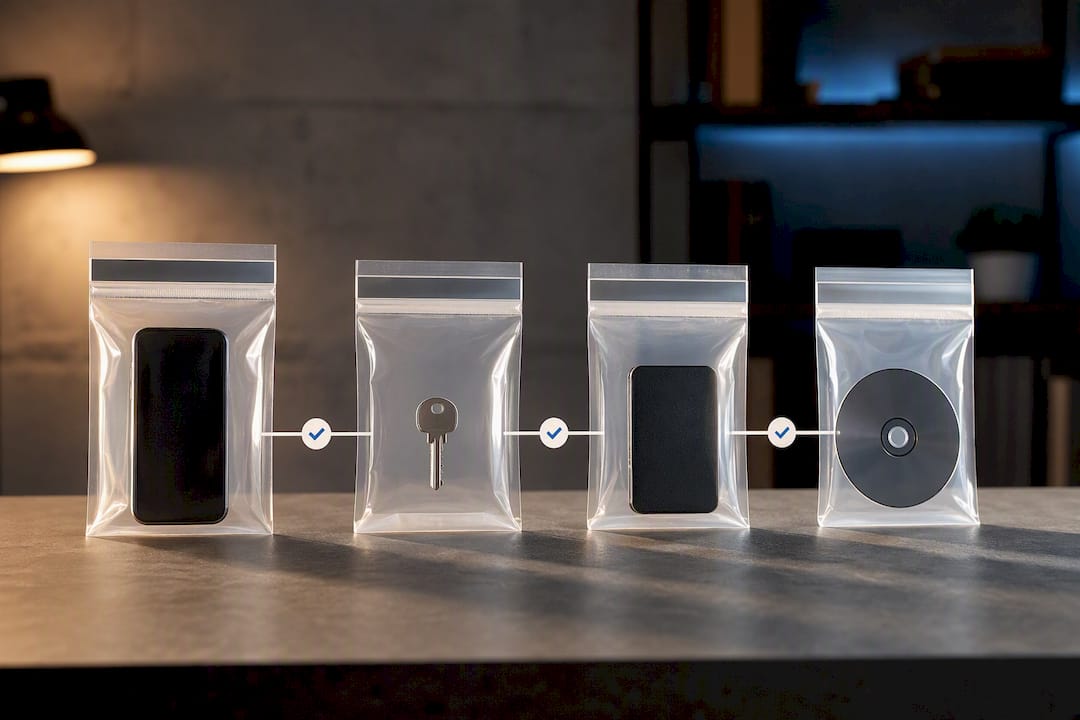
Findings are only as strong as the record of how the evidence was handled. The WGU career guide is direct on this point: admissibility requires rigorous evidence-handling protocols, meticulous chain-of-custody documentation and the ability to testify professionally in court. Skip any of the three and even sound science can be thrown out.
Chain of custody records:
- Who collected the evidence and when
- Every person who accessed, moved or analysed it afterwards
- Storage conditions and any transfers between locations or organisations
Laboratory accreditation and documented quality standards act as a trust signal for courts and opposing counsel, showing that a lab’s procedures are consistent rather than improvised. The National Institute of Justice’s chain-of-custody guidance states plainly that any break or ambiguity in the record can render otherwise sound results inadmissible, regardless of how rigorous the underlying analysis was.
What does the forensic workflow look like from collection to court?
The sequence is broadly consistent whether the evidence is a bloodstain or a hard drive image:
- Identification and secure collection. Physical evidence is bagged, labelled and sealed; digital evidence is forensically imaged to create an exact, unaltered copy for analysis.
- Analysis using validated techniques. Analysts apply recognised methods and tools, with findings checked through peer review before anyone signs off on them.
- Reporting and preservation. A written report documents methodology and conclusions, the original evidence is preserved untouched, and the analyst prepares to present and defend the findings in court if required.
Digital cases often demand a faster first step than traditional ones, because volatile data such as active memory or session logs can disappear within minutes of a device being touched. The CISA cyber defence forensics analyst role description makes preserving that volatile evidence a defined part of the job, not an afterthought.
When should you instruct a professional digital forensics supplier?
Specialist instruction becomes necessary once a case involves litigation, suspected deleted-data destruction, or an intrusion too complex for in-house IT staff to safely examine without risking the evidence itself. Handling it incorrectly, even with good intentions, can corrupt the very data you need.
A professional supplier should deliver forensic imaging, a written expert report, documented chain-of-custody handling, and the option of witness support if the matter proceeds to a hearing. For procedural detail on preserving digital evidence correctly before you call anyone in, this guide to digital evidence preservation is a useful reference.
Before instructing anyone, ask:
- Have they given court testimony before, and can they describe the outcome?
- What accreditation or quality standards does their laboratory follow?
- What is the realistic turnaround time for imaging and reporting?
- What will the final report look like, and will it stand alone without further explanation?
Pro Tip: Ask for a sample report structure before you instruct anyone. A supplier who cannot show you how they present findings in writing will struggle to defend those findings verbally under cross-examination.
A practitioner’s view on what actually matters in forensic work
Reproducibility beats cleverness. A method another analyst can repeat and verify holds up in court; a brilliant but undocumented shortcut does not. Sensitive material, whether a body of medical records or a suspect’s private messages, deserves restraint as much as rigour. When evidence needs preserving for litigation, get it imaged and secured before anything else happens to it.
— Computer
How a professional digital forensics service can help when evidence needs to hold up in court
Where a DIY approach to data recovery risks corrupting the very evidence you need, professional digital forensics services provide an alternative for cases where the outcome matters, such as litigation, employee misconduct, cyberattacks and intellectual property disputes. Such teams handle forensic imaging, expert witness reports and chain-of-custody documentation across computers, mobile devices, social media and cloud data, and sometimes have experience with media projects.
Instruction typically starts with a description of the incident and any devices or accounts involved, followed by a scoping conversation about what documentation the case will need. If you are weighing up whether your situation needs specialist input, the digital forensics services page sets out what is included and how engagements are structured. Get in touch to discuss your case and the evidence you need preserved.
Sources
- Bureau of Labor Statistics — Forensic science technicians (2023)
- Crime Scene Investigator EDU — digital forensics vs traditional CSI
- WGU career guide — forensic computer analyst
- CISA — cyber defence forensics analyst
FAQ
Do forensic analysts get paid well?
Pay varies by jurisdiction, sector and specialism, with private consultancy and expert witness work generally commanding more than entry-level public laboratory posts. Treat any specific figure with caution, since local labour markets differ significantly.
What qualifications do I need to be a forensic analyst?
Most roles expect a degree in forensic science, chemistry, biology, computer science or a related field, though vocational and apprenticeship routes into digital forensics are increasingly accepted. Certification tends to matter more for career progression and courtroom credibility than for entry-level hiring.
Is a forensic analyst a good job?
It suits people who value precision, patience and clear written communication over fast-paced fieldwork, since most of the work happens in a laboratory or office rather than at a scene. The role carries real responsibility, as findings can directly affect legal outcomes.
What degree do I need to be a forensic analyst?
Common choices include forensic science, chemistry, biology or computer science, depending on whether you are heading toward traditional or digital forensics. Employers increasingly weigh practical, demonstrable skills alongside the degree itself.
What is the difference between a forensic analyst and a forensic expert witness?
A forensic analyst carries out the technical examination, while an expert witness role involves presenting those findings in court and defending the methodology under cross-examination. Many analysts do both, but expert witness work specifically requires strong communication skills alongside technical competence.