
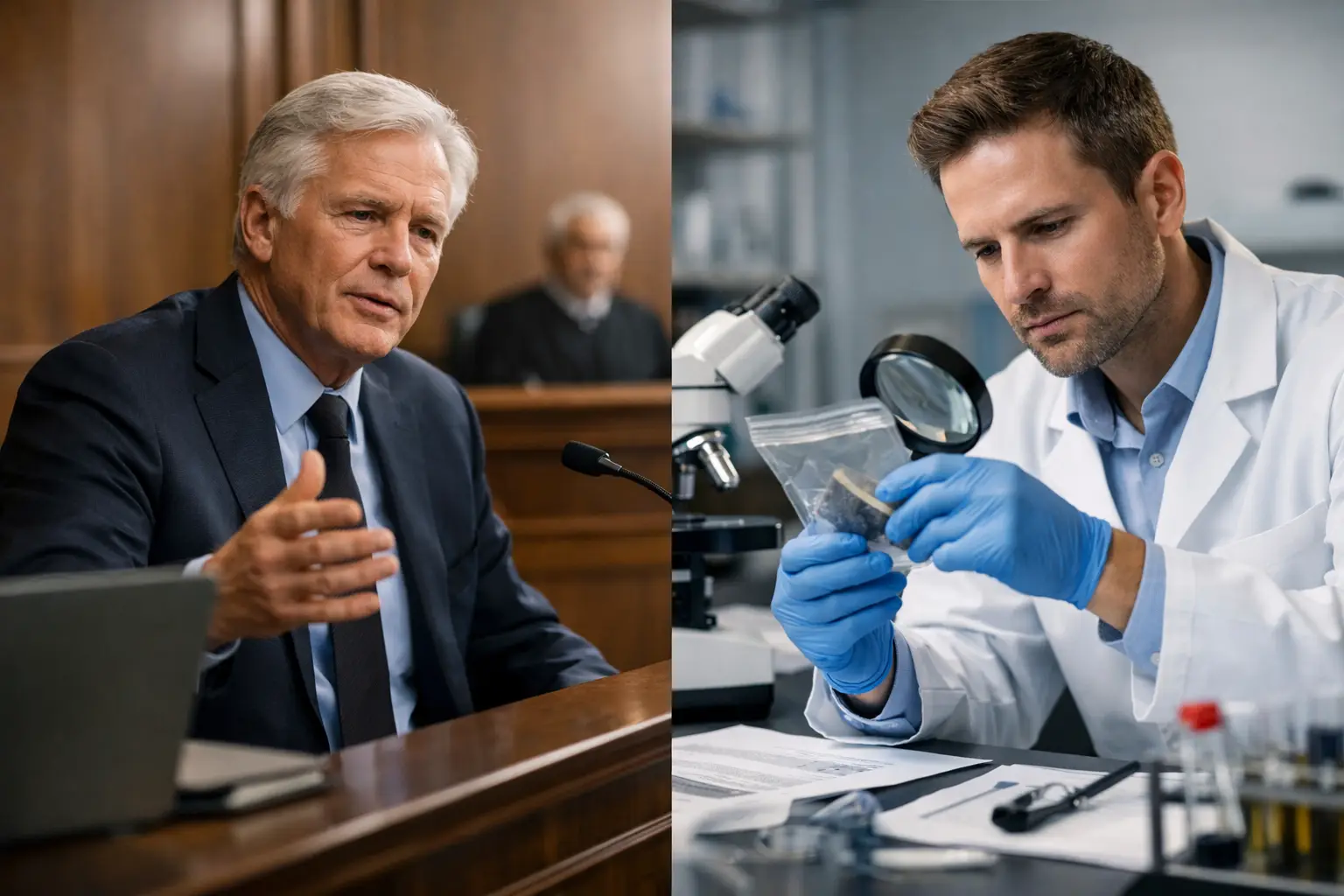
A disputed WhatsApp message, an allegedly deleted file or a suspected unauthorised login can change the direction of a case. But the value of that material depends on more than whether it can be found. In the expert witness vs forensic consultant distinction, the central question is purpose: are you seeking confidential technical advice to shape a case, or independent evidence that may be relied upon by the court?
The same digital forensic practitioner may have the technical ability to undertake both types of work. Their legal role, reporting obligations, communications and duties are not, however, interchangeable. Getting the instruction right at the outset protects evidential integrity, avoids unnecessary disclosure risks and gives the legal team a clearer route from device seizure to court-ready findings.
Expert witness vs forensic consultant: the core difference
A forensic consultant is instructed to assist a party, solicitor, insurer or business with a technical issue. Their work may be exploratory, strategic and confidential. They can advise on what a device is likely to contain, assess another party’s technical assertions, identify weaknesses in an investigation, help frame disclosure requests or guide the scope of a later forensic examination.
An expert witness is instructed to provide independent expert opinion within a legal process. Their overriding duty is to the court or tribunal, not to the party paying for the instruction. In England and Wales, that duty is reflected in the Civil Procedure Rules and Criminal Procedure Rules governing expert evidence. An expert must set out their conclusions fairly, explain the basis for their opinions, identify limitations and address matters that may weaken their conclusions.
This is not simply a difference in job title. A consultant can help a legal team understand the technical landscape and make decisions before litigation strategy is fixed. An expert witness must remain demonstrably objective. They are not there to argue the client’s case, fill evidential gaps with assumption or present a selective technical narrative.
What a forensic consultant does
A forensic consultant’s role is often most valuable early in a matter, when facts are uncertain and time is limited. For example, a company facing suspected insider data theft may need urgent advice on preserving laptops, mobile phones, cloud accounts and server logs. The consultant can help contain the risk, identify likely sources of evidence and advise whether the available material supports a full forensic investigation.
In civil litigation, a consultant may review a disclosure exercise, assess whether a search methodology is technically adequate, or explain the significance of metadata before a formal expert is instructed. In criminal defence work, they may scrutinise prosecution material, identify potential acquisition or interpretation issues and advise on further enquiries.
That advice can be candid and wide-ranging. It may include provisional views, alternative theories and lines of enquiry that do not ultimately form part of the evidence presented in court. The scope should still be carefully documented. Confidential does not mean informal: records of devices received, handling actions, forensic tools used and data preservation decisions remain essential.
What an expert witness does
An expert witness examines and interprets material within a defined evidential remit. Their report must allow the court and opposing parties to understand what was received, how it was acquired, what methods were used and how the findings were reached. It should distinguish fact from opinion and avoid presenting technical possibility as proof.
For a mobile phone examination, that may mean recording the device condition, preserving chain of custody, creating a forensic extraction where possible, validating key artefacts and explaining the limits of the data. A message shown within an exported chat may not establish who physically typed it. A browser record may indicate activity on a device, but not necessarily the identity or intent of the user. These qualifications are often where a sound report proves its value.
An expert may be required to respond to questions from the other side, attend experts’ discussions, prepare a joint statement or give oral evidence. Every conclusion must therefore be capable of being tested under cross-examination. The report needs to be clear enough for legal professionals to use and sufficiently transparent for another suitably qualified expert to review.
Where the roles overlap – and where they should not
Both roles require technical competence, disciplined evidence handling and a proper understanding of the relevant legal context. A skilled digital forensic practitioner should preserve original data, use repeatable methods, maintain an audit trail and avoid overstating findings whether they are acting as consultant or expert.
The overlap can create a practical difficulty. A party may first instruct a consultant for confidential strategic advice, then later want the same individual to act as expert witness. This can be possible, but it requires careful consideration. If the practitioner has become closely involved in litigation strategy, received privileged communications or expressed strongly partisan provisional views, their perceived independence may be challenged.
There is no automatic rule that early consulting work prevents later expert evidence. The issue depends on the nature of the initial instruction, the information received, the records created and whether the expert can still provide an independent opinion. It is usually safer to decide as early as possible whether the matter is likely to require formal expert evidence. A clearly separated instruction, with defined scope and documented duties, reduces avoidable complications.
Why the distinction matters in digital evidence
Digital evidence is especially vulnerable to misunderstanding. Data can be altered through ordinary use, remote synchronisation, automatic deletion, software updates and poorly managed collection. An investigator who starts by browsing a live phone, forwarding material by email or copying files without preserving provenance may compromise the ability to explain what happened later.
A consultant can urgently advise on preservation without waiting for every issue to be resolved. They may recommend isolating devices, retaining relevant accounts and logs, suspending routine deletion policies, and securing access credentials through appropriate legal and organisational channels. Where a formal examination is needed, an expert-led process can then acquire and analyse the material in a manner suited to evidential scrutiny.
The distinction also affects the language used in reports. A consulting memorandum may say that a technical allegation appears plausible and identify the work required to test it. An expert report must go further: it must state precisely what has been established, what remains uncertain and whether alternative explanations have been considered. That difference can be decisive where allegations concern harassment, fraud, unauthorised access, hidden assets, intellectual property theft or manipulated communications.
Common mistakes when giving instructions
The first error is treating an expert witness as a technical advocate. An instruction asking an expert to “prove” a client was hacked, or to confirm a particular person sent a message, starts from an unsafe premise. The proper instruction identifies the issue to be investigated and provides the relevant material without directing the conclusion.
The second is waiting too long to preserve evidence. A device may be wiped, overwritten, damaged or remotely altered before any examination begins. Cloud-held records may be subject to short retention periods. Early, proportionate preservation advice can be more valuable than a broad investigation undertaken after the critical data has gone.
The third is failing to define scope. A full examination of every device and account may be disproportionate, costly and intrusive. Conversely, an instruction limited to screenshots may miss the metadata, deleted material or system records needed to test authenticity. The right scope reflects the pleaded issues, relevant date range, likely data sources and urgency.
Finally, do not assume that a technically impressive report is automatically suitable for proceedings. Courts need methodology, provenance, limitations and a properly reasoned opinion. Screenshots, informal timelines and unsupported assertions rarely meet that standard on their own.
Choosing the right role for your matter
Use a forensic consultant where you need early technical direction, confidential case assessment, preservation planning, a review of existing evidence or support in developing focused questions for the other side. This route is often appropriate when the facts are still developing or the legal team needs to understand whether a forensic exercise is proportionate.
Instruct an expert witness where an independent report is likely to be disclosed, exchanged, relied upon in court or tested by another expert. Make the intended status clear in the letter of instruction. Provide the issues to be addressed, relevant documents, device and account details, key dates, known limitations and any procedural timetable. The expert should then confirm their expertise, availability, proposed methodology, assumptions and any information needed before work starts.
For high-stakes matters, the most effective approach may involve both roles at different stages. Early consultancy can preserve options and narrow the issues; a separate or clearly independent expert instruction can then produce evidence fit for court. Computer Forensics Lab approaches both stages with the same priorities: secure handling, transparent methodology and conclusions that can withstand scrutiny.
When digital evidence may determine liability, credibility or liberty, the role should never be an afterthought. Decide whether you need advice, evidence or both before the first device is handled. That decision gives the investigation its proper direction and gives the court a clearer basis on which to find the facts.