
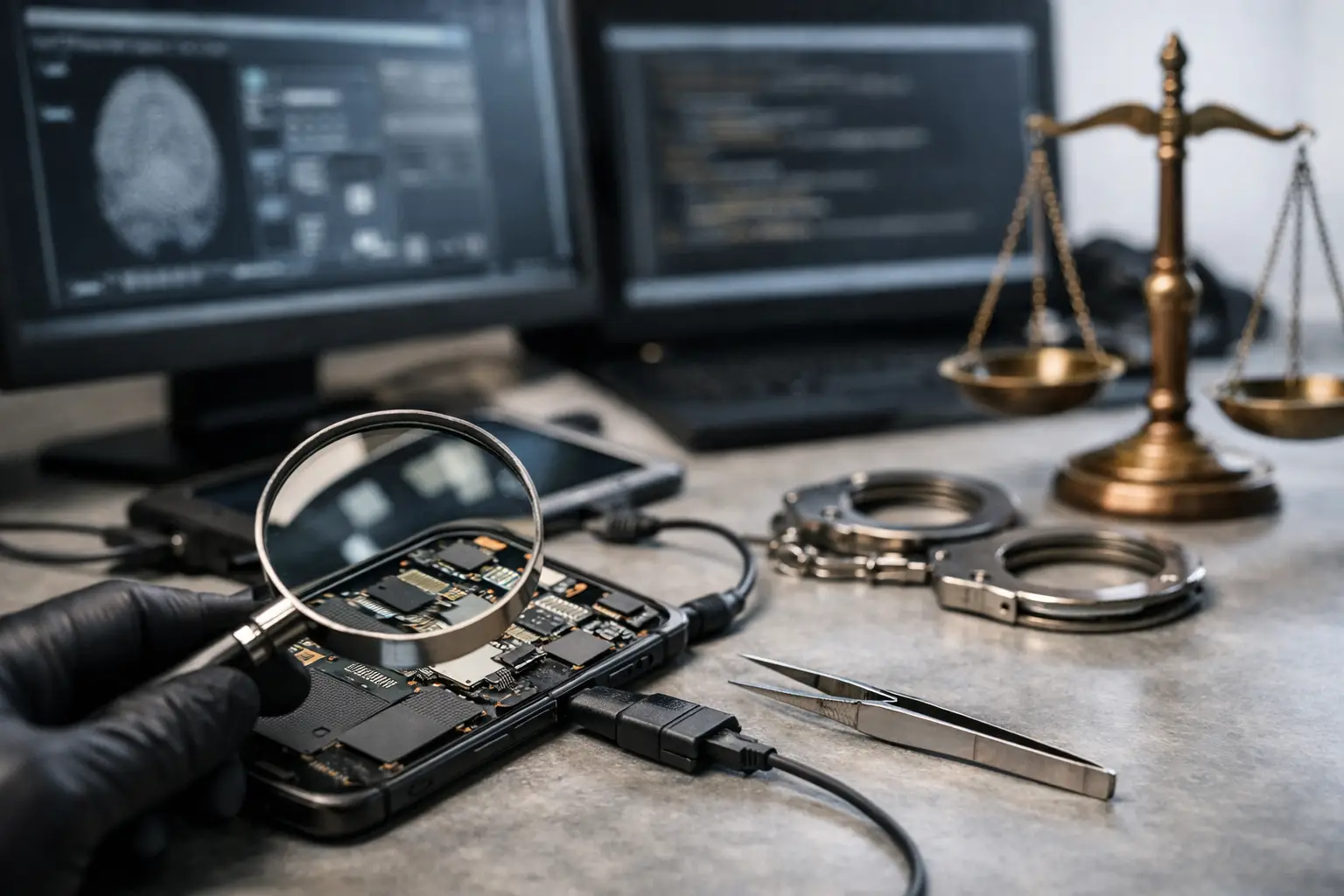
A mobile phone can become the most contested exhibit in a criminal case within hours of arrest. Messages, app data, location records, deleted content and handset usage patterns are often treated as if they tell a complete story. They rarely do. Criminal defence phone forensics exists to test that story properly – preserving the device, examining the data with evidential discipline, and identifying what the material does, and does not, prove.
For defence solicitors and counsel, the issue is not simply whether data can be extracted. The real question is whether the handset evidence has been handled lawfully, interpreted accurately and presented in a way that would withstand scrutiny. A phone may appear to place a suspect at a location, suggest contact with a complainant or imply knowledge of an offence. Yet each of those propositions may turn on timestamps, attribution, application behaviour, sync artefacts, deleted fragments or gaps in disclosure. That is where specialist forensic work matters.
What criminal defence phone forensics actually covers
In practice, criminal defence phone forensics is not a single task but a sequence of controlled forensic steps. The first is preservation. If the device is available, it must be secured in a way that protects its state and records continuity. If the defence is working from prosecution material only, the focus may shift to reviewing extraction reports, schedules, screenshots, download files and disclosure around the examination method.
The next stage is acquisition and analysis. Depending on the handset, operating system, lock state and case issues, that may involve logical extraction, file system acquisition, targeted recovery, deleted data analysis or scrutiny of cloud-linked artefacts reflected on the device. The method chosen matters. A limited extraction can omit relevant context. A broad extraction can produce large volumes of material that require careful filtering and interpretation.
Then comes reporting. In criminal proceedings, findings must be framed around evidential questions, not technical curiosity. The defence does not need a catalogue of everything on a phone. It needs clear answers on relevance, reliability and interpretation. Was a message actually sent from that device, or merely received and previewed? Does an app timestamp record user activity, server sync or local cache creation? Is a contact between parties established by call data, or only suggested by an unsaved number fragment? Precision matters because vague technical language can distort the strength of evidence.
Why phone evidence is often more complex than it appears
A phone extraction can look persuasive because it is digital, timestamped and machine-generated. That does not make it straightforward. Mobile devices are dynamic systems. Data may be altered by normal use, software updates, network changes, app refresh cycles and cloud synchronisation. Some records represent direct user actions. Others are background artefacts created by the operating system or third-party applications.
This distinction can affect the heart of a defence case. Location material is a common example. A handset may show coordinates, cell site associations, Wi-Fi history or map searches, but each has different evidential value. None should be treated as a simple statement that the owner was physically present at a precise point. Likewise, communication evidence can be misunderstood if investigators fail to distinguish between drafted, sent, delivered, deleted and recovered fragments.
Attribution is another recurring issue. A phone may be associated with a defendant, but that does not resolve who held it at a particular moment, who knew the passcode, whether accounts were shared or whether content was created elsewhere and merely viewed on the handset. In some matters, especially those involving alleged conspiracy, harassment, grooming, drug supply or assault, these distinctions are central.
Criminal defence phone forensics and disclosure strategy
The defence value of a phone examination is often tied to disclosure as much as extraction. Prosecuting authorities may rely on selected screenshots, summary statements or limited report sections that support their theory of the case. That does not necessarily reflect the full evidential picture. A proper defence review can identify missing context, omitted date ranges, unexamined applications, incomplete attribution or inadequate explanation of forensic limitations.
Sometimes the issue is not that the available material is wrong, but that it is incomplete. A thread of messages may be disclosed without the surrounding conversation. Media files may be referenced without metadata. Search records may be produced without time zone clarification. Device downloads may exist, but only partial exports have been served. In those situations, targeted defence requests can be more effective when grounded in independent forensic opinion.
This is especially important where the prosecution case leans heavily on digital inference. If the phone is said to demonstrate intent, planning or association, the defence should ask whether the extraction method captured the relevant artefacts, whether alternative interpretations were considered and whether exculpatory material may sit in unreviewed data.
Common defence issues a forensic review can address
The most useful phone forensic work is issue-led. It starts with the allegation and the evidential pressure points. In one case, the key question may be whether deleted WhatsApp content can be recovered or contextualised. In another, it may be whether a handset was used at the time alleged. Elsewhere, it may concern image provenance, browser history interpretation, contact patterns or whether an app account can truly be attributed to the defendant.
There are also cases where the defence needs to challenge process rather than content. Was the device seized and packaged correctly? Was chain of custody maintained? Was a second-hand review conducted from exported files rather than from a verified forensic image? Were examination notes sufficient? If an analyst cannot explain the process that produced the evidence, that weakness may matter as much as the data itself.
Trade-offs do arise. Full re-examination may be justified in serious matters, but not every case requires the same level of intervention. Sometimes an expert review of prosecution schedules and extraction material is enough to identify whether the digital evidence is being overstated. In other cases, especially where liberty, reputation or long-term professional consequences are at stake, a deeper independent examination is proportionate.
What solicitors should expect from a proper forensic instruction
A defensible instruction begins with a narrow brief and a clear evidential objective. The strongest results usually come when solicitors identify the live issues early – timeline, attribution, deleted content, location, account use, image handling, or disclosure gaps – rather than requesting a generic trawl through the handset.
The expert should be able to explain what can realistically be recovered, what may no longer be available, and what dependencies exist. Device model, encryption, operating system version, passcode access and prior handling all affect the scope of examination. Overpromising is a warning sign. Good forensic practice is careful about limitations because limitations themselves can be highly relevant to the court.
Reporting should be transparent, restrained and fit for litigation. That means setting out materials reviewed, methods used, findings reached and any caveats that affect interpretation. It also means preserving independence. In criminal defence work, the expert’s role is not to advocate technical possibilities unsupported by evidence. It is to examine the material rigorously and present conclusions that can withstand challenge from the prosecution and the court.
For that reason, many legal teams instruct specialists such as Computer Forensics Lab where mobile evidence requires court-ready handling, peer-reviewed reporting and a clear chain of custody from receipt through to expert opinion.
When timing becomes critical
Delay can damage digital evidence. Devices may be reset, repaired, reused or subjected to repeated handling. Accounts may sync, retention periods may expire, and opportunities for targeted recovery may narrow. Even when the handset itself is not available to the defence, early expert involvement can shape preservation requests, disclosure strategy and case theory before positions harden.
Urgency does not mean rushing methodology. It means recognising that mobile evidence is perishable in practical ways. Defence teams should move promptly where phone material sits near the centre of the prosecution case, where deleted or disputed communications are involved, or where disclosure appears selective.
The real value of independent phone forensics
The strongest criminal defence phone forensics work does not simply search for helpful fragments. It tests the reliability of the entire digital proposition. Sometimes that leads to recovery of material the prosecution did not identify. Sometimes it exposes overstatement, weak attribution or technical assumptions dressed up as fact. Sometimes it confirms parts of the case while narrowing the true issues in dispute.
That independence is precisely what makes the evidence useful. Courts do not need speculation from either side. They need disciplined examination, honest limits and findings grounded in method. For defence teams, that can mean the difference between reacting to phone evidence and properly challenging it.
When a case turns on a handset, treat it as evidence first and technology second. The closer the forensic work stays to preservation, process and proof, the more valuable it becomes when the scrutiny starts.